
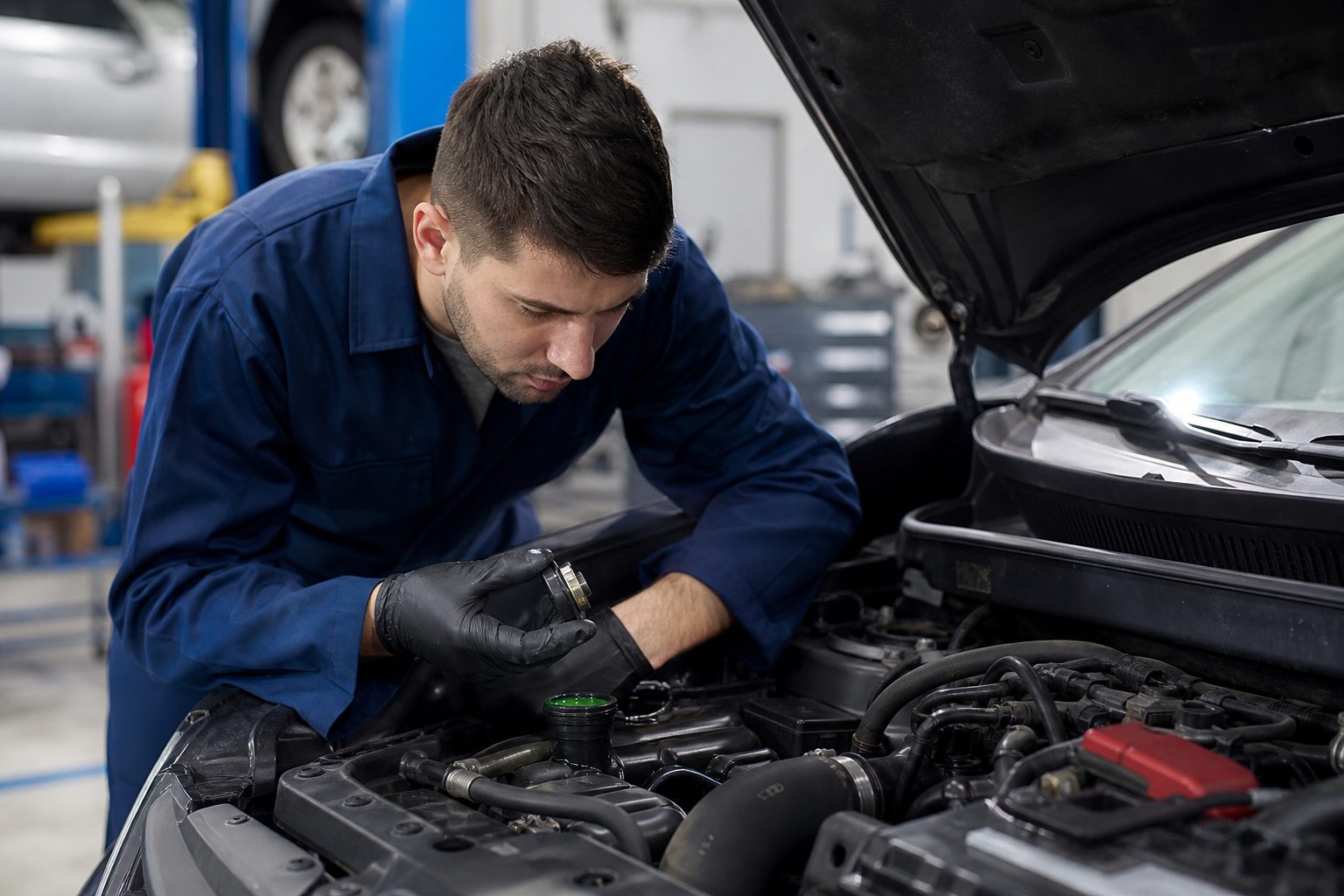
Summer Heat Will Find Every Weakness in Your Cooling System
On a hot afternoon with traffic crawling, your engine sits with almost no airflow moving through the grille. That's when the temperature gauge starts climbing, and you start wondering how bad this is about to get.
Coolant is the only thing standing between a running engine and a repair bill that can run several thousand dollars. It pulls heat away from the engine block, keeps the system from boiling over, and protects metal components from corrosion year-round. When it's low, degraded, or leaking, the engine doesn't get a warning. It just gets hot.
Blue Ridge Automotive - European & Domestic is a full cooling system diagnostic and repair facility, handling coolant repair service for European, domestic, and Asian vehicles alike. We carry a 4.9-star rating across 1,000+ Google reviews. Call us before the gauge hits red.
What Coolant Repair Actually Covers
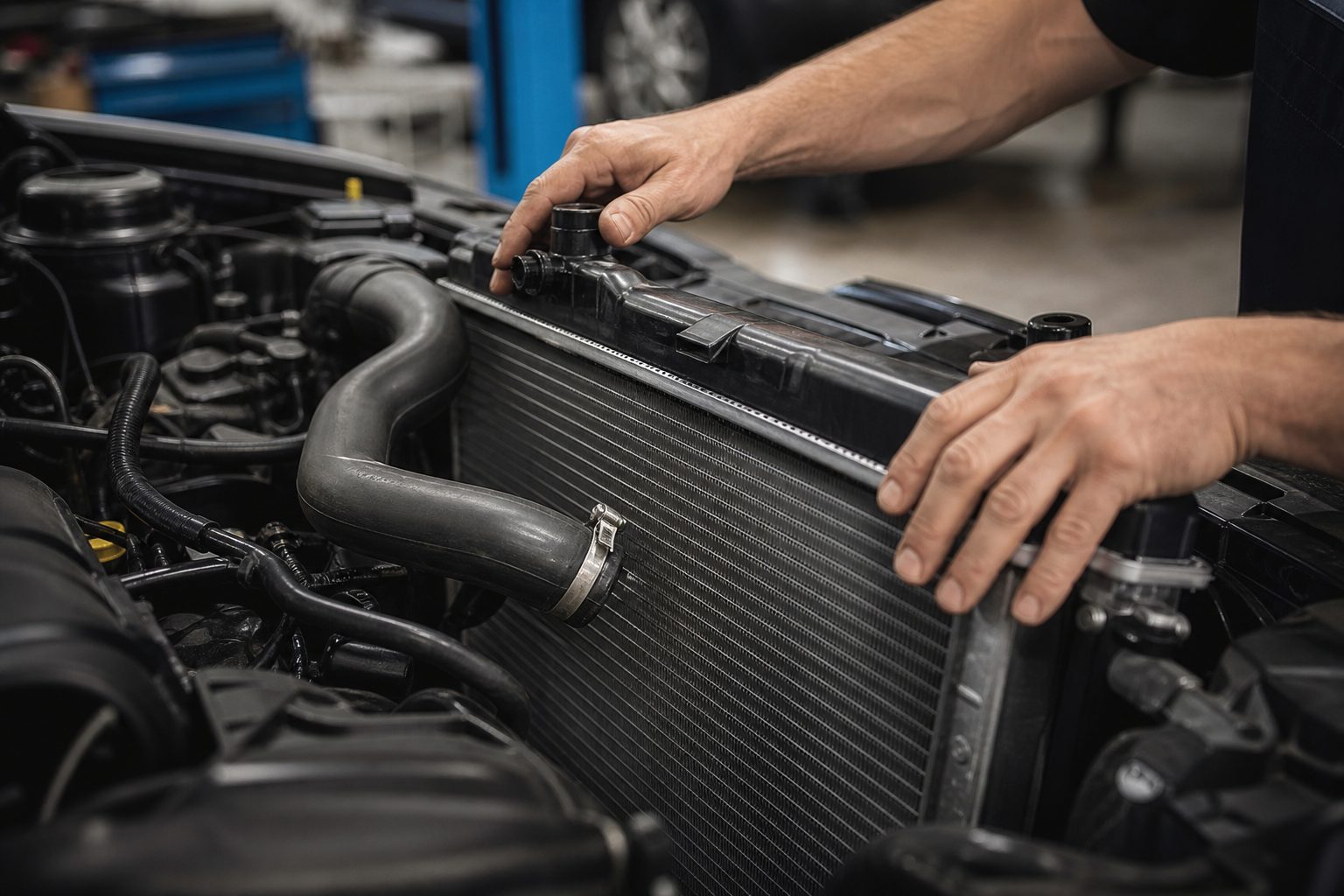
Topping off the reservoir is not coolant repair. The cooling system is a pressurized loop: coolant circulates through the engine block, absorbs heat, travels to the radiator where that heat dissipates into the air, and then returns to start again. Any break in that loop, a cracked hose, a failing water pump, a stuck thermostat, overheats your engine fast. Real cooling system repair means inspecting and pressure-testing every component in that loop, not just refilling the bottle under the hood.
The flush matters just as much as the parts. Over time, coolant becomes acidic and starts corroding the aluminum components it was designed to protect. Drivers who top off with tap water deposit mineral scale inside radiator passages and heater cores, narrowing the flow and reducing heat transfer. A proper coolant flush removes that degraded fluid, neutralizes acid buildup, and refills with the correct concentration for your vehicle, protecting against both overheating and freezing. That concentration matters. Too diluted and you lose freeze protection. Too concentrated and heat transfer actually drops.
A full cooling system repair inspection covers all of the following:
Heat Exchange
Radiator (core, tanks, and external fins)
Flow Control
Thermostat and housing
Circulation
Water pump and drive belt
Hoses
Upper and lower coolant hoses
Cabin Heat
Heater core and connections
Pressure
Pressure cap and overflow reservoir
What’s Included in Our Coolant Repair Service
A cooling system repair in Atlanta isn't one single task. It's a sequence of checks, each one ruling out a different failure point. Here's what we actually do.
Pressure Test and Leak Diagnosis
We pressurize the system to manufacturer spec and trace every drop point: pinhole hoses, weeping radiator seams, and failing head gaskets. A head gasket is the seal between the engine block and cylinder head, and when it fails, coolant can enter the combustion chamber with no visible puddle outside the car.
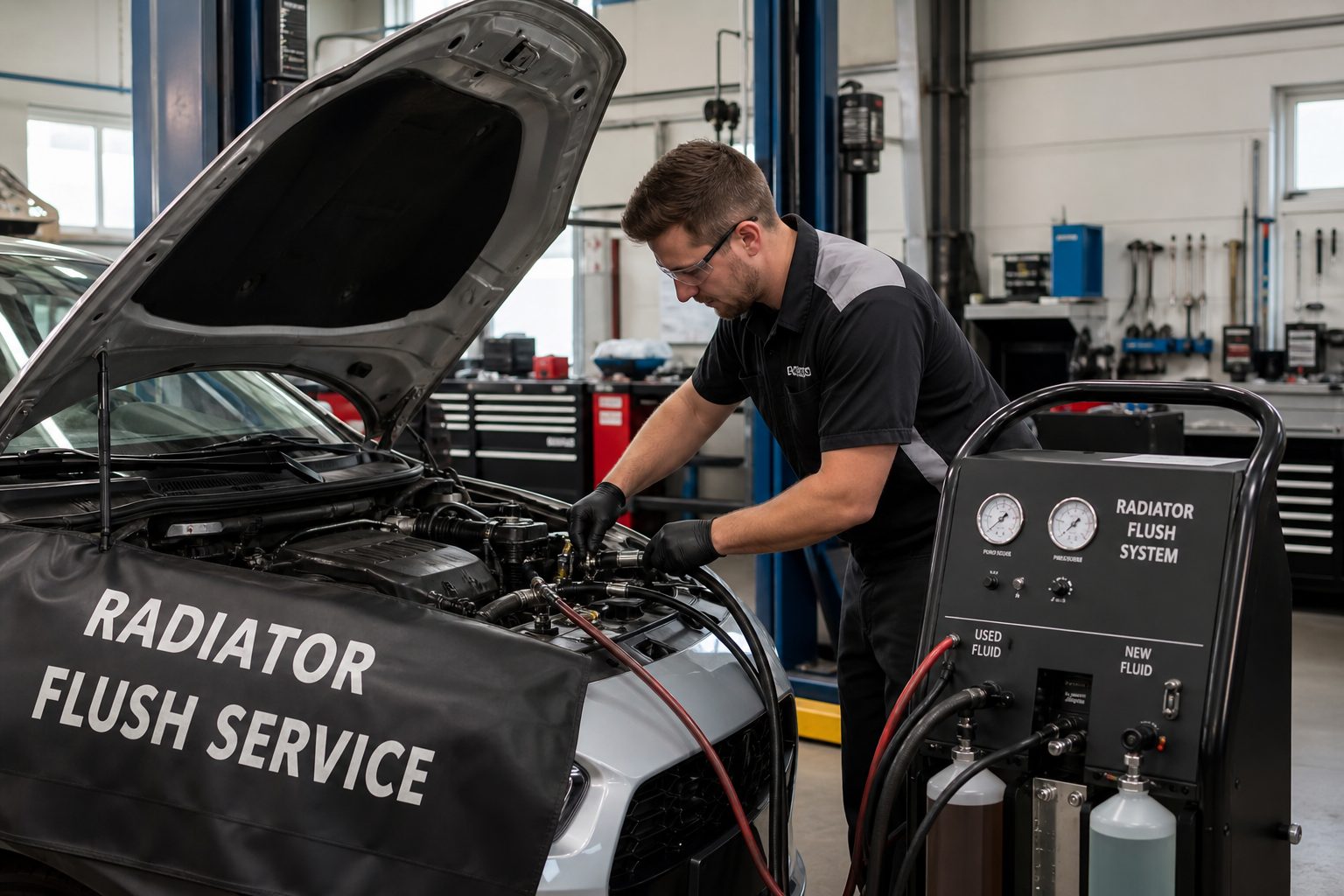
Radiator Inspection and Flush
We inspect the radiator core for blockage, corrosion, and physical damage, then flush out degraded fluid along with mineral scale from tap water, which narrows internal passages and cuts cooling efficiency before you notice any symptoms.
Thermostat Replacement
The thermostat is a small valve that controls coolant flow to the radiator. Stuck open, it runs the engine cold and kills fuel economy. Stuck closed, it causes overheating fast. We replace it with an OEM-spec unit matched to your vehicle.
Water Pump Evaluation
We check the water pump as part of your preventative maintenance evaluation, looking for bearing play, shaft wobble, and weeping seals. A failing pump often causes slow coolant loss with no puddle on the ground.
Coolant Hose and Cap Inspection
Rubber hoses harden and crack from heat cycles and road vibration. A pressure cap that no longer holds spec lets the system boil over at lower temperatures than it should.
Coolant Concentration and Condition Check
We test freeze point and pH. Degraded coolant turns acidic and corrodes aluminum components from the inside. This matters especially for European vehicles running G12 or G13 chemistry, where the wrong fluid causes engine damage that doesn't show up immediately.
How the Coolant Repair Process Works
Every coolant repair follows the same four steps, in the same order, every time.
Step 1: Visual Inspection and Pressure Test
The car goes on the lift first. We do a full visual inspection of every cooling system component, then pressurize the system to find every leak point before quoting anything. A coolant leak diagnosis done this way catches slow seeps that only show up under pressure, not just the obvious puddle on the floor.
Step 2: Written Estimate Before Any Work Begins
You get a written breakdown of what we found and what the repair covers. If the inspection turns up signs of overheating damage beyond the cooling system itself, we flag it here. Prolonged overheating can warp cylinder heads and damage gaskets, which is a separate conversation about engine repair. Nothing moves forward until you approve the scope.
Step 3: Approved Repairs Using OEM-Spec Parts
We use parts that meet or exceed the original manufacturer specification for your specific vehicle. European vehicles often require specific coolant chemistries like G12 or G13. Using the wrong fluid causes corrosion. We match the chemistry to the car, not just the job.
Step 4: System Refill, Bleed, and Verification
After repairs, we refill and bleed the system, removing trapped air pockets that cause false overheating readings. Then we run the engine to full operating temperature and confirm the gauge holds steady with no new leaks before the car leaves the bay.
Signs Your Cooling System Needs Attention in Atlanta
Most cooling system failures give you warning before they strand you. The problem is the signs are easy to dismiss. Here are six you should not ignore.
Temperature Gauge Climbing Toward the Red
If the needle creeps past the midpoint during stop-and-go traffic on the Downtown Connector or a slow afternoon in Buckhead, the system is not keeping up. Pull over. Running an overheating engine even a few extra minutes can warp a cylinder head.
Sweet Smell After Parking or at Startup
Ethylene glycol, the base chemical in most coolants, has a distinctly sweet, syrupy smell. If you catch it after parking or when you first start the car, coolant is burning off on a hot engine component. That means a leak is already happening.
Tinted Puddle Under the Car
Coolant comes in green, orange, pink, or blue depending on the type your vehicle uses. A tinted, slightly slick puddle under the front of the car is not AC condensation. AC water is clear and odorless. Coolant leak diagnosis should happen before you drive it again.
White or Rusty Residue Around Hose Clamps
Dried coolant leaves a white, chalky, or rust-colored crust around hose clamps, the radiator cap, and the overflow reservoir. Constant vibration accelerates hose wear, making this worth checking regularly as part of preventative maintenance.
Heater Blowing Cold on January Nights
The heater core is part of the cooling circuit. When temperatures drop and your heat is weak or cold, that points to low coolant or a blocked heater core, not a thermostat problem.
Low Coolant Warning Light
The dashboard warning light is the last line of defense, not the first. By the time it illuminates, the level is already low enough to risk serious overheating damage. At that point, you are one hot commute away from engine repair that costs far more than a coolant service would have.
What Wears Down Cooling Systems
Heat, low-speed traffic, tap-water top-offs, and vibration slowly degrade cooling system components before most drivers notice a problem.
Heat and Low-Speed Airflow
Hot days are not kind to radiators. At low speeds in stop-and-go traffic, grille airflow drops to almost nothing, and the cooling fan has to carry the full load. That is a system running near its ceiling on a routine Tuesday afternoon commute.
Tap Water and Scale Buildup
What goes into the reservoir matters more than most drivers realize. Every time a driver tops off the coolant reservoir with tap water instead of distilled, those minerals stay behind as scale deposits inside the radiator passages and heater core. Scale acts as insulation and narrows the internal passages. A radiator that reads full on the dipstick can still overheat the engine because the fluid cannot move through fast enough to shed heat. A proper coolant flush removes that buildup before it becomes an engine repair conversation.
Road Vibration and Hose Wear
Then there is vibration. Rough pavement and potholes jar the engine bay constantly, and that accelerates wear on rubber coolant hoses. A hose can look perfectly fine on the outside while the inner lining has already started collapsing, partially blocking coolant flow without showing a single external drip.
Age Catches Up With Every Cooling System
If your car is more than five years old and has never had a coolant flush, the years have already been working against you.

Why Atlanta Drivers Choose Blue Ridge Automotive for Coolant Services
Drivers keep coming back because the work gets done right the first time, and the explanation always matches the invoice.
European and Domestic Coolant Service Under One Roof
Most independent shops handle domestic vehicles well. European coolant repair is a different situation. BMW, Mercedes-Benz, Audi, Volvo, and Land Rover use manufacturer-specific coolant chemistries, proprietary cooling system designs, and torque specs that require different tooling than a domestic truck or sedan. We stock G12, G13, OAT, and HOAT fluids and have the equipment to service these vehicles correctly. Drivers with a 5 Series or an E-Class do not need to pay dealership rates to get the job done right.
Transparent, Attentive Service Every Time
The team walks through diagnostic findings and costs before any work begins. Nobody here suggests a repair that was not warranted. That pattern shows up in review after review from drivers who have tried other shops first. That same standard applies whether you drive a Land Rover or a Chevrolet.
4.9 Stars Across 1,000+ Reviews
A 4.9 average across 1,000+ reviews is not a marketing number. It reflects drivers who brought in a car with a cooling system issue, got a clear explanation of what failed and why, and left with a system that held steady. That kind of consistency does not happen by accident. If you want preventative maintenance scheduled alongside your coolant repair, we handle that in the same visit.








Vehicle Brands We Service
From Asian reliability to American work-ready performance, our ASE-certified technicians service every major make. Pick your brand to see model-specific repair details.





























Our Car Repair Shop Locations
We handle cooling system diagnosis and repair for drivers in the Atlanta area. If your car is running hot, we’re close by.
Ready to Stop Guessing What’s Wrong With Your Cooling System?
Bring your car in and we'll tell you exactly what the cooling system needs, and what it doesn't. Our coolant repair service starts with a straight diagnosis. If you've been putting it off, now is the right time. A cooling system that's quietly failing will eventually show up as an engine repair bill instead. Get a straight answer on what your cooling system actually needs. No guesswork, no surprises. Call us today at (404) 266-1699.
Learn More Before Your Visit
Want to understand the problem before you come in? Our technicians cover the most common questions in How a Car's Cooling System Works: A Simple Guide for Marietta Drivers, What Is a Radiator Flush and Why Do Chamblee Cars Need One?, How Much Does a Coolant Leak Cost to Fix?, and What a Burning Smell From Car Vents or the Engine Means for Atlanta Drivers.
Still have questions? Our auto repair FAQ answers the questions we hear most, and our service areas page shows every neighborhood our four shops serve.
Frequently Asked Questions