
Atlanta Oil Leak Repair: Know What You're Dealing With Before You Spend a Dollar
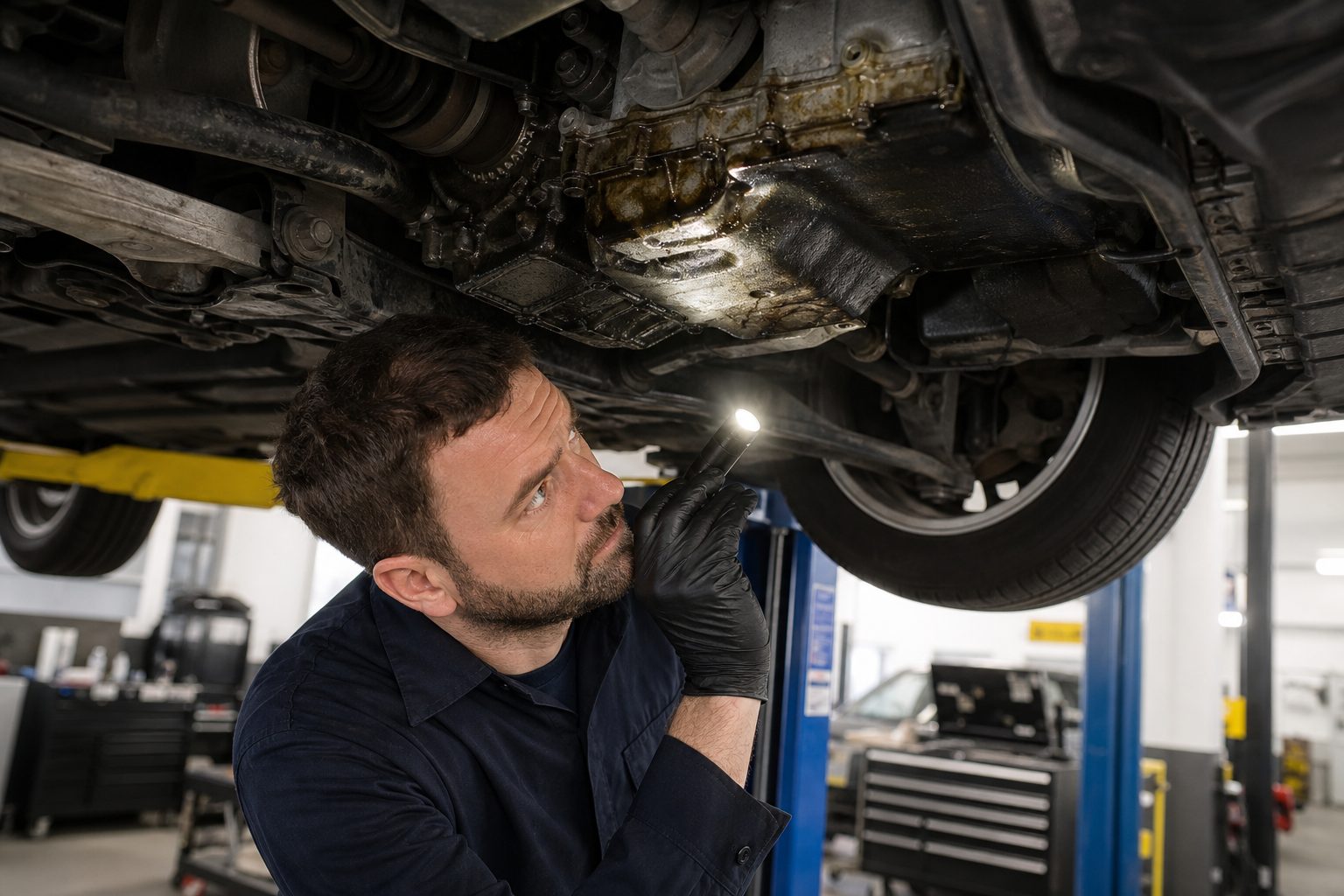
You pull into your driveway after a long day of driving, and there it is: a dark stain on the concrete where your car was parked this morning. That stain is an oil leak, and the honest answer is that it does not get cheaper the longer you ignore it. A small seeping gasket becomes a low-oil condition. A low-oil condition becomes engine damage that costs several times what the original repair would have.
Oil leak repair on European and domestic vehicles is one of the most common jobs we handle at Blue Ridge Automotive. BMWs, Audis, Mercedes, Chevrolets, Fords, the leak sources differ by make, but the diagnostic process is the same: find it, confirm it, fix it correctly the first time.
We are ASE-certified and rated 4.9 stars across 1,000+ Google reviews by drivers who needed straight answers and a repair that held. If your car is leaving spots on the pavement, call us before that spot gets bigger.
What Oil Leak Repair Actually Covers
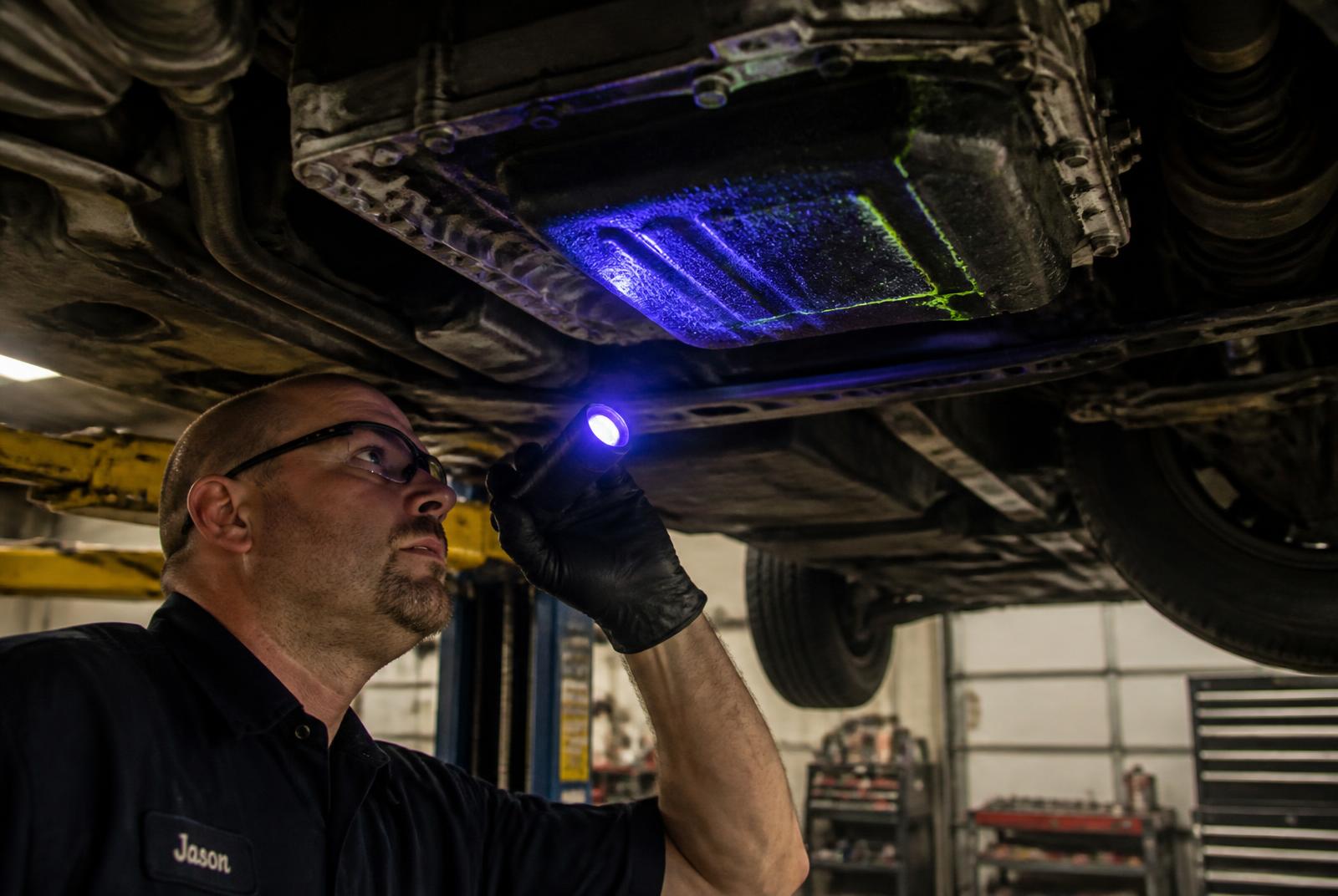
The honest answer is that oil leak repair is a diagnostic job first and a parts job second. You cannot fix a leak by guessing at the source. A dark stain on your driveway could be coming from a valve cover gasket (the rubber-sealed cover sitting on top of the engine), an oil pan gasket (the seal at the very bottom of the engine), a rear main seal (the seal where the crankshaft exits the back of the engine block), a front crankshaft seal, or oil cooler lines. Each one requires a different repair, different labor time, and a different cost. Replacing the wrong part means you pay twice and still have a leak.
European vehicles, including BMW, Audi, Mercedes, and Volkswagen, develop these leaks at higher rates than most drivers expect. Valve cover gasket replacement and oil pan gasket repair are among the most common jobs we see on European makes with 80,000 to 150,000 miles.
The reason is a combination of higher oil pressures, plastic or composite valve covers that warp over time, and original rubber seals that were never designed to last indefinitely. Repeated heat cycling in the engine bay accelerates that breakdown. Our full European auto repair work covers these failure patterns across all major makes.
Topping off the oil instead of fixing the source is not a strategy. A seeping valve cover gasket will eventually drip onto the serpentine belt below it. Once oil saturates that belt, you are looking at belt replacement on top of the original gasket job. That is a straightforward single-gasket repair turning into a multi-system repair, and the cost shows up in places that do not look connected to the original leak. Catching it early through preventative maintenance is almost always the cheaper path.
A full oil leak repair inspection covers all of the following:
Diagnosis
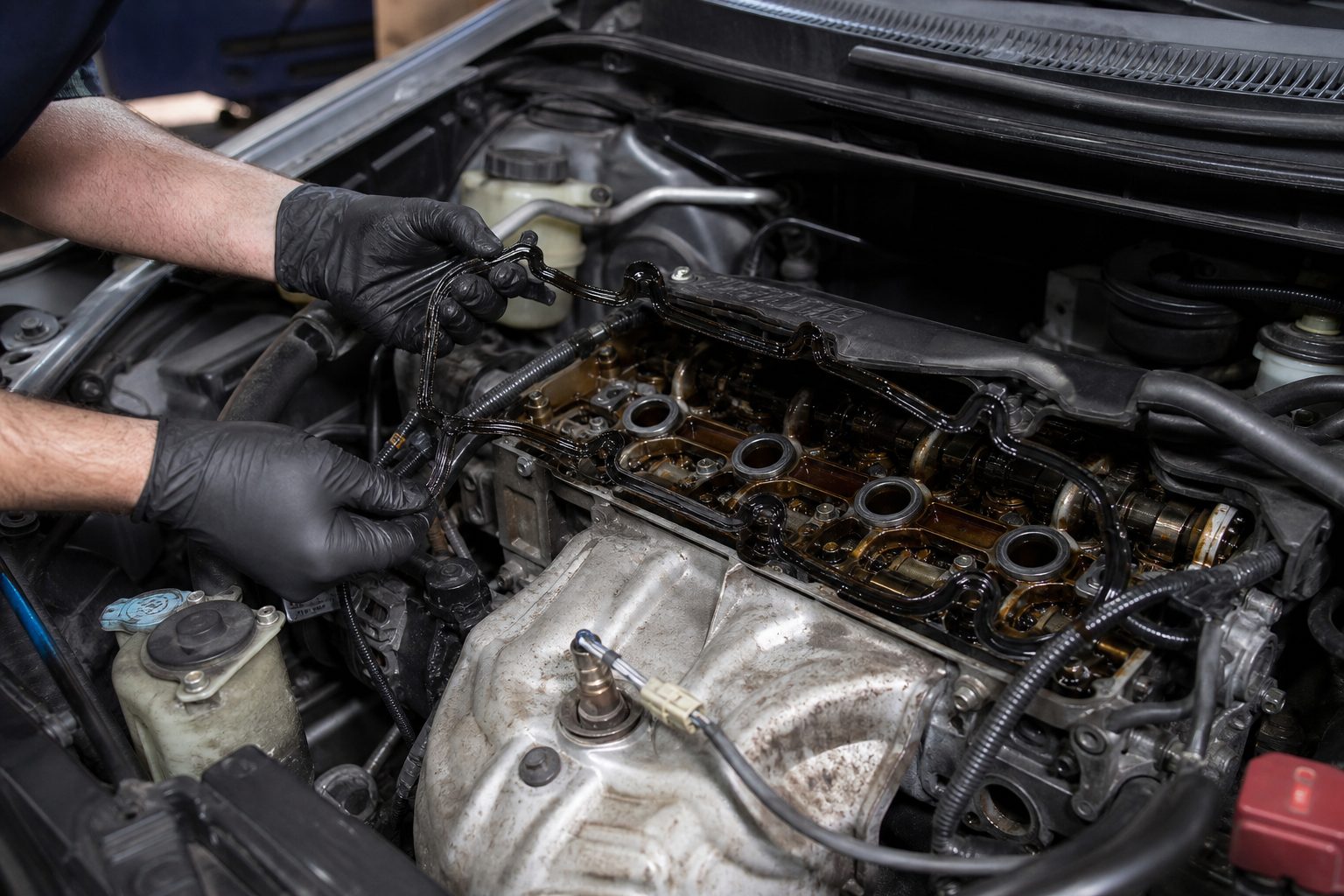
UV dye diagnosis to pinpoint the exact leak source under a black light
Pressure Testing
Pressure testing to confirm seal integrity across the engine
Seals
Gasket or seal replacement using parts rated for the specific vehicle
Cleanup
Contamination cleanup to remove oil from surrounding components
Torque Spec
Torque-to-spec reassembly so fasteners are tightened to the manufacturer's exact specification, not by feel
Verification
Post-repair test drive to verify the repair holds under normal operating conditions
What's Included in Our Oil Leak Repair Service
Leak Source Diagnosis
We inject UV dye into the oil system and run the engine, then use a UV light to trace exactly where oil is escaping before we quote you anything. You get a confirmed source, not a guess.
Gasket and Seal Replacement
Once we know what failed, we replace that specific component using OEM-grade or OEM-equivalent parts. Valve cover gasket replacement, rear main seal repair, oil pan gasket repair, each job gets the correct part for your make and model, not a generic substitute.
Contamination Cleanup
Oil that has been leaking doesn't stay in one place. It coats belts, sensors, and wiring. We clean those components during the repair so a slow drip doesn't turn into a failed sensor or cracked belt two months later.
European Vehicle Expertise
BMW valve cover gaskets, Audi cam chain tensioner seals, Mercedes oil pan leaks, VW rear main seals, these are regular work for us, not occasional jobs. See our dedicated pages for BMW Repair, Audi Repair, and Mercedes Repair if you want more detail on what we cover for each brand.
Domestic and Asian Vehicle Coverage
We handle the full range of domestic vehicles as well, including Lincoln, Cadillac, and Subaru. If it leaks oil, we can fix it.
Post-Repair Verification
Before your car leaves, we bring the engine up to operating temperature, re-inspect the repair area, and confirm oil level. The job isn't done until we've verified it holds under real conditions.
How the Oil Leak Repair Process Works
Most drivers drop off a car not knowing what actually happens next. Here is the sequence, start to finish.
Step 1: Inspection and Diagnosis
The car goes on the lift. If the engine exterior is coated in grime and old oil, we clean it first. A dirty engine hides the actual source. From there, we use UV dye or a pressure test to trace the leak to its confirmed origin point. This is how an engine oil leak diagnosis gets done correctly.
Step 2: Repair Plan and Parts
Before any work starts, we tell you exactly what failed, what the fix requires, and what parts are going in. For European vehicles, that often means a valve cover gasket on a BMW Repair & Service vehicle or a rear main seal on an Audi Repair & Service vehicle. You approve the plan first.
Step 3: The Repair
The failed gasket or seal comes out. Mating surfaces are cleaned so the new part seats properly. The replacement goes in torqued to manufacturer specifications. Adjacent components are reassembled in the correct order.
Step 4: Test and Confirm
We run the engine to full operating temperature. Then we re-inspect the repair area while the engine is hot. Oil level is checked and confirmed before the car leaves the lot. If it is not sealed, it does not leave.
Signs Your Car Has an Oil Leak in Atlanta
Here are the five things most drivers notice first, before any mechanic gets involved. A dark spot in the driveway, a smell after a drive, an oil level that keeps dropping. Catch one of these early and a car oil leak repair stays simple.
Dark Spots or Puddles Under the Car
Fresh oil leaves a slick, dark brown or black stain on concrete. Older oil dries into a crusty ring with a lighter center. Condensation from the A/C drain is clear water and evaporates quickly. If the spot is oily to the touch, it is not condensation.
Burning Oil Smell After Driving
A sharp, acrid smell after you park means oil is dripping onto a hot exhaust manifold or catalytic converter and burning off. That is different from a sweet smell, which points to coolant. If you are unsure which fluid you are dealing with, our coolant services page explains what a coolant leak looks and smells like.
Oil Level Dropping Between Changes
Pull the dipstick two weeks after an oil change. If the level has dropped noticeably and there is no puddle on the ground, the engine has a slow seep or is burning oil internally. No puddle does not mean no leak.
Visible Oil Film on the Engine Exterior
Open the hood and look at the valve cover, oil pan rail, and the rear of the engine block. A greasy dark film in any of those areas is oil that has been seeping and collecting road dust. High-mileage European vehicles are especially prone to this.
Blue-Gray Smoke From the Exhaust
Blue-gray exhaust smoke means oil has reached the combustion chamber, typically through worn valve seals or a failing head gasket. This is no longer just a seal problem. Left alone, it becomes a full engine repair situation.
Why Vehicles Develop Oil Leaks
The honest answer is that most oil leaks are not sudden failures. They are gradual, and catching them early is almost always cheaper than waiting.
Heat Cycling and Seal Fatigue
Heat does real damage to engine seals over time. Rubber gaskets cycle through significant expansion and contraction every time the engine warms up and cools down, year after year.
That repeated stress is what hardens gaskets, robs them of elasticity, and eventually causes them to crack. Corrosion can also pit the metal flanges that oil pan gaskets seal against. Once a flange pits or warps slightly, even a new gasket has a harder time holding.
Age and European Makes
Age compounds everything on BMW Repair & Service vehicles in particular. The N52 and N54 engines common in 3-series and 5-series models from the mid-2000s develop valve cover gasket failures reliably around 80,000 to 100,000 miles, a direct result of heat cycling rather than a design flaw.
Audi Repair & Service work tells a similar story: the longitudinal engine layout in most Audi models puts rear main and cam chain tensioner seals under sustained thermal load, and those seals don't last forever. We've seen firsthand that Volkswagen Repair & Service and Mercedes Repair & Service vehicles from the 2010 to 2016 model years are now hitting the mileage range where these failures become predictable.
Traffic and Driving Habits
Commuters who log heavy miles in traffic face an additional factor. Stop-and-go traffic generates more engine heat cycles per mile than steady highway driving, which means seals wear faster than the calendar suggests.
Fine dirt and grit can also work into undercarriage seals on vehicles driven on unpaved or gravel-edged roads. The combination of heat cycles, age, and driving habits makes engine oil leak diagnosis a more frequent conversation than most drivers expect.
Why Atlanta Drivers Choose Blue Ridge Automotive for Oil Leak Repair
Transparent From the First Inspection
Before any work starts, we show you exactly what we found, where the leak is coming from, and what the repair will cost. No guessing, no surprise add-ons once the car is already apart. Customers keep telling us this is why they come back. You see the problem, you approve the fix, and the repair carries our 24-month, 24,000-mile nationwide warranty.
European and Domestic Expertise Under One Roof
A BMW valve cover gasket needs different tooling and torque specs than a domestic V8 oil pan. We work on both, daily. Subaru owners with head gasket seepage, Lincoln owners with a rear main seal going bad, Volkswagen drivers, Cadillac owners, all of them come through our bays. One shop, the right tools for each make, and technicians who know the difference instead of guessing.
Attentive Service, Confirmed by Customers
We hold a 4.9-star rating across 1,000+ verified reviews. Customers consistently describe us as attentive and honest, and drivers who brought us their car for oil leak repair left knowing exactly what we did and why.








Vehicle Brands We Service
From Asian reliability to American work-ready performance, our ASE-certified technicians service every major make. Pick your brand to see model-specific repair details.

































Our Car Repair Shop Locations
We handle automotive repair across Atlanta and the surrounding communities. If you're close to any of these areas, we can help.
Ready to Stop That Leak for Good?
That stain on your driveway is not going to fix itself. If your oil level is dropping or you caught a dark spot under the car this morning, the next step is simple: bring it in for an oil leak repair diagnosis before a small seal turns into a damaged engine.
Spots on the driveway don't wait. Neither should you. Call us today at (404) 266-1699.
Learn More Before Your Visit
Want to understand the problem before you come in? Our technicians cover the most common questions in 12 Common Engine Problems Identified Through Diagnostics and 7 Car Maintenance Tips to Extend Your Car's Engine Life.
Still have questions? Our auto repair FAQ answers the questions we hear most, and our service areas page shows every neighborhood our four shops serve.
Frequently Asked Questions