
Summer Heat and Your Car AC
You’re sitting in a wall of brake lights, and the air coming out of your vents is lukewarm at best. It’s July. It’s sweltering outside. This is not a minor inconvenience. A failing AC system in stop-and-go traffic is a mechanical problem with a timeline.
In the heat the system never fully rests. Idle-load operation is harder on compressor clutches than steady driving, and heat-cycle fatigue on rubber seals is a primary failure driver we see. Low refrigerant is a symptom, not a root cause. We handle European and domestic vehicles, including BMW, Mercedes, Audi, and Volvo alongside domestic makes. Blue Ridge Automotive - European & Domestic carries a 4.9-star rating across 1,000+ reviews. Schedule your AC repair before the next heat wave arrives.
What Car AC Repair Actually Covers
Most drivers think auto AC repair means topping off refrigerant and calling it done. The honest answer is that a refrigerant recharge is the last step, not the whole job. If the refrigerant is low, something caused that loss. Recharging without finding the source means you’re paying twice within a season.
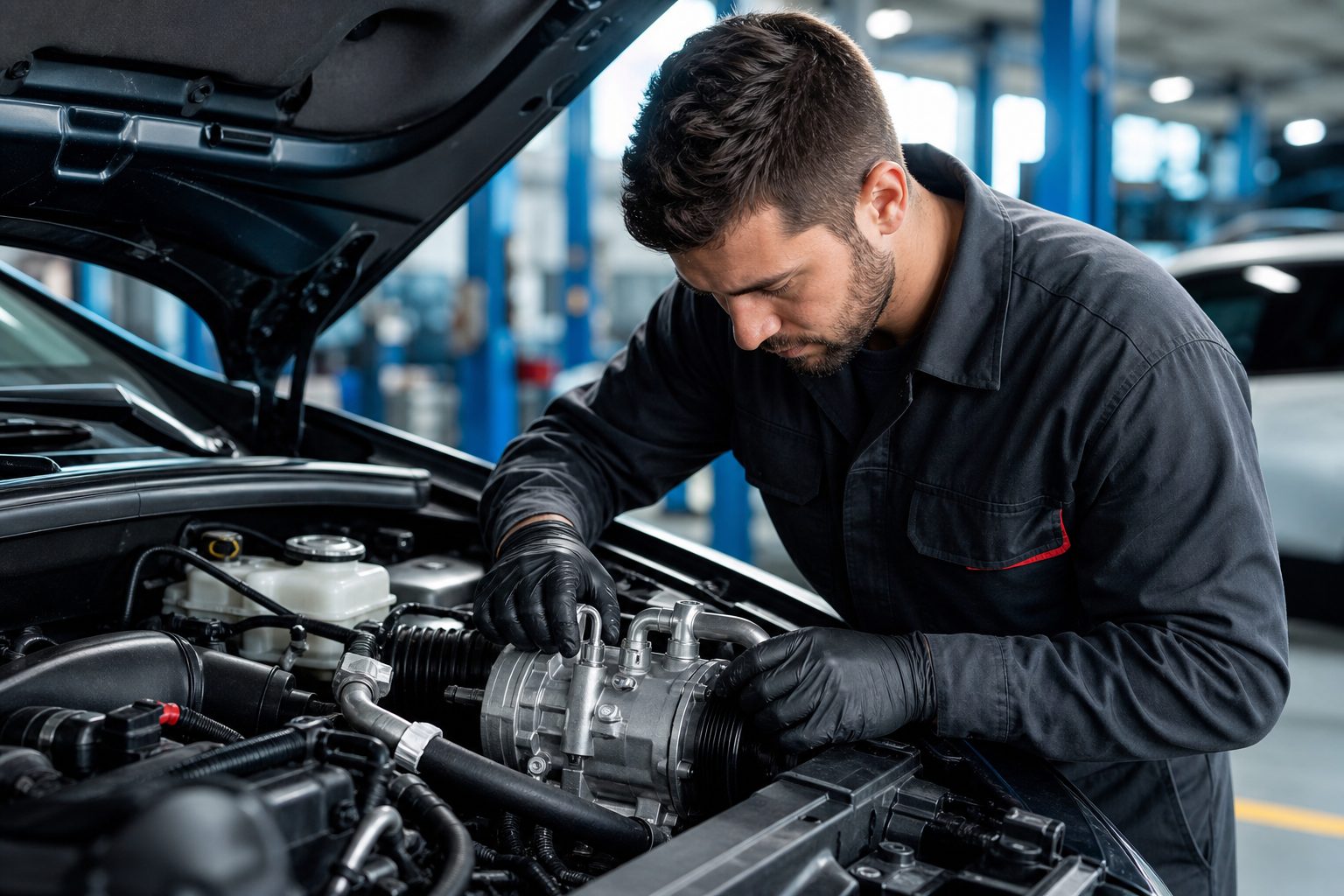
Your car’s AC system is a four-component loop. The compressor pressurizes the refrigerant and pushes it through the system. The condenser, sitting in front of your radiator, releases that heat outside the cabin. The evaporator, inside the dashboard, absorbs heat from the air blowing over it. The expansion valve controls how much refrigerant enters the evaporator at once. Any one of those components can fail independently, and a pressure check alone won’t tell you which one.
A thorough diagnostic covers more than system pressure. Here’s what a complete AC repair evaluation actually includes:
Testing
System pressure check (high and low side readings)
Precision
UV dye leak test to locate refrigerant loss at seals, hose fittings, or the condenser
Mechanical
Compressor clutch inspection (the clutch engages the compressor; if it slips, cooling output drops)
Air Quality
Cabin air filter check for restriction
Sensors
Electrical component testing: blend door actuators, pressure switches, and fan relays
Maintenance
Heating system function check, since the heater core and AC share blower and control components
What’s Included in Our Car AC Repair
An AC diagnostic in our shop isn't a visual glance and a guess. We connect gauges, introduce dye, and test every component in sequence, so we know exactly what failed before we quote you a dime.
Here is what that process covers.
System Pressure and Refrigerant Check
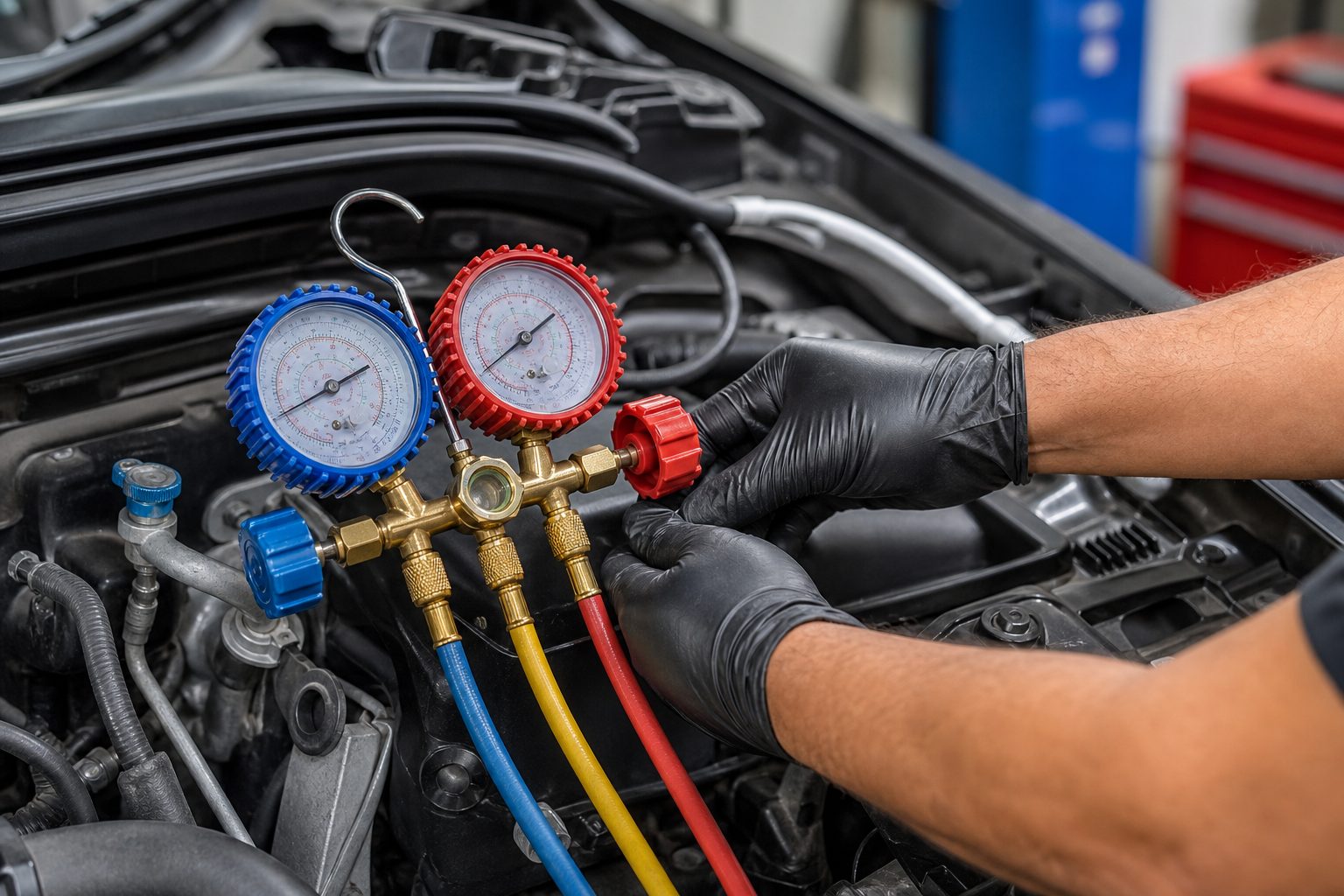
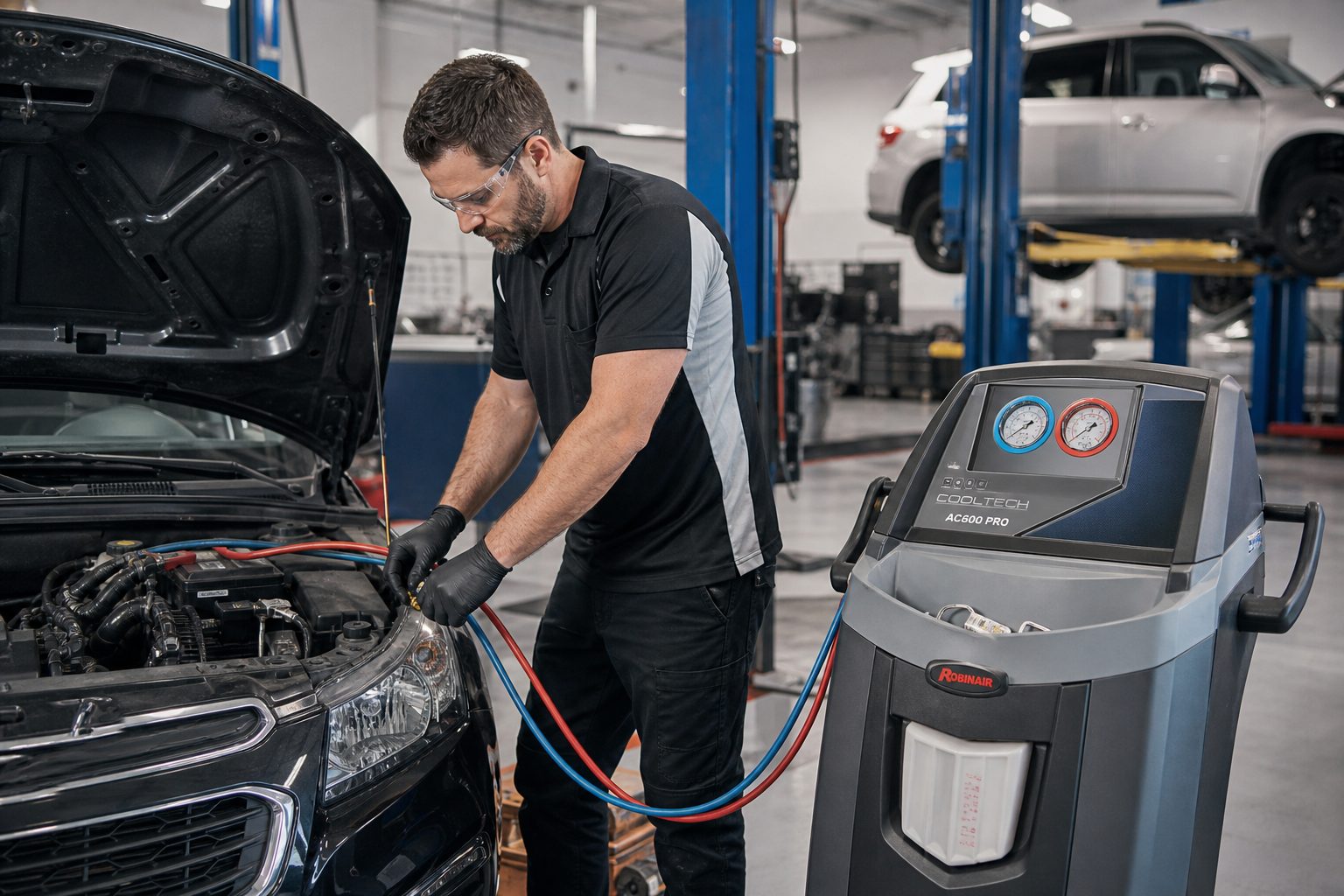
A technician connects manifold gauges to the high-side and low-side service ports. Those readings tell us whether low refrigerant is the root problem or a symptom of something else leaking upstream. Pressure alone does not diagnose a system. It narrows the field.
UV Dye Leak Detection
We introduce UV dye into the system and run it under load. A UV light then traces the exact leak point, whether that is a compressor shaft seal, a hose fitting, or a condenser seam.
Compressor and Clutch Inspection
The compressor clutch is checked for clean engagement. We listen for bearing noise and verify the compressor cycles correctly under load.
Condenser and Evaporator Evaluation
Both heat-exchange components are inspected for physical damage, corrosion, and fin blockage. The condenser sits at the front of the vehicle and takes road debris directly. Corrosion and blockage on the fins reduce its ability to shed heat.
Electrical and Blower Motor Testing
Pressure switches, relays, and blend door actuators are tested before any refrigerant work is recommended. An electrical fault can mimic a refrigerant problem. We rule that out first.
Cabin Air Filter Assessment
A clogged cabin air filter restricts airflow across the evaporator and is one of the most common reasons a system that tests fine still blows weak. Filters clog faster than most drivers expect. Replacing it is part of routine preventative maintenance and costs far less than a misdiagnosed refrigerant service.
How Our AC Repair Process Works
From the moment you pull in to the moment you drive away, every step has a purpose. Here is exactly what happens.
Step 1: You Describe What You're Experiencing
You tell us what you noticed. Weak cooling, poor airflow, a musty smell, the system cycling on and off at idle. That description is not small talk. It tells us where to start the diagnostic and which components to prioritize.
Step 2: Full System Inspection
We run a complete AC diagnostic that covers pressure readings on both the high and low sides, a UV dye leak test to find refrigerant escaping at seals or fittings, compressor clutch engagement, electrical component scan, and cabin filter condition. Every driver gets the same full inspection every time.
Step 3: You Get a Written Estimate and Approve It
Once we know what failed, you get a written estimate covering parts and labor before anything is repaired. Nothing gets added to that order without your approval. If the diagnostic turns up a second problem, the car stops and you get a call. You will not find a line item on your invoice you did not agree to.
Step 4: We Walk You Through What We Found
Before any work begins, we explain what we found in plain English. No shop shorthand. You know exactly what your money is paying for and why each item matters, and which repairs are urgent versus which ones can wait.
Step 5: Post-Repair Verification
After the repair, we run the system under load and verify target vent temperatures are reached. The leak seal is confirmed before your car leaves the bay.
Signs Your Car AC Needs Repair in Atlanta
Most drivers notice something is wrong before they can name it. The air feels less cold than it did last week, or there's a smell that wasn't there before. Here's what each symptom actually means.
Warm Air from the Vents
If your vents are blowing air that isn't cold, a recharge alone probably won't fix it. Air that isn't getting cold points to low refrigerant, a failed compressor, or a blocked condenser. Each of those has a different repair path, which is why diagnosis has to come before anything else.
AC Starts Cold Then Goes Warm
The system cools down fine at startup, then loses it after ten or fifteen minutes of idling. That pattern points to a refrigerant leak that empties the system under sustained load, or a compressor clutch that slips once it heats up. Either way, a recharge will hold for about a day.
Clicking or Grinding Noise Under AC Load
A single click when the AC kicks on is normal clutch engagement. Grinding or rattling that continues while the system runs means the compressor bearings are failing. Left alone, a seized compressor can send debris through the system and cause broader engine damage that costs significantly more to address.
Musty or Moldy Smell from the Vents
The evaporator core stays damp during normal operation. Mold and mildew can grow on that damp surface. The smell coming through your vents is the mold itself, not refrigerant. It will not clear up on its own, and recirculating that air through the cabin is not a solution.
Windows Fogging More Than Usual
Your AC system dehumidifies cabin air as part of normal operation. When the evaporator is failing, moisture stays in the air instead of condensing on the core. Your windows fog faster than they should, especially in stop-and-go traffic. That's a dehumidification failure, not a defrost problem.
Compressor Clutch Not Engaging
Turn the AC on and watch the center disc on the compressor pulley. If the pulley spins but the center disc stays still, the clutch has failed electrically or mechanically. The system cannot pressurize refrigerant without it. This is one symptom you can confirm yourself before you ever call us.
Why Summer Is Hard on Car AC Systems
Sustained load, vibration, and aging seals cause most AC failures we see. Knowing what wears your system down helps you catch problems before they turn into a costly repair.
Sustained Compressor Load
When it is hot your AC compressor runs at near-maximum load for months at a time. Compressor clutches wear faster under that kind of continuous demand. Rubber O-rings and seals dry out and crack from repeated heat cycles, and refrigerant leaks out as the seals age. If you are wondering why your system seems to fail every summer, the honest answer is that it never really gets a rest.
Road Vibration & Stop-and-Go Idling
Vibration adds a second failure mode most drivers do not connect to their AC. Rough pavement and potholes create constant stress on AC hose fittings and condenser mounts. A small fitting leak that costs very little to fix early becomes a full refrigerant loss if you run through a summer ignoring it. We see this pattern regularly after a full season of stop-and-go idling.
Heat-Cycle Fatigue on Seals
Rubber O-rings and seals in the AC system expand and contract every time the system cycles. Over a season of heavy use, that repeated expansion dries the rubber out and creates cracks too small to see. Refrigerant escapes through them slowly. This is a primary failure driver we see, and it is why a system that held pressure fine last fall can be empty by the next summer. If your AC has needed a recharge more than once, the seals are usually the reason, and our coolant services address the thermal management side that works alongside your AC to keep engine temps in range.

Why Atlanta Drivers Choose Blue Ridge Automotive for AC Repair
Drivers keep coming back because the work gets done right the first time, and the explanation always matches the invoice.
European and Domestic AC Service Under One Roof
European car AC repair takes extra know-how. BMW, Mercedes-Benz, Audi, Volvo, and Land Rover use manufacturer-specific refrigerant specs, proprietary electronic climate control modules, and system pressures that require different diagnostic tooling than a domestic truck or sedan. We have that tooling, and our technicians work on these vehicles daily. Drivers with a 5 Series or an E-Class do not need to pay dealership rates to get the job done correctly. See our full BMW repair and service page for more on what that covers.
Transparent, Attentive Service Every Time
We walk through diagnostic findings and costs before any work begins, and nobody here suggests a repair that isn't warranted. That shows up in review after review from drivers who tried other shops first. The same standard applies whether you drive a Land Rover or a Chevrolet.
4.9 Stars Across 1,000+ Reviews
A 4.9 average across 1,000+ reviews is not a marketing number. It reflects drivers who brought in a car that wasn't cooling, got a clear explanation of what failed and why, and left with an AC system that worked. That kind of consistency does not happen by accident. If you want preventative maintenance scheduled alongside your AC repair, we handle that in the same visit.
Your AC Repair Is Covered for Two Years
Most repairs we complete carry a 24-month, 24,000-mile warranty on parts and labor through the PAC network, honored at participating shops nationwide. If the compressor we installed fails while you are three states away in August, you are still covered. We are also RepairPal Certified, which means a third party audited our technician training, customer satisfaction scores, and pricing against what these repairs should actually cost in this market.









Vehicle Brands We Service
From Asian reliability to American work-ready performance, our ASE-certified technicians service every major make. Pick your brand to see model-specific repair details.

































Atlanta Auto AC Repair: Where We Work
We handle automotive repair across Atlanta, with four locations covering the city and its surrounding neighborhoods. Find the shop closest to you below.
Book Your Atlanta AC Repair Today
A slow leak or a worn compressor clutch that feels manageable in spring becomes a real problem once the heat arrives.
We serve drivers from four locations around Metro Atlanta. If your air isn't getting cold, or you just want the system checked before peak heat hits, schedule with us now. A diagnostic in April costs a fraction of a compressor replacement in July.
Don't wait until July to find out your AC is failing. Book your diagnostic now and drive into summer ready. Call us today at (404) 266-1699.
Learn More Before Your Visit
Want to understand the problem before you come in? Our technicians cover the most common questions in The Cabin Air Filter Most Atlanta Drivers Forget to Replace, When a Car AC Compressor Fails in Chamblee, Can It Be Repaired or Does It Need Replacing?, and How Often Do You Have to Recharge Your AC in Your Car?.
Still have questions? Our auto repair FAQ answers the questions we hear most, and our service areas page shows every neighborhood our four shops serve.
Frequently Asked Questions