

Why Atlanta Drivers Come to Blue Ridge for Electrical Diagnosis
A failing alternator, a corroded ground strap, or a module fault buried in the body control system can all produce the same dead-car symptoms, and none of them respond to a new battery. Stop-and-go traffic keeps charging systems under constant load. Heat pushes under-hood temperatures high enough to accelerate battery degradation and crack the insulation on wiring harnesses. The electrical problem you are seeing is often the result, not the cause, which is exactly why a guess-and-replace approach costs drivers money without solving anything.
Blue Ridge Automotive is a full-service car electrical repair shop in Atlanta, rated 4.9 stars across 1,000+ reviews, with a BBB A+ rating and recognition as a Nextdoor Neighborhood Favorite three years running. Our technicians bring decades of combined experience across European, domestic, and Asian platforms, and most electrical repairs we complete are backed by a 24-month/24,000-mile nationwide warranty. That warranty applies to parts and labor, with no geographic fine print.
What Auto Electrical Repair Actually Covers
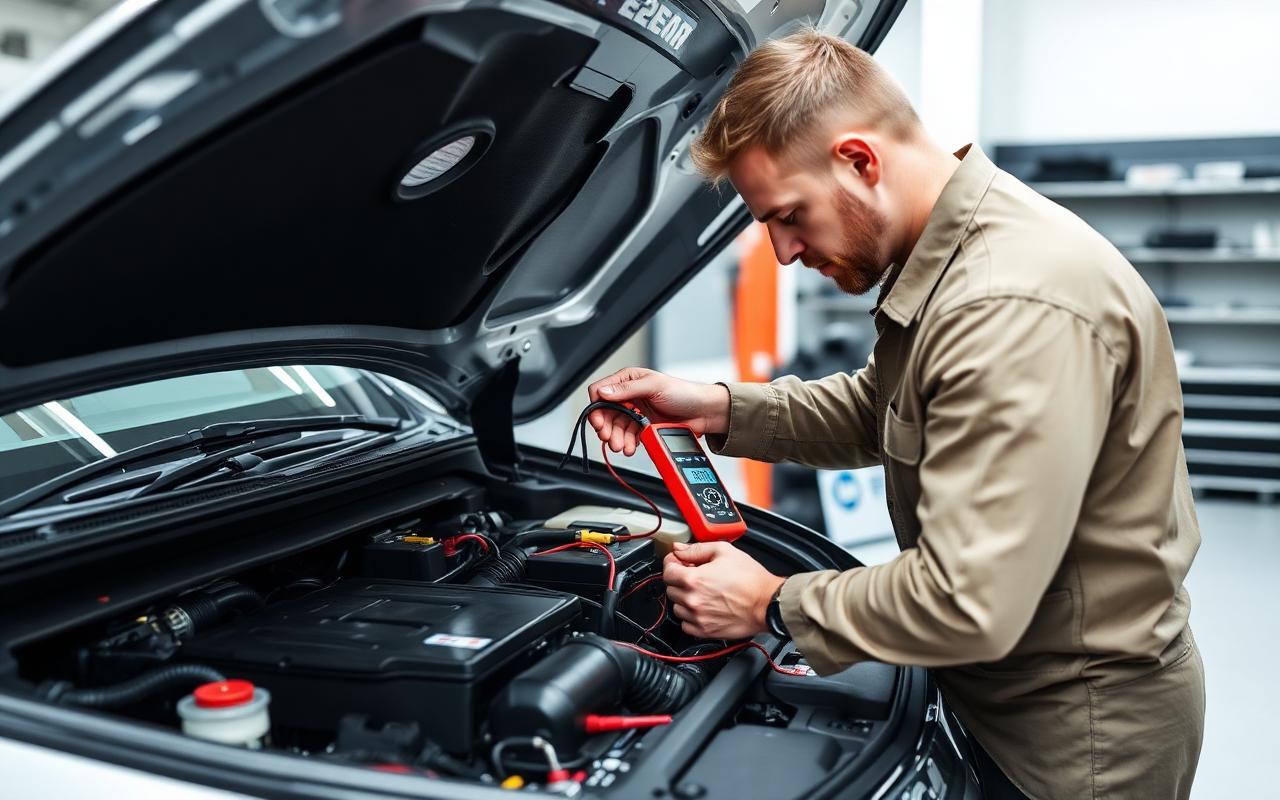
Auto electrical repair covers battery and charging system service, alternator and starter repair, wiring harness diagnosis, fuse box and relay repair, and module-level fault diagnosis. We trace power through the whole vehicle, from the cranking circuit to the wiring buried inside your door panels and firewall, so we find where it is actually failing instead of guessing.
Generic scan tools read generic fault codes. They cannot access the sub-system data that tells you what is actually wrong. Stop paying to replace parts that test fine once removed from the vehicle. A same-day electrical diagnostic gets you a root-cause answer before any work begins.
A full auto electrical repair inspection covers all of the following:
Battery
Battery testing, replacement, and charging system service
Alternator
Alternator output, ripple, and drive-belt inspection
Starter
Starter motor and voltage-drop circuit testing
Wiring
Wiring harness, fuse box, and relay diagnosis
Modules
Module-level fault diagnosis across body and powertrain networks
Fleet & Multi-Platform
Domestic, Asian, European, and fleet vehicle electrical systems
What's Included in Our Auto Electrical Repair Service
We work on domestic, Asian, and European vehicles, including BMW, Mercedes-Benz, Audi, Porsche, Land Rover, and Jaguar. Those platforms use integrated electrical architecture that requires brand-specific diagnostic tools, not a generic code reader. We regularly see drivers who have already paid another shop to replace parts that were never the problem.
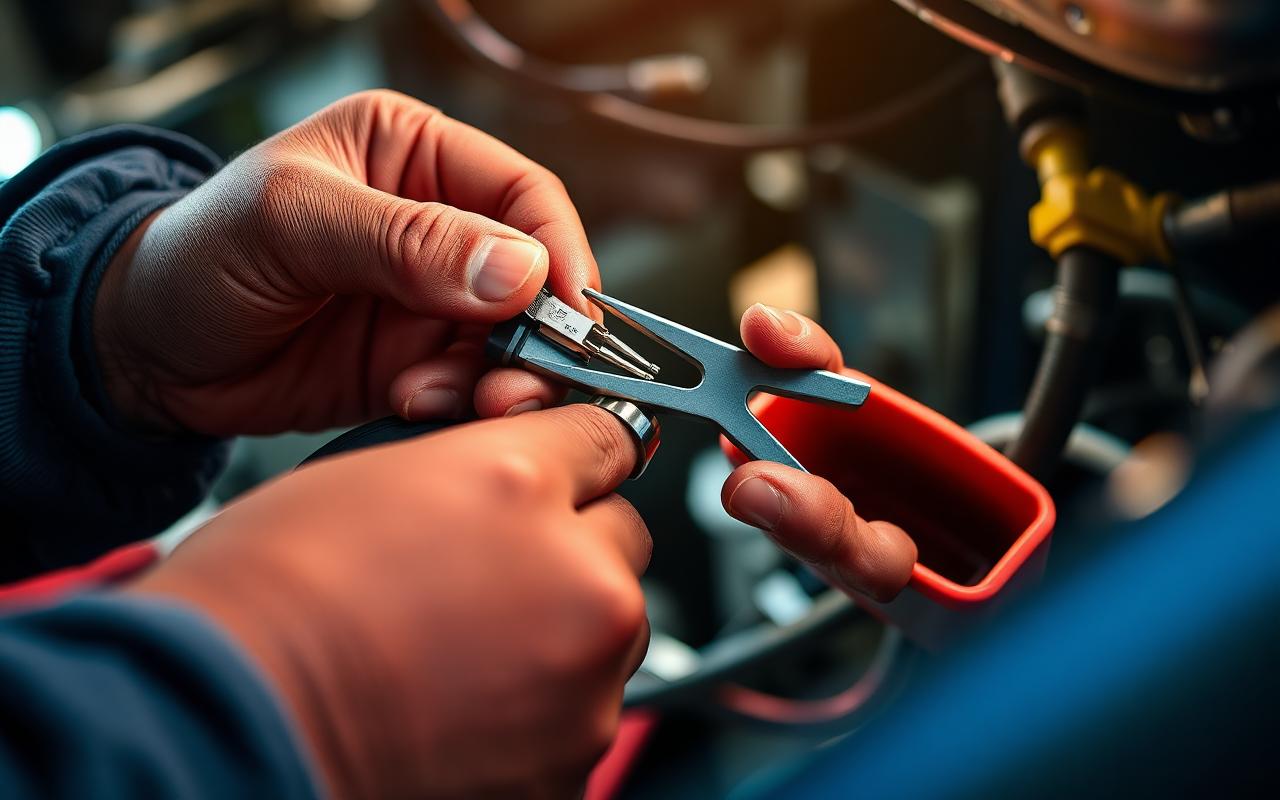
Battery Testing, Replacement, and Charging System Service
A battery in good condition holds a resting voltage of at least 12.4 volts. Under cranking load, it should not drop below 9.6 volts. When it does, you get more than a slow start. A weak battery causes infotainment screens to reset mid-drive, transmission shift errors, and false warning lights across multiple systems because modern vehicles interpret low voltage as a fault signal.
Heat is genuinely hard on batteries. High temperatures accelerate plate sulfation, which is the process where lead sulfate crystals build up inside the battery and permanently reduce its capacity. If your battery is more than three years old and you are seeing random electrical gremlins, a load test is the right first step, not a guess.
A charging system test goes further than a battery test. It checks whether the alternator is producing between 13.8 and 14.7 volts at idle, which is the range needed to keep the battery charged while the engine runs. It also checks the serpentine belt that drives the alternator, because a worn or slipping belt can kill an otherwise healthy alternator by starving it of the mechanical input it needs.
Alternator and Starter Repair
The alternator converts mechanical energy from the engine into DC electricity, which recharges the battery while you drive. When it begins to fail, the battery drains even with the engine running. Watch for a battery warning light, headlights and dash lights that dim or brighten with engine speed, a whining or grinding bearing noise from the front of the engine, and eventually a stall once the battery is depleted. We confirm the diagnosis by measuring output voltage and ripple under load with the alternator on the vehicle, which catches a failing diode pack that a static voltage reading would miss. Stop-and-go traffic puts repeated short-trip load on alternators that never get a chance to fully recharge the battery between stops.
The starter motor draws 150 to 250 amps from the battery to spin the engine fast enough to fire. A failing starter usually announces itself with a single click, a rapid clicking, or a complete no-crank condition. We perform a voltage-drop test across the starter circuit and ground path before condemning the motor itself, because corroded battery cables and a weak battery both mimic starter failure. That extra step is why our customers do not pay twice for the same no-start.
Wiring Harness, Fuse Box, and Relay Diagnosis
Wiring faults are the hardest electrical problems to find. Corroded connectors, chafed insulation, and broken chassis grounds do not throw a single clean fault code. A single bad ground near the firewall can cause both a non-functional window motor and an ABS warning light at the same time, because multiple systems share that ground path. Vehicles that run on rough roads and construction sites often arrive with intermittent faults that only appear over bumps, a classic sign of a chafed harness or a loose ground we trace with a wiggle test and a multimeter.
European vehicles add another layer of complexity. BMW, Mercedes-Benz, and Audi platforms use CAN bus and LIN bus multiplex wiring, which is a networked communication system where modules talk to each other rather than running on simple point-to-point circuits. Generic OBD-II readers cannot access manufacturer-specific fault codes on these platforms. Our auto diagnostics service uses OEM-level scan tools to read the full fault memory on European vehicles, which is the only honest way to find what is actually causing the problem.
Why European Electrical Systems Require Specialist Tools
BMW uses ISTA (Integrated Service Technical Application) for full-system diagnostics. Without ISTA, you can pull a fault code, but you cannot access battery management system registration, adaptive headlight module calibration, or VANOS solenoid sub-data. That matters because replacing a battery on a BMW without registering it through ISTA causes the IBS (Intelligent Battery Sensor) to misread charge levels immediately. The car thinks the battery is old when it is brand new.
Mercedes-Benz requires XENTRY/DAS (Diagnostic Assistance System) for deep module access. Audi and Volkswagen use VCDS (VAG-COM Diagnostic System). Shops without these tools often replace parts that test fine once removed from the vehicle. Our European auto repair in Atlanta work uses manufacturer-level diagnostic access, not generic OBD-II readers. That is the difference between fixing the fault and chasing it.
Common Electrical Faults by Make
BMW drivers most often come in with IBS faults after a battery swap done without coding, DSC (Dynamic Stability Control) module failures, and N54/N55 VANOS solenoid electrical faults that trigger multiple check engine codes at once. Each of these looks different on a generic scanner than it does inside ISTA.
Mercedes-Benz faults frequently trace back to the SAM module (Signal Acquisition Module), which controls a large number of electrical functions simultaneously. A failing SAM causes seemingly unrelated gremlins across the car. W204 and W212 models are especially prone to front SAM corrosion from windshield leaks. ME-SFI engine control module faults are also common and require XENTRY to diagnose correctly.
Audi owners typically see MMI control unit failures, TPMS module communication errors, and Haldex AWD controller electrical faults. Porsche faults often involve the PCM (Porsche Communication Management) module or PDK transmission control unit electrical issues. We also service Land Rover and Jaguar electrical systems. If your European vehicle needs thorough electrical diagnosis, our team handling European vehicle repair for Atlanta drivers has the tools to do it right the first time. Call our Buckhead location at (404) 266-1699 or our Chamblee shop at (770) 216-8474 to schedule.
Auto Electrical Repair by Vehicle Type and Situation
The electrical faults we see, and how we trace them, depend heavily on what's in your driveway.
Domestic Vehicles: Ford, GM, and Chrysler Electrical Systems
A GM truck owner in Marietta brings in a vehicle with three warning lights on the dash and no clear pattern to when they appear. The natural assumption is a bad sensor. More often, the culprit is a BCM fault, where the Body Control Module, the central computer managing lighting, windows, and accessory circuits, starts sending false signals across the network. Generic OBD-II readers miss this entirely.
Ford vehicles develop PATS faults, where the Passive Anti-Theft System fails to recognize the key and the engine simply will not crank. Chrysler's TIPM, the Totally Integrated Power Module, is known for random relay behavior: fuel pumps cycling on their own, horns activating without input, windows refusing to respond. Diagnosing any of these correctly requires manufacturer-specific scan tools that read GM-LAN, Ford MS-CAN, and Chrysler CAN-C protocols, not just a generic reader. Our domestic auto repair services in Atlanta cover the full range of these electrical faults across Ford, GM, and Chrysler platforms.
Asian Vehicles: Toyota, Honda, Acura, and Hyundai Electrical Systems
A Decatur commuter driving a high-mileage Toyota notices the smart key system becoming intermittent, sometimes recognizing the fob, sometimes not. At higher mileage, Toyota and Lexus smart key modules develop communication faults that read as key fob battery issues but are actually module failures. Honda and Acura vehicles develop SRS module errors, where the airbag control unit loses communication after even a minor collision, triggering a persistent warning light that will not clear without module-level diagnosis.
One customer brought in an Acura RDX at 115,000 miles with electrical faults other shops had not been able to trace. We diagnosed and resolved the issue correctly the first time. Hyundai and Kia hybrids develop GDS faults, errors in the Global Diagnostic System that manages the hybrid battery, which require brand-specific software to read accurately. Our Asian auto repair team handles these systems with the correct tools for each platform.
Fleet Vehicles: Keeping Commercial Vehicles on the Road
A single delivery van in Chamblee with a failing alternator does not just inconvenience one driver. It stops a route. Fleet vehicles accumulate electrical wear faster than personal vehicles because of higher annual mileage, added accessory loads from upfitter wiring, GPS units, and aftermarket lighting, and maintenance that gets deferred when schedules are tight.
Our fleet services in Atlanta include scheduled battery load testing, alternator output checks, and upfitter wiring inspections, with priority scheduling built around your operation's hours. Marietta and Chamblee fleets tied to construction and delivery run hard, and we structure our vehicle electrical service in Atlanta around minimizing your downtime, not ours.
Signs Your Vehicle Needs Electrical Repair in Atlanta
Most electrical failures give you warning before they leave you stranded. Here are six signs you should not ignore.
Battery Warning Light or Dimming Headlights
Watch for a battery warning light, headlights and dash lights that dim or brighten with engine speed, a whining or grinding bearing noise from the front of the engine, and eventually a stall once the battery is depleted, all signs the alternator is starting to fail.
Repeated Clicking or a No-Crank Condition
A failing starter usually announces itself with a single click, a rapid clicking, or a complete no-crank condition. A voltage-drop test across the starter circuit and ground path rules out corroded battery cables before the motor itself gets condemned.
Intermittent Faults That Only Show Up Over Bumps
A single bad ground near the firewall can cause both a non-functional window motor and an ABS warning light at the same time. Intermittent faults that only appear over bumps are a classic sign of a chafed harness or a loose ground.
Infotainment Resets and False Warning Lights
A weak battery causes infotainment screens to reset mid-drive, transmission shift errors, and false warning lights across multiple systems because modern vehicles interpret low voltage as a fault signal.
Random Relay Behavior
Fuel pumps cycling on their own, horns activating without input, and windows refusing to respond point to a power distribution module or relay fault, not a single failed part.
Smart Key or Module Communication Errors
A smart key system that intermittently fails to recognize the fob, or an SRS and airbag warning light that will not clear, points to a module-level communication fault rather than a simple part failure.
What Wears Down Vehicle Electrical Systems
Stop-and-go traffic keeps charging systems under constant load, and heat pushes under-hood temperatures high enough to accelerate battery degradation and crack the insulation on wiring harnesses.
Heat Accelerates Battery Failure
Heat is genuinely hard on batteries. High temperatures accelerate plate sulfation, which is the process where lead sulfate crystals build up inside the battery and permanently reduce its capacity.
Stop-and-Go Traffic Strains Charging Systems
Buckhead's stop-and-go traffic on Peachtree Road puts repeated short-trip load on alternators that never get a chance to fully recharge the battery between stops, the kind of driving pattern that wears down a marginal charging system fast.
Rough Roads Stress Wiring and Grounds
Vehicles that run on rough roads and construction sites often arrive with intermittent faults that only appear over bumps, a classic sign of a chafed harness or a loose ground we trace with a wiggle test and a multimeter.
High Mileage Compounds Electrical Wear
At higher mileage, smart key modules, SRS control units, and body control modules develop communication faults that read as simple part failures but are actually module-level issues requiring brand-specific diagnostic software to trace correctly.

Why Atlanta Drivers Choose Blue Ridge Automotive for Electrical Repair
Drivers keep coming back because the diagnosis is thorough and the explanation matches the invoice.
BBB A+ Rating & Four Years as a Nextdoor Neighborhood Favorite
Neighbors vote for this one themselves. It is not something a shop can buy or campaign for. We have earned it since our founding, which tells you the same drivers who vote keep walking back through our door. In tight-knit Atlanta neighborhoods, that kind of word of mouth means more than any ad ever could.
4.9 Stars Across 1,000+ Reviews: What Customers Actually Say
A couple of great months can skew a rating. Over a thousand reviews cannot. Read through ours and the same themes keep showing up: quick turnaround, fair pricing, and clear communication from people who actually explain what is going on with your car. That consistency is not an accident. It is what happens when the same trusted faces greet you visit after visit.
Transparent Pricing and Upfront Estimates
You get a written estimate before we touch your car, and nothing gets added without your okay. That is just how we operate, not a line we trot out to win you over. It is part of why an independent shop like ours often costs less than a dealership: lower overhead and no quota pushing you toward extra work. If an inspection turns up a second issue, it shows up as its own line with its own number, never as work already done.
24-Month / 24,000-Mile Nationwide Warranty
Most of our repairs carry a 24-month, 24,000-mile warranty on parts and labor, nationwide. Compare that to the 30 days a lot of quick-lube chains offer and it is not close. Travel a lot or move across the country? The coverage follows you to participating shops wherever you land. If something we fixed needs another look, it is covered whether you are back in one of our bays or hundreds of miles away.
Our Services
 Oil Change
 Preventative Maintenance
 Wheel Alignment
 Brake Repair
 Engine Repair
 Transmission Repair
 Steering & Suspension Repair
 Exhaust System Repair
 Auto DiagnosticsEuropean Auto RepairAsian Auto RepairDomestic Auto RepairFleet Services
Vehicles We Service by Make
Each manufacturer designs vehicles with distinct engineering specifications and service requirements. Our technicians carry factory-level knowledge for Asian, Domestic, and European makes, allowing us to perform repairs to manufacturer standards.
































Vehicle Brands We Service
From Asian reliability to American work-ready performance, our ASE-certified technicians service every major make. Pick your brand to see model-specific repair details.

Atlanta Metro Communities We Serve
Four full-service shops across Metro Atlanta, in Buckhead, Chamblee, Decatur, and Marietta. Walk into any of them and you get the same capabilities and the same standards, so pick whichever one is on your way.
Ready to Get Started with Blue Ridge Automotive - European & Domestic?
Your car's electrical system is not something to guess at. Bring it to one of our four Atlanta-area locations in Buckhead, Chamblee, Decatur, or Marietta, and our team will diagnose the root cause before recommending any repair. Most electrical repairs we complete are backed by a 24-month/24,000-mile nationwide warranty. Call the location nearest you: Buckhead at (404) 266-1699, Chamblee at (770) 216-8474, Decatur at (404) 549-9424, or Marietta at (770) 426-4220. Our Chamblee shop is located at 3733 N Peachtree Rd, Chamblee, GA 30341.
Frequently Asked Questions