
November 5, 2026
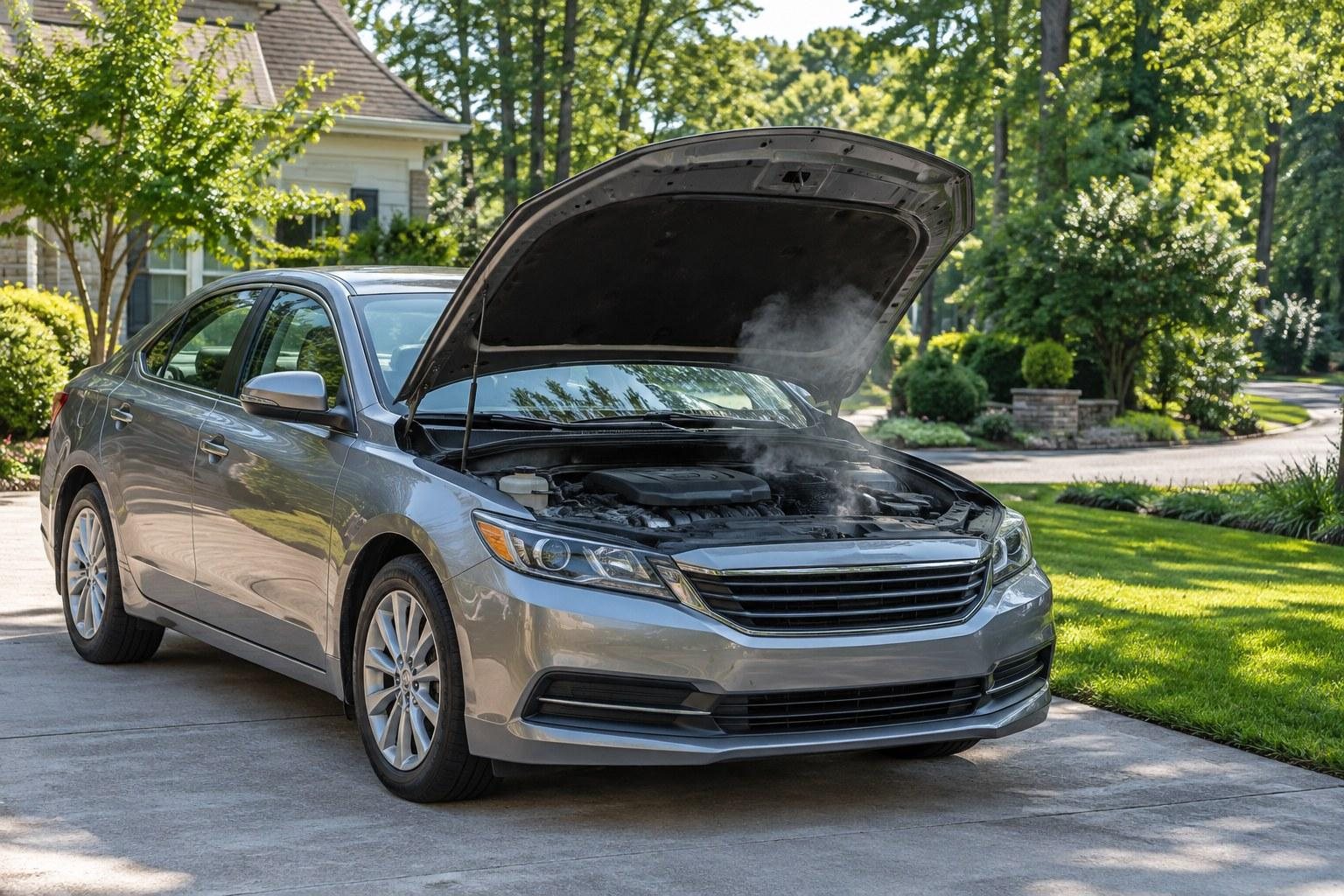
Smelling something hot and strange on your drive home? Let us sniff out the cause before it turns into a bigger repair.
Key Takeaways
- Different burning odors point to different problems, so describing the smell accurately helps our technicians find the cause faster.
- A sharp acrid smell of burning oil usually means oil is leaking onto a hot exhaust part, which can become a fire risk if ignored.
- A sweet, syrupy smell through the vents often signals a coolant leak, sometimes from the heater core inside the cabin.
- Burning plastic or electrical odors, especially with smoke, mean you should pull over, shut the engine off and get everyone out of the vehicle.
- Heat and stop-and-go traffic push engines, brakes and belts harder, so slow leaks and worn parts often show up as odors first.
Picture it. You are sitting in traffic on Peachtree Road near Lenox, the AC is running hard, and a hot, sharp smell starts drifting through the vents. You glance at the dashboard. No warning lights. The temperature gauge looks normal. So is it something serious, or just the car ahead of you?
Sometimes it really is the vehicle in front of you, because your fresh air intake pulls in whatever is outside. But when the smell follows you from one street to the next, keeps coming back, or gets stronger when you stop, the source is almost always your own car. The good news is that each type of odor has a short list of likely causes. Once you know what to listen for (and sniff for), you can make a smarter call about whether to keep driving, head straight to a shop, or pull over right now.
Why a Burning Smell From Your Car Should Never Be Ignored
Modern vehicles are packed with hot parts sitting inches away from fluids, rubber and plastic. Exhaust manifolds and catalytic converters run hot enough to ignite oil, transmission fluid and other fluids that drip onto them. A small leak that only smells a little today can soak into insulation and wiring over time.
The National Highway Traffic Safety Administration (NHTSA) publishes vehicle safety recalls, including some for fire and wiring risks. You can check whether your vehicle has an open recall on the NHTSA recall lookup using your VIN. It takes about a minute and is worth doing before any shop visit.
Smell Plus Smoke Is a Different Situation
A faint odor that fades is a reason to schedule an inspection. Visible smoke from under the hood, flames, or a smell that grows quickly is a reason to stop. Pull over somewhere safe, turn off the engine, get everyone out and away from the vehicle, and call 911 if you see flames or heavy smoke. Do not open the hood if you suspect a fire, because the rush of fresh air can feed it.
Why Heat and Stop-and-Go Driving Bring These Smells Out
Hot weather and heavy traffic mean engines idle and creep for long periods with less cooling airflow. That combination is tough on vehicles stuck in stop-and-go traffic. Brakes work harder on hilly routes, rubber belts and hoses age faster with heat, and leaves and debris can collect around the cowl and engine bay. Many of these problems show up as odors before they turn into breakdowns.
Matching the Smell to the Likely Cause
When you call us, the most useful thing you can tell us is what the smell is like and when it happens. Use the chart below as a starting point.
| What It Smells Like | Most Likely Source | How Urgent |
|---|---|---|
| Sharp, acrid burning oil | Oil leaking onto exhaust, valve cover or oil filter gasket leak, spill after an oil change | Schedule soon; stop if you see smoke |
| Sweet, syrupy, like maple syrup | Coolant leak from a hose, radiator, water pump or heater core | Soon; stop if the temperature gauge climbs |
| Burning rubber | Slipping or damaged drive belt, a hose touching a hot part, debris on the exhaust | Soon |
| Burning plastic or electrical | Shorted wiring, failing blower motor or resistor, melted connector | High; pull over if it is strong or smoky |
| Hot, metallic or chemical after braking | Overheated brakes, sticking caliper, parking brake left on | High if one wheel is very hot |
| Burnt toast or burning carpet with a manual | Slipping or overheated clutch | Moderate |
| Rotten eggs or sulfur | Catalytic converter trouble or rich fuel mixture; sometimes an overcharged battery | Moderate to high |
| Raw gasoline | Fuel leak, loose gas cap, leaking injector or fuel line | High; avoid sparks and get it checked right away |
Where You Notice It Matters Too
A smell that only comes through the vents when the heater or AC runs often points toward the HVAC system or something near the cowl, where fresh air enters. A smell you notice mostly when you step out of the car and walk past the front end usually comes from the engine bay. A smell strongest near one wheel after driving downhill points toward the brakes.
Burning Oil Smells and What They Usually Mean
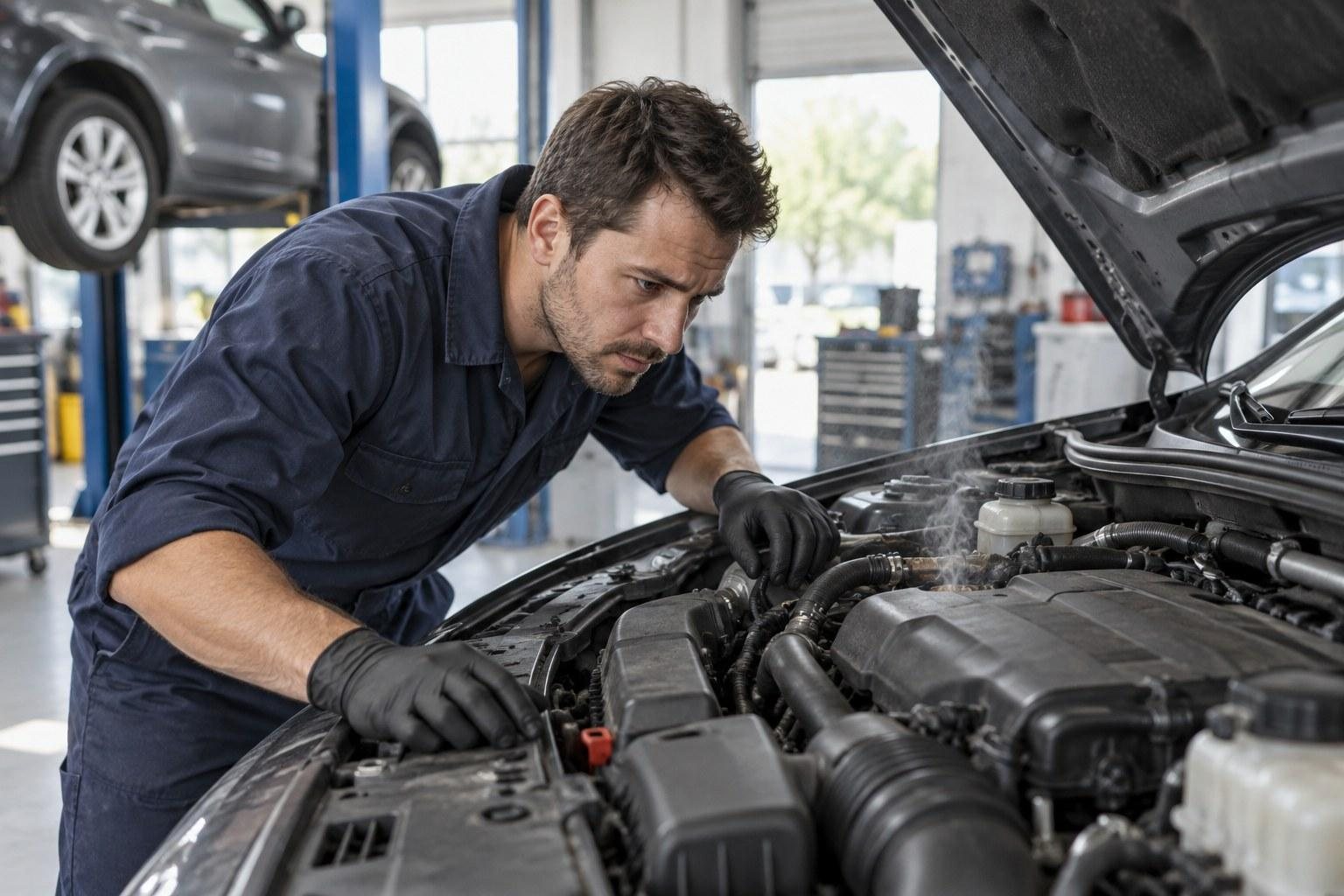
Burning oil is one of the most common odors drivers notice. It is sharp, heavy and a little smoky, and you may notice a thin haze from under the hood at stoplights.
Valve Cover and Oil Pan Gasket Leaks
Gaskets harden and shrink with age and heat cycles. On many engines the valve cover sits right above the exhaust manifold, so even a slow seep drips onto metal hot enough to make it smoke. Our oil leak repair service starts by cleaning the area and finding the actual source, because oil travels and the wet spot is not always where the leak begins.
Oil Spilled During an Oil Change
If the smell starts right after an oil change and fades within a day or two, a little spilled oil burning off is a common and harmless cause. If it lingers, check for a loose drain plug, a double gasket on the filter or a cap left loose. Any good shop doing oil change services should be happy to recheck its work.
Turbocharged and European Engines
Many BMW, Audi, Volkswagen and Mercedes engines run turbos and pack a lot into a tight engine bay. Oil leaks from turbo feed lines, oil filter housings and valve covers are well known on several of these designs. If you drive a German vehicle, our European auto repair team knows where to look first.
Sweet Smells, Rubber and Plastic Through the Vents
When a burning smell from car vents is the complaint, the source is often coolant, a belt or something electrical. Each one needs a different response.
Sweet Coolant Odor
Coolant (antifreeze) smells sweet, almost like syrup. If you notice it inside the cabin, sometimes with a greasy film on the inside of the windshield or damp carpet on the passenger side, the heater core may be leaking. Under the hood, look for colored crust around hose clamps, the radiator or the reservoir. Coolant is toxic to people and pets, so wipe up puddles in your driveway. Never open the radiator cap or reservoir on a hot engine, because the pressurized coolant can spray and cause severe burns. Our coolant services include pressure testing to find small leaks.
Burning Rubber
A slipping serpentine belt, a seized pulley or AC compressor clutch, or a hose rubbing on a hot part can all create a rubber smell. Sometimes it is simply a plastic bag or road debris picked up while driving and stuck to the exhaust. A squeal at startup along with the smell points strongly toward the belt drive.
Burning Plastic and Electrical Smells
This is the one to take most seriously. A melting wire smells sharp and chemical. Common sources include a failing blower motor or blower resistor, an overloaded aftermarket accessory, a corroded connector or a short in the wiring harness. If your fan only works at certain speeds and you smell something hot from the vents, the blower circuit is a strong suspect. If the smell is strong, pull over, turn off the car and get out. Our car diagnostic service can trace electrical faults without guesswork.
Musty Smells Are Usually a Different Problem
A damp, moldy odor when you first turn on the AC is not a burning smell, and it is usually not dangerous. It often points to moisture on the evaporator or a clogged filter. Our post on the cabin air filter Atlanta drivers forget explains that one in detail.
Not sure which smell you are dealing with? Bring it in and we will find the source and explain it in plain English.
Brake, Clutch and Exhaust Odors
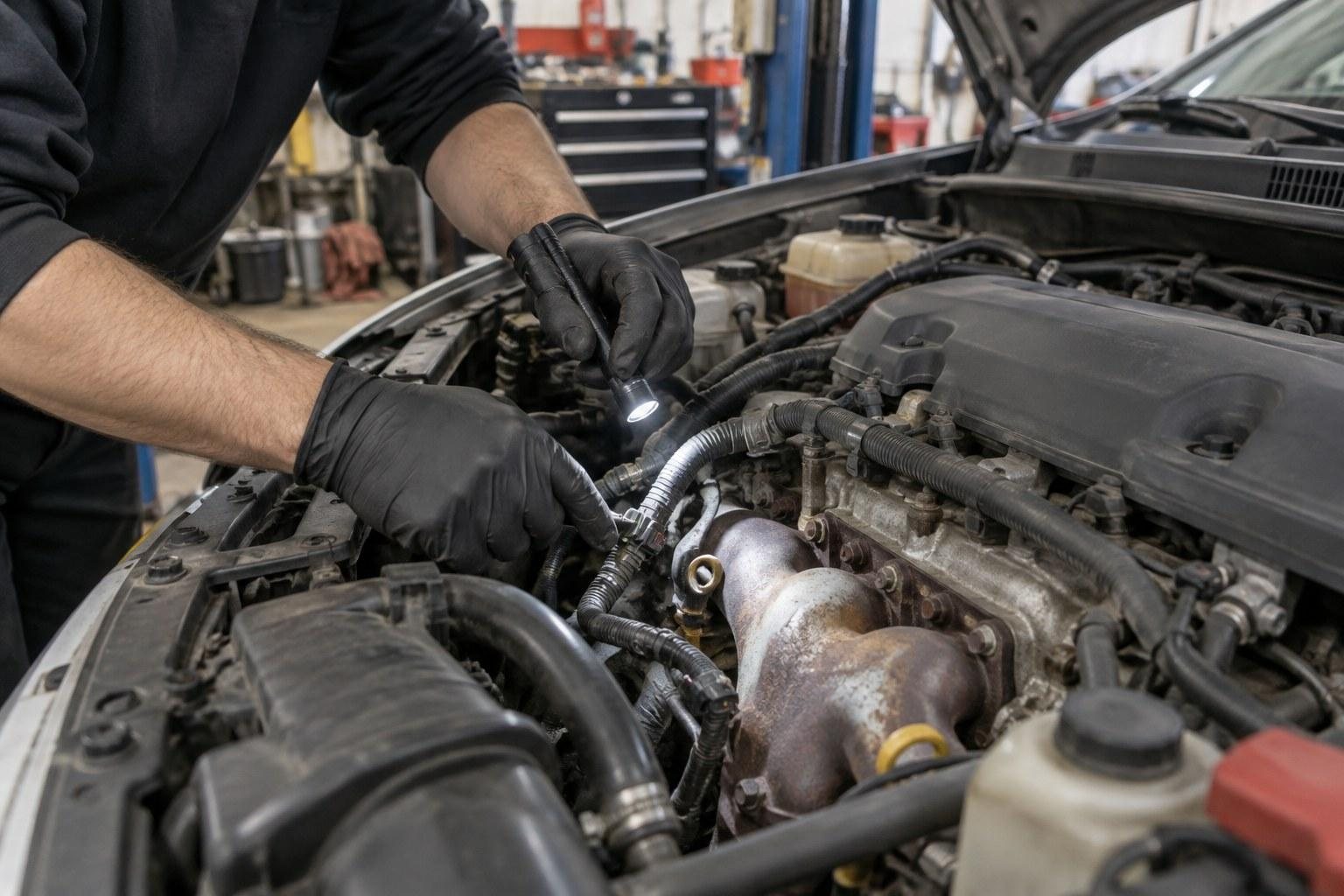
Some burning smells come from parts that are working too hard rather than leaking.
Overheated or Dragging Brakes
Hot brakes have a sharp, metallic, chemical smell. After a long downhill run or heavy braking, a brief odor can be normal. A smell that shows up on flat roads, a car that pulls to one side, or one wheel that feels much hotter than the others usually means a caliper is sticking or the parking brake is partially engaged. That wears pads and rotors fast and can reduce braking performance. Have our brake services team check it soon.
Slipping Clutch
Manual transmission drivers know the burnt smell of a clutch after a hill start. If it happens on level ground or the engine revs climb without the car speeding up, the clutch may be wearing out.
Rotten Egg and Exhaust Smells
A sulfur smell often relates to the catalytic converter or the engine running too rich. Exhaust fumes inside the cabin are a carbon monoxide concern. If you smell exhaust inside, pull over when it is safe, turn off the engine and get out of the car, then have the system checked through our car exhaust services.
What to Do When You Notice a Burning Smell
A calm, simple routine keeps you safe and helps us diagnose the problem faster.
Step One, Check Your Gauges and Surroundings
Look at the temperature gauge and warning lights. Notice whether you see smoke and where it is coming from. If the temperature is climbing or there is smoke, pull over as soon as it is safe, ideally off the shoulder of the highway and away from traffic.
Step Two, Shut It Down Safely
Turn off the engine. If there is smoke or flame, get everyone out, move well away, and call 911. If there is no smoke, let the engine cool completely before touching anything under the hood.
Step Three, Take Notes
Write down what the smell was like, when it started, whether the heater or AC was on, and whether you saw drips under the car. A quick photo of any puddle helps. These details save diagnostic time.
Step Four, Get It Inspected
Even when the smell fades, the cause usually does not fix itself. Regular maintenance and early attention to warning signs help prevent roadside breakdowns. The cost of a repair depends on your vehicle and what we find, and we go over the cost with you before any work begins.
Ready to get that smell checked? Our Buckhead technicians will track down the source and explain what they find.
Why Atlanta Drivers Trust Blue Ridge Automotive - European & Domestic for Burning Smell Diagnosis
Finding the source of an odor takes more than a quick look. It means lifting the car, cleaning suspect areas, checking pressure in the cooling system, and testing electrical circuits when needed. Our technicians work on European, Asian and domestic vehicles every day, so we know the common leak points on everything from a Honda commuter to a Range Rover.
Atlanta drivers have given us a 4.9-star rating on Google, and we keep it by explaining what we found in plain English, showing you the problem, and going over the cost with you before any work begins. Our Buckhead shop at 3190 Roswell Rd NW is open Monday through Friday from 8AM to 5PM.
Frequently Asked Questions
Is it safe to drive with a burning smell?
It depends on the smell. A brief odor after an oil change or heavy braking is usually not urgent. A strong electrical or plastic smell, smoke, a climbing temperature gauge or raw fuel odor means you should pull over, turn off the engine and get the car inspected before driving further. When in doubt, stop and call for help.
Why does my car smell like burning when the heater is on?
The first time you use the heat each fall, dust burning off the heater core and ducts can cause a short-lived smell. If it lasts more than a few minutes, smells sweet, or comes with fog on the windshield, the heater core may be leaking coolant. A hot plastic smell can point to a failing blower motor or resistor.
Can a new car smell like burning?
Yes. New vehicles often have protective coatings and residue on the exhaust that burn off during the first several hundred miles. The smell should fade steadily. If it gets stronger, comes with smoke, or appears suddenly after the break-in period, have the vehicle checked, and look up open recalls with your VIN.
What does burning oil smell like compared to coolant?
Burning oil smells sharp, heavy and smoky, a little like a hot frying pan. Coolant smells sweet, almost like syrup or candy. Oil leaks usually leave dark brown or black drips. Coolant drips are often green, orange, pink or blue and feel slippery. Both deserve attention, but coolant leaks can also lead to overheating.
Why do I smell burning after driving on the highway?
Highway speeds and hot weather raise engine and exhaust temperatures, so slow leaks onto hot parts become easier to smell when you stop. Dragging brakes also heat up over long drives. If the smell shows up after every highway trip, a leak or a sticking caliper is a likely cause worth checking.
How do you find the source of a burning smell?
We start with your description, then inspect the engine bay, underside, brakes and HVAC system. We may clean areas to watch for fresh leaks, pressure test the cooling system, and scan for trouble codes or test electrical circuits. Once we know the cause, we explain it and go over the cost with you before any work begins.
Catching a Burning Smell Before It Becomes a Bigger Repair
A burning smell from car vents or the engine is your vehicle asking for attention, and catching it early is usually simpler and safer than waiting. Our Buckhead technicians can find the source and help you get back on the road with confidence.
Ready to Get Started with Blue Ridge Automotive - European & Domestic?
If something smells hot, sweet, smoky or electrical, don't wait for it to get worse. Our Buckhead team will track down the source, explain what we find, and go over the cost with you before any work begins.
Visit Blue Ridge Automotive - European & Domestic at 3190 Roswell Rd NW, Atlanta, GA 30305, or call (404) 266-1699 today to schedule your inspection.
Need a hand with this repair?
Our ASE-certified technicians serve Buckhead, Chamblee, Decatur, and Marietta — backed by a 24,000-mile, 24-month nationwide warranty on parts and labor.