

What Is a Radiator Flush and Why Do Chamblee Cars Need One?
Sharing this:
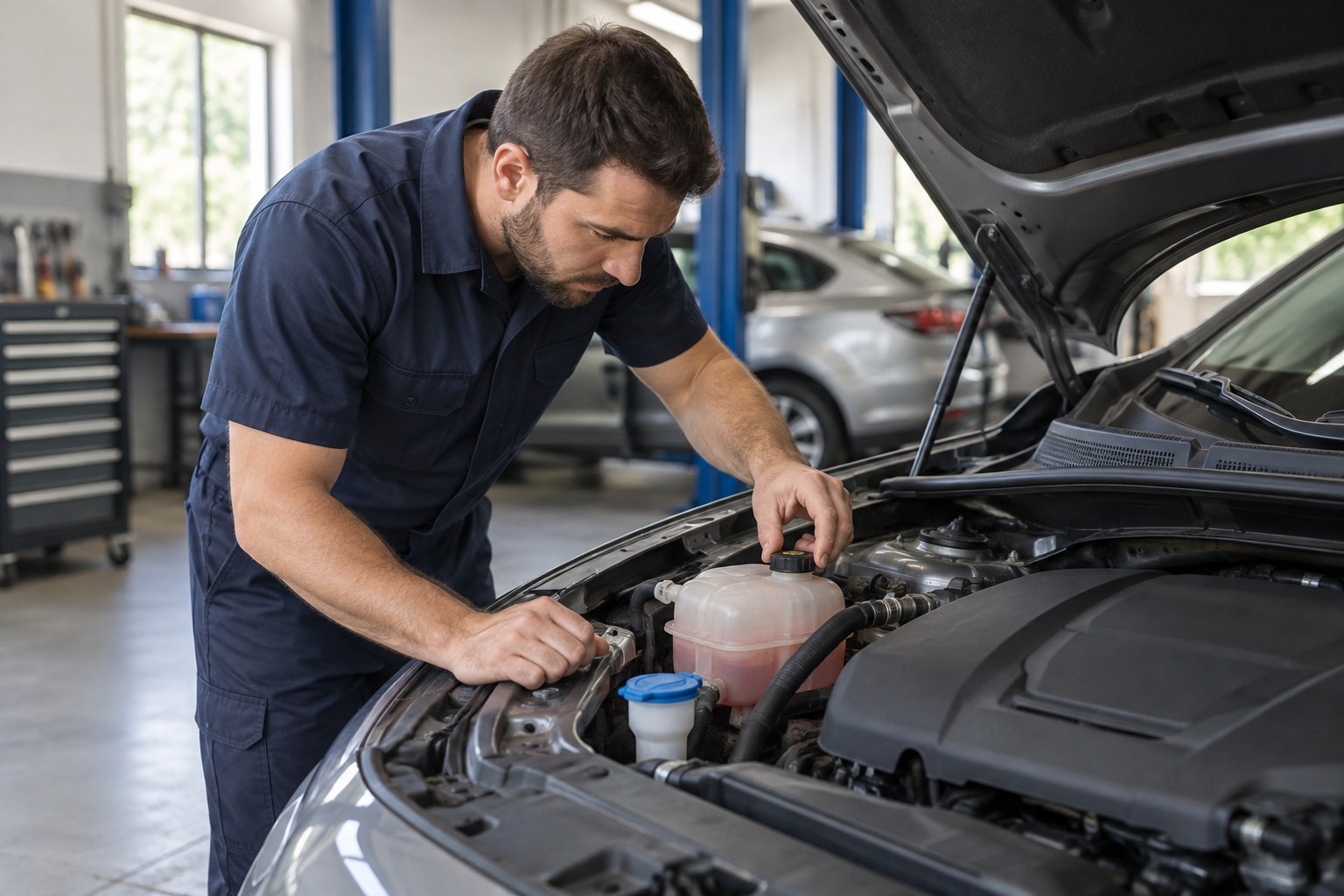
A radiator flush is one of those services that sounds like an upsell until you see what old coolant looks like coming out of an engine. Rusty, sludgy, or full of tiny flakes, it stops protecting the metal it was supposed to protect. At our Chamblee shop, we drain coolant like that every week from cars that otherwise seem perfectly healthy. The honest answer is that most drivers have no idea when their coolant was last changed, and Georgia summers are hard on whatever is in there. Below, we explain what the service actually does, when you need it, and when you don't.
Not sure when your coolant was last replaced? Our technicians can test it and tell you straight.
Key Takeaways
- This service removes old coolant, rust, and deposits from the cooling system and refills it with fresh coolant of the correct type.
- Coolant wears out over time because its corrosion inhibitors get used up, even if the fluid level looks fine.
- Service intervals vary widely, from about two years on older green coolant to five years or more on many extended life formulas, so your owner's manual is the real authority.
- Long summers, I-285 traffic, and short stop-and-go trips around Chamblee put extra heat stress on coolant.
- A flush is maintenance, not a repair, so it will not fix a leaking hose, a failed water pump, or a cracked radiator.
Every engine makes far more heat than it can use. The cooling system carries that extra heat away by pumping coolant through passages in the engine, out to the radiator, and back again. If you want the full picture of how the parts work together, our post on how a car cooling system works walks through each component.
Here we are focused on one narrower question. What happens to the coolant itself as it ages, and what do you do about it? That is where the flush comes in.
What a Radiator Flush Actually Is
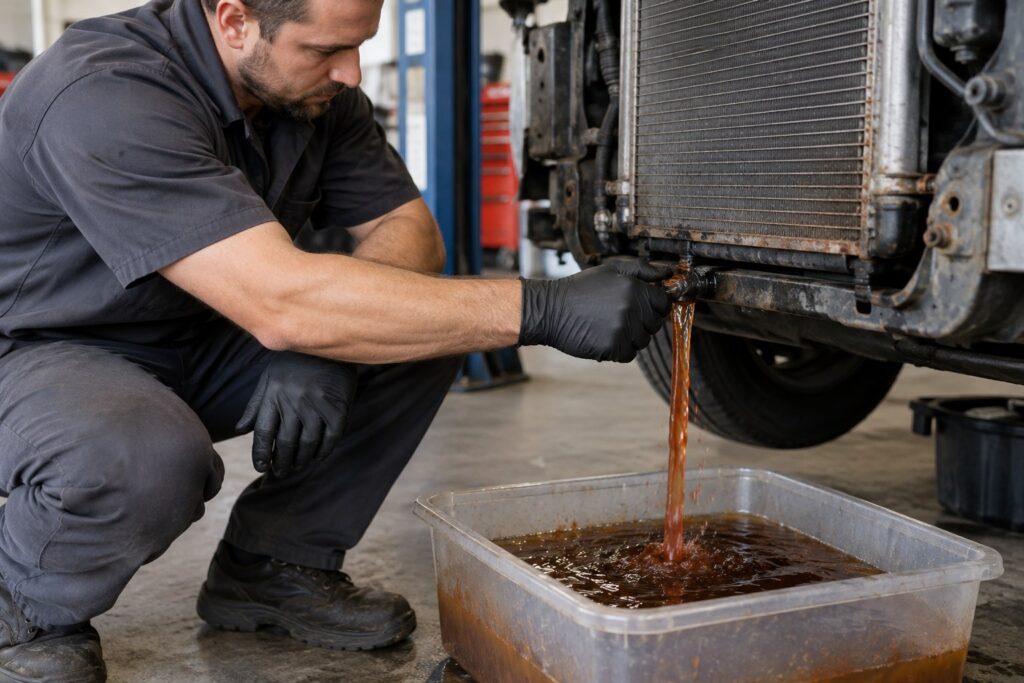
It is a cooling system service that removes the old coolant, cleans out loose contaminants, and refills the system with fresh coolant mixed to the right ratio. Despite the name, it covers more than the radiator. Coolant sits in the engine block, cylinder head, heater core, hoses, and overflow tank, and a proper service addresses all of it.
Drain and Fill vs. Full Flush
Shops use a few different methods, and it helps to know the difference. A simple drain and fill opens the radiator drain and lets gravity do the work. It is quick, but it often leaves a large share of the old coolant behind in the engine block and heater core. A full flush pushes clean water or a flushing solution through the system, sometimes with a dedicated machine, until what comes out runs clear. Then the system is refilled with new coolant.
Neither method is automatically right for every car. On a well maintained vehicle with clean coolant, a drain and fill done on schedule may be all it needs. On a system with rust, scale, or a history of mixed coolant types, a more thorough flush makes sense. Our technicians decide based on what the old fluid looks like and what the manufacturer recommends.
Why Bleeding the Air Matters
The step people forget is removing trapped air after the refill. Air pockets can sit near the thermostat or in the cylinder head and create hot spots, which can lead to overheating right after a service that was supposed to help. Many modern engines, especially some BMW, Mercedes-Benz, and Volkswagen models, need a specific bleeding procedure or a vacuum fill tool to get every bubble out. This is one of the biggest differences between a careful shop service and a rushed one.
Why Coolant Wears Out Even When the Level Looks Fine
Most drivers check the overflow tank, see coolant between the lines, and assume all is well. Level and condition are two different things. Coolant is a mix of glycol, water, and an additive package. The glycol handles freeze and boil protection. The additives prevent corrosion, protect seals, and keep minerals from forming scale.
Additives Get Used Up
Those corrosion inhibitors are consumed slowly as they do their job. Once they are depleted, the coolant can still look green, orange, or pink, but it no longer protects aluminum, iron, copper, and solder inside the system. Corrosion begins quietly. Rust particles and scale collect in the narrow tubes of the radiator and the heater core, and flow drops a little at a time.
Heat Cycles Speed Up the Process
Each time the engine warms up and cools down, the coolant goes through a heat cycle. Hot summers mean higher operating temperatures for longer stretches, and that breaks down coolant chemistry faster. A car that sits in traffic on Peachtree Industrial Boulevard in July, then cools in a parking deck, then heats back up for the drive home, is putting a lot of cycles on its coolant.
Contamination From Other Problems
Sometimes coolant goes bad because something else is wrong. Oil in the coolant can point to a failing head gasket or oil cooler. A milky or foamy look can mean combustion gases or air are getting in. A flush will not fix those problems, and it would be a waste to flush first and diagnose later. When we see contamination, we move to a proper diagnostic inspection before anything else.
Signs Your Car May Need Fresh Coolant
Coolant problems rarely announce themselves loudly at first. These are the clues our technicians look for, along with what each one usually means.
| What You Notice | What It Can Mean | What We Usually Do |
|---|---|---|
| Coolant looks rusty, brown, or cloudy | Inhibitors are worn out and corrosion has started | Test the coolant and recommend a flush |
| Flakes or sludge in the overflow tank | Scale, rust, or mixed coolant types reacting | Inspect the system, then perform a thorough flush |
| Temperature gauge creeps higher in traffic | Restricted radiator, weak fan, low coolant, or thermostat issue | Diagnose before servicing |
| Weak cabin heat in winter | Partly clogged heater core or air in the system | Check flow and coolant condition |
| Sweet smell or puddles under the car | A leak somewhere in the system | Find and repair the leak first |
| Oily film or milky coolant | Possible head gasket or oil cooler problem | Full diagnosis, no flush until the cause is known |
| Mileage or age past the recommended interval | Coolant chemistry likely depleted | Scheduled coolant service |
If your coolant level keeps dropping, that is a separate issue from coolant age. Our post on why your coolant reservoir might be empty covers the most common causes.
A Note on Safety
If your temperature gauge spikes into the red or you see steam, pull over somewhere safe and shut the engine off. Never open the radiator cap or the pressurized reservoir cap on a hot engine. Coolant is under pressure and can spray out hot enough to cause serious burns. Let the engine cool for at least 30 minutes, and if you see flames or smoke coming from under the hood, get away from the car and call 911. For a step by step plan, read what causes a car to overheat and how to handle it safely.
Seeing rusty coolant or a temperature gauge that won't sit still? Let our Chamblee team take a look before a small problem turns into a big one.
How Often Should You Get a Radiator Flush?
There is no single number that fits every car, and that is where a lot of confusion comes from. Intervals depend on the type of coolant your manufacturer specifies and on how you drive.
Older Conventional Coolant
Traditional green coolant, common on many cars built before the late 1990s and early 2000s, was typically changed about every two years or 30,000 miles. If you drive an older classic or a vehicle that has been switched back to conventional coolant, that shorter interval still applies.
Extended Life and Hybrid Formulas
Most newer vehicles use extended life coolant, organic acid technology, or a hybrid formula. Many of these are rated for five years or 100,000 to 150,000 miles, and some manufacturers list even longer first intervals. Toyota, Honda, GM, Ford, and the European brands each spell out their own schedule and their own coolant spec. Some European makers call for phosphate free or silicate specific coolant, and using the wrong one can shorten the life of water pumps and gaskets.
Why Your Driving Matters
Manufacturer intervals assume normal use. Many owner's manuals also describe severe service conditions, which can include extreme heat, heavy stop-and-go traffic, towing, and lots of short trips. A daily commute on I-285 or Buford Highway in August fits that description pretty well. We don't recommend flushing coolant more often than needed, but we do recommend testing it at regular maintenance visits so you know where it stands.
Never Mix Coolant Types
Topping off with whatever jug is on the gas station shelf is a common mistake. Mixing incompatible coolants can cause the additives to react, forming gel or sludge that clogs passages. If you are not sure what is in your car, a full flush back to the correct type is the cleanest fix.
What Happens If You Skip It
Skipping coolant service rarely causes a breakdown next week. The damage builds slowly, which is why it is easy to ignore and expensive to discover.
Clogged Radiator and Heater Core
Radiators are built from thin tubes and fins. Scale and rust narrow those tubes until the radiator cannot shed heat fast enough on a hot day. The heater core, tucked behind your dashboard, clogs the same way, and replacing it is often a labor heavy job.
Water Pump and Seal Failure
Worn coolant is less effective at lubricating the water pump seal and protecting it from abrasive particles. A failing pump often leaks first, then stops moving coolant altogether. On many engines the water pump is driven by the timing belt, so a pump failure can turn into a much bigger repair. Our post on coolant leak repair costs covers what a leak can involve.
Engine Overheating and Gasket Damage
Once flow drops far enough, the engine can overheat. Aluminum cylinder heads can warp, and head gaskets can fail. At that point, you are looking at engine repair instead of routine maintenance, and the cost depends heavily on the vehicle and how far the damage went.
Why Chamblee Driving Is Hard on Coolant
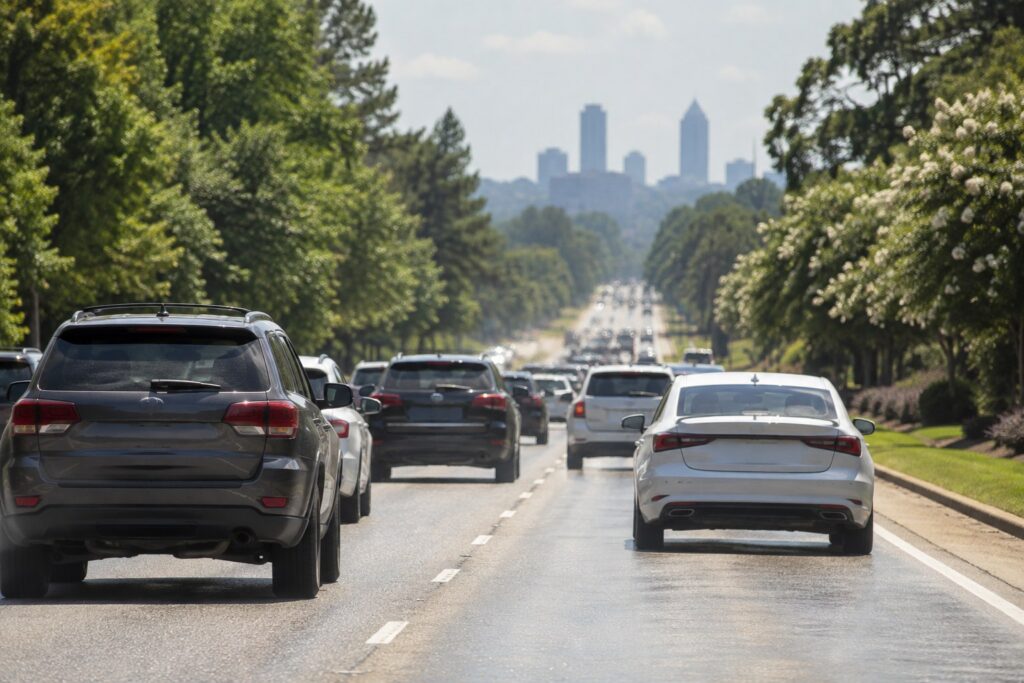
Chamblee sits right in the middle of some of the busiest roads in metro Atlanta. Between I-285, Peachtree Industrial, Buford Highway, and the traffic around Dresden Drive and the Perimeter, plenty of drivers spend a lot of time idling. Idling with the AC running in summer means the engine is hot, airflow through the radiator is low, and the cooling fan is doing most of the work.
Long, Humid Summers
Georgia summers regularly push into the 90s with high humidity, and the hot season stretches from late spring well into fall. Under-hood temperatures climb fast when you are parked in the sun at a shopping center off Chamblee Tucker Road. That steady heat ages coolant and puts more load on every part of the cooling system. Your AC system also adds heat in front of the radiator, since the condenser sits right there.
Pollen and Debris
Every spring, the yellow coat of pine and oak pollen settles on everything, including the radiator and AC condenser fins. Leaves, dust, and road grime pile on top. Blocked fins reduce airflow, so the coolant can't release heat as well. We often clean the front of the radiator during cooling service for exactly this reason.
Occasional Freezes
Winters here are mild most days, but we still get hard freezes and the occasional ice event. A proper coolant mix protects against freezing, and it also protects against boiling over in summer. Plain water in the system, which some people add in a pinch, offers neither kind of protection and has no corrosion inhibitors at all.
Why Chamblee Drivers Trust Blue Ridge Automotive - European & Domestic for Radiator Flush Service
We work on European, Asian, and domestic vehicles every day, and coolant service is a good example of where that matters. A Honda, a Ford F-150, and a BMW 3 Series each call for a different coolant and often a different fill procedure. Our technicians follow the manufacturer's spec rather than using one jug for everything.
We Test Before We Recommend
We check coolant condition, freeze protection, and the system for leaks before recommending a flush. If your coolant is still in good shape, we tell you that. If something else is causing the problem, we explain it in plain English and show you what we found.
Clear Pricing, No Surprises
The cost of this service depends on your vehicle, the coolant it requires, and how much of the system needs cleaning. We give you a clear price before any work begins. Our customers rate us highly on Google.
Full Cooling System Care
If the inspection turns up a soft hose, a weeping water pump, or a sticking thermostat, we can handle that in the same visit through our coolant services. That means fewer trips and a cooling system that works as a whole.
Ready to find out what shape your coolant is in? Our Chamblee technicians can test it and give you an honest recommendation.
Frequently Asked Questions
Is a radiator flush the same as a coolant change?
They are closely related. A coolant change, or drain and fill, replaces part of the old fluid. A flush goes further by pushing out more of the old coolant and loose deposits before refilling. Both end with fresh coolant of the correct type. Which one your car needs depends on the condition of the old coolant and the manufacturer's recommendation.
Can I flush my radiator myself?
Some drivers do, but it is easy to get wrong. Many modern engines need a specific bleeding procedure to remove air, and trapped air can cause overheating. Used coolant is also toxic to people and pets and cannot be poured down a drain. It has to be taken to a recycling or hazardous waste facility.
How long does the service take?
On many vehicles the service takes roughly an hour or two, including refilling and bleeding air from the system. Cars with complex cooling systems or heavy buildup can take longer. We will give you a realistic time estimate when you drop off your car so you can plan your day around it.
Will flushing the coolant fix my overheating problem?
Only if old or restricted coolant is the actual cause. Overheating can also come from a bad thermostat, a failing water pump, a broken cooling fan, a leak, or a head gasket problem. That is why we diagnose first. Flushing a system with a mechanical failure just means paying for fresh coolant that leaks out or overheats again.
What color should my coolant be?
Coolant comes in green, orange, pink, yellow, blue, and other colors depending on the formula, so color alone doesn't tell you the type. What matters is that it looks clean and translucent. Brown, rusty, cloudy, oily, or sludgy coolant is a warning sign that it needs attention soon.
Does a coolant flush help my AC or heater?
It can help your heater. A partly clogged heater core often improves after a thorough flush, giving you warmer air in winter. Your AC is a separate system, but a radiator that sheds heat well helps the engine stay cool while the AC is running hard in summer traffic.
A radiator flush is simple maintenance that protects some of the most expensive parts under your hood. Done at the right interval with the right coolant, it keeps your radiator, water pump, and engine working the way they should through long Georgia summers. Whether you live in Chamblee, Brookhaven, Doraville, Dunwoody, or Tucker, our team can test your coolant and tell you honestly whether it's time.
Ready to Get Started with Blue Ridge Automotive - European & Domestic?
Stop by our shop at 3733 N Peachtree Rd, Chamblee, GA 30341, Monday through Friday from 8AM to 5PM. We will check your coolant, explain what we find, and give you a clear price before any work begins. Reach out at (770) 216-8474 today to schedule your cooling system service.