
The Pull: What Drivers Need From a Tire and Alignment Shop
You merge onto the highway and the steering wheel pulls left. Not dramatically, just enough that you notice it every time you let go. That pull is your alignment talking. Ignore it and you're looking at uneven tire wear, worse fuel economy, and eventually a suspension component that fails because it's been loaded wrong for months.
European imports and domestic trucks and SUVs run on different alignment software and different torque specs, and we carry what both require. A national chain built around one platform often misses the other entirely.
Blue Ridge Automotive - European & Domestic holds a 4.9-star rating across 1,000+ reviews from drivers who needed the job done correctly, not just done quickly. Our wheel alignment service and steering and suspension repair are built around getting it right the first time. Call us at (404) 266-1699 to schedule.
What Tire, Wheel, and Alignment Service Actually Covers
Most drivers think of this as one job. It's actually three separate operations, and each one fails independently.
Mounting seats the tire bead against the rim so the seal holds. Balancing distributes rotational weight using small lead or adhesive weights so the wheel spins without vibration. Alignment adjusts the angles of the wheels themselves, specifically camber, caster, and toe. Skip any one of the three and the others degrade faster. A perfectly aligned car on an unbalanced wheel still vibrates at highway speed. Just fixing the alignment without checking the balance is paying for half the job.
A Complete Service Covers Six Items. Each item below is a physical action a technician performs, not a checklist box we tick and hand back.
Mounting
Mounting and demounting
Balancing
Dynamic balancing
Alignment
Two- and four-wheel alignment to factory spec
Rotation
Rotation and tread depth inspection
TPMS
TPMS reset (tire pressure monitoring system sensor relearn)
Inspection
Pre-alignment suspension inspection
What's Included in Our Tire, Wheel, and Alignment Service
Each item below is a physical action a technician performs on your vehicle, not a checklist box we tick and hand back to you.
Tire Mounting and Demounting
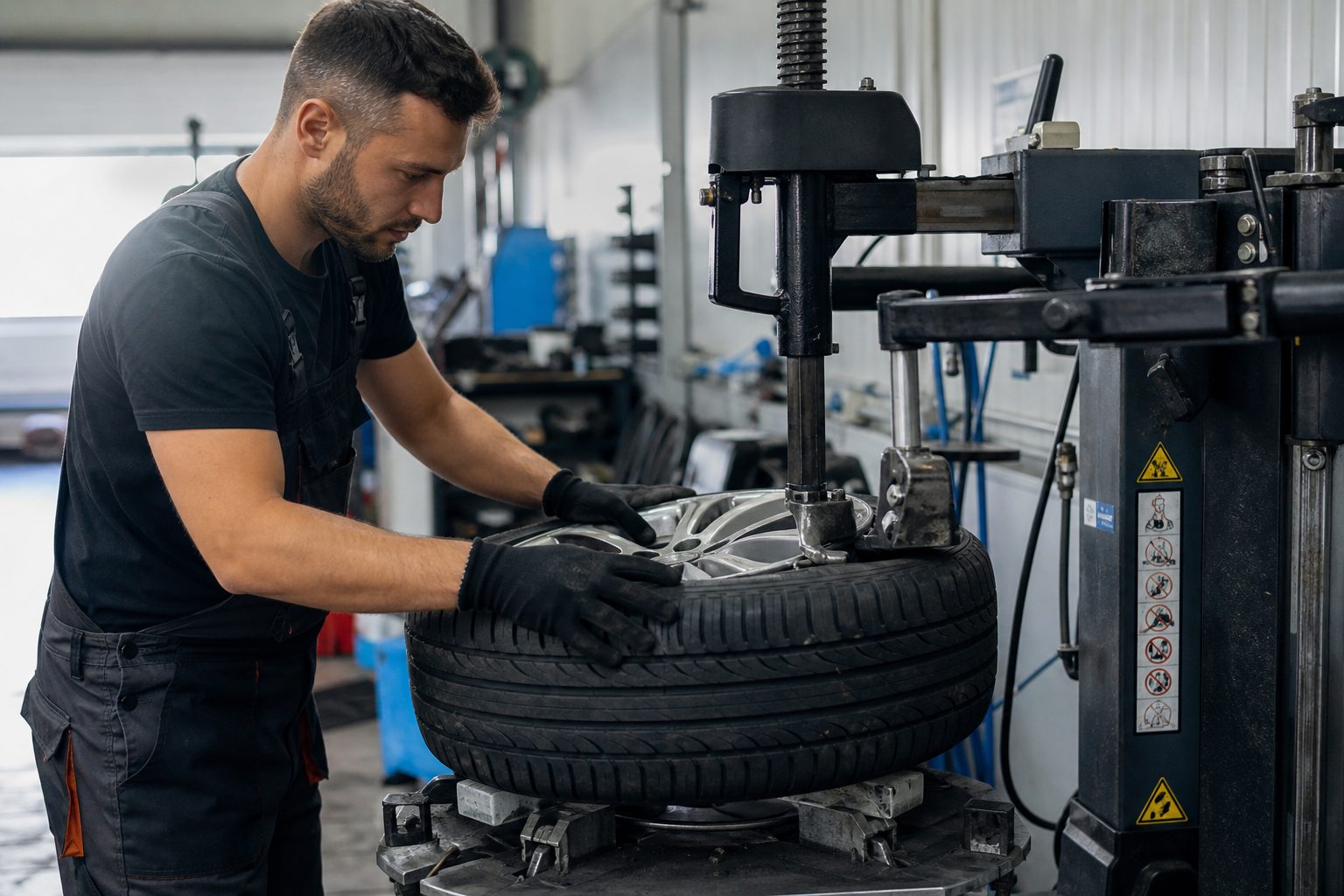
A mounting machine breaks the bead, the seal between tire and rim, then seats the new tire and inflates it to the manufacturer's specified PSI. That spec matters. Overinflating by even a few PSI changes the contact patch and accelerates center-tread wear.
Dynamic Wheel Balancing
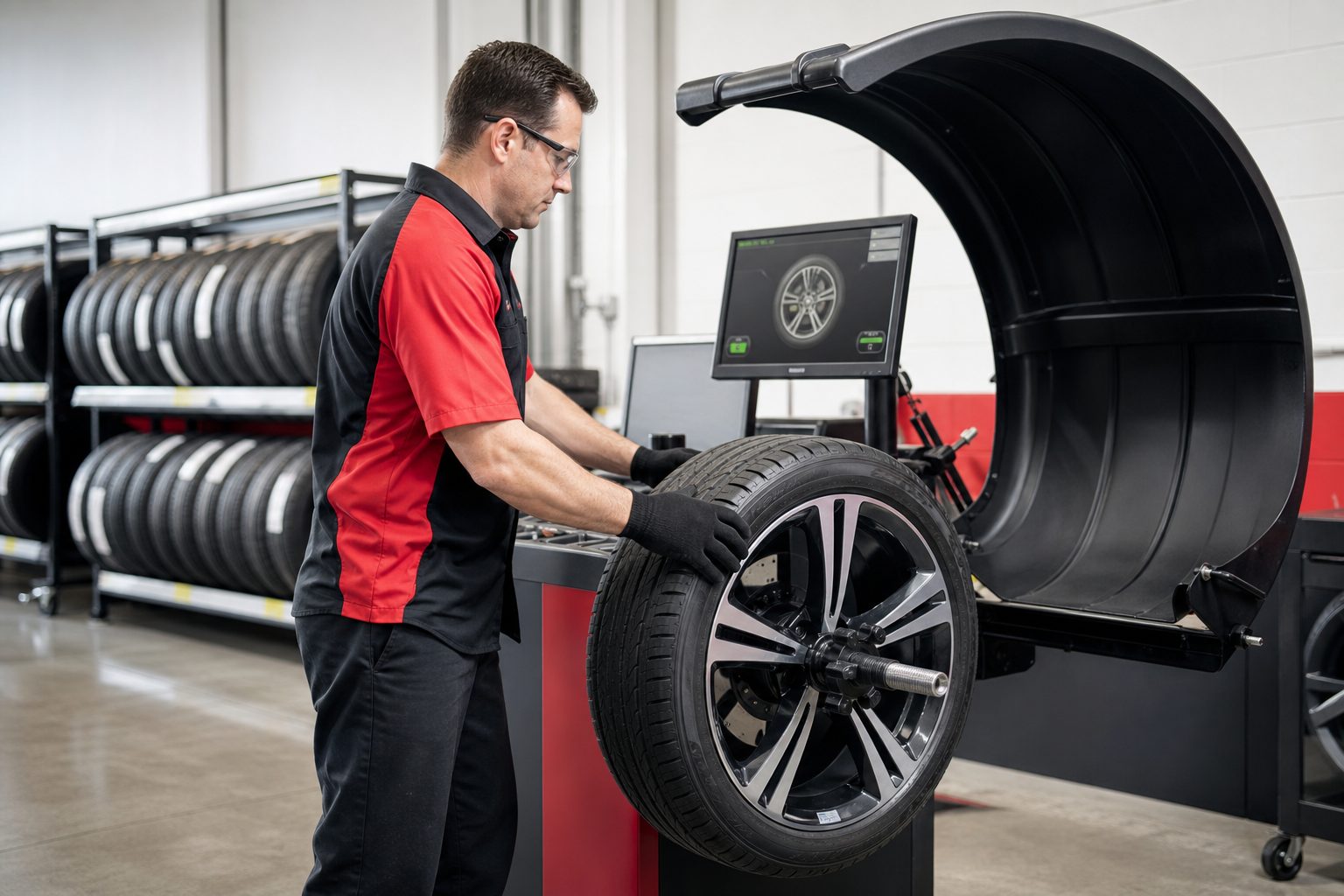
A spin-balance machine rotates the wheel assembly and identifies heavy spots. Small lead or adhesive weights are placed on the rim to correct the imbalance. Skip this step and you'll feel a steering-wheel shimmy above 45 mph that gets worse over time.
Four-Wheel Alignment with Angle Report
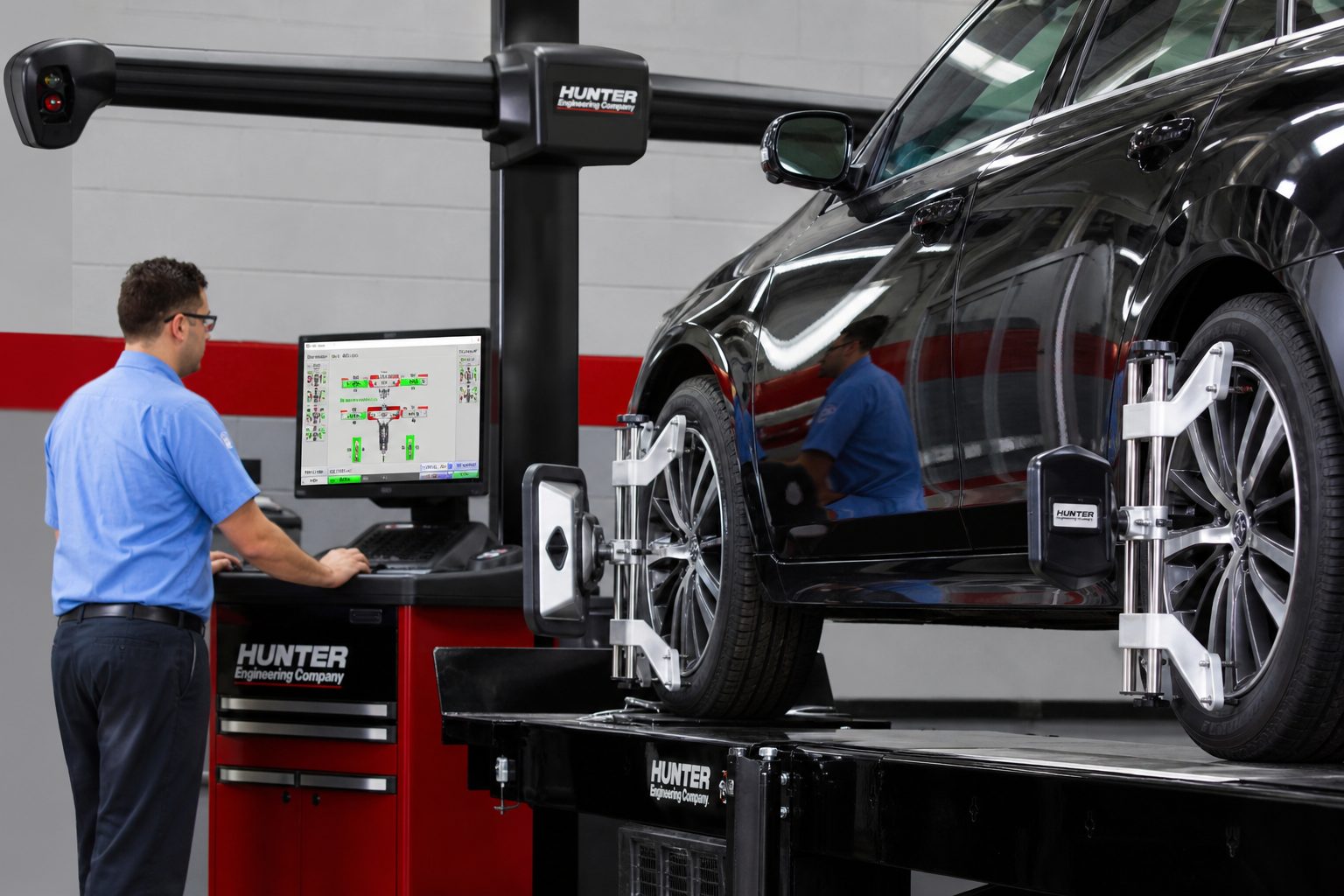
A computerized alignment rack measures camber, caster, and toe on all four wheels against factory spec. Those are the three angles that determine whether your tires roll straight or scrub sideways. You leave with a printed before-and-after report showing the actual numbers, not just a verbal confirmation that something was adjusted. This is especially relevant for European vehicles, where factory tolerances are tighter than most national chains account for.
Tire Rotation and Tread Inspection
Tires are moved front-to-rear or in a cross pattern depending on drivetrain. Tread depth is measured at multiple points with a gauge, not estimated by eye. That distinction matters when a tire looks fine but is already below the safe threshold on one edge.
TPMS Reset and Sensor Verification
After rotation or mounting, the TPMS system, the tire pressure monitoring sensors in each wheel, is reset so the dashboard warning clears. Sensors are confirmed functional. A sensor that reads as present but transmits bad data is worse than no sensor at all.
Pre-Alignment Suspension Check
Before touching any angle, the tech inspects tie rods, control arm bushings, and struts. Rough roads take a real toll on these components, and adjusting alignment on worn parts wastes money. The angles will not hold. Catching this early is exactly what routine preventative maintenance is designed to do, before a worn bushing turns a straightforward alignment into a steering and suspension repair job.
How the Tire and Alignment Process Works at Blue Ridge Automotive
Drop off your car and you might assume the tech jumps straight to adjusting angles. That's not how it works here. There are four distinct steps, and skipping any one of them turns the rest of the job into guesswork.
Step 1: Inspection and Diagnosis
The vehicle goes on the lift first. The tech checks tread wear patterns, inspects steering and suspension components, and reads the existing alignment angles before any work is quoted. Worn ball joints or tie rod ends will pull the alignment right back out after adjustment. Those get flagged before anything else happens.
Step 2: Tire and Wheel Service
Tires are mounted, balanced, and rotated as needed. TPMS sensors, the small pressure monitors inside each wheel, are checked and reset to match the new tire positions. Skipping that reset means your dashboard warning light stays on and you lose accurate pressure readings.
Step 3: Alignment Adjustment
The vehicle moves to the alignment rack. Current angles are measured against the factory spec sheet for that exact make and model. European platforms, including BMWs and Audis, carry tighter manufacturer tolerances than most domestic trucks. We carry the manufacturer-specific software those vehicles require. Our full wheel alignment service covers both European and domestic specs.
Step 4: Road Test and Confirmation
The vehicle gets driven before it comes back to you. The tech confirms the steering wheel is centered, there is no pull to either side, and no vibration exists at speed. If something is off, it goes back on the rack. You get the car when the numbers and the road feel match.
Signs Your Atlanta Vehicle Needs Tire or Alignment Service
Most drivers feel something is off before they can name it. These five checks need no tools, no lift, and no diagnostic equipment. Four of them you can do right from the driver's seat.
Steering Wheel Pulls to One Side
Find a straight, flat stretch of road during light traffic. Briefly release the wheel. If the car drifts consistently left or right, that is an alignment issue. A tire problem alone rarely produces that steady, repeatable pull.
Vibration at Highway Speed
Above 45 to 55 mph, a rhythmic shake through the steering wheel or up through the seat is the classic sign of a wheel out of balance. Not alignment. Balancing and alignment are two different corrections, and mixing them up means paying for the wrong one.
Uneven Tread Wear
Crouch next to the tire. If one edge is noticeably more worn than the other, or you see scalloped, cupped patches across the tread face, those patterns point to alignment drift or a worn steering and suspension component. Uneven wear is rarely just a tire issue.
Off-Center Steering Wheel
Driving straight but the steering wheel logo sits rotated five to ten degrees to one side means the wheel was not centered during the last adjustment, or alignment has drifted since. Rough roads and potholes make this drift faster.
TPMS Warning Light
The TPMS light, your tire pressure monitoring system, can mean a slow leak, a sensor that was not reset after rotation, or pressure lost from road debris. Construction zones are a consistent source of nails and sharp debris. Do not assume it reset itself. Check the pressure first, then investigate the sensor.
What Wears Out Tires and Alignment
Rough roads do not give alignment angles a chance to stay put on their own.
Potholes and Alignment Drift
Every pothole that opens up in the road is a hazard for your wheels and suspension. Each time a wheel drops into one, your alignment angles shift a little. Not dramatically, not all at once, but consistently, commute after commute.
Tire Pressure and Rubber Wear
Tire pressure matters too. It drops roughly 1 PSI for every 10-degree temperature drop, and heat pushes it back up while accelerating rubber breakdown. Add in compromised pavement and that constant stress shows up as uneven tire wear and steering and suspension components wearing out ahead of the manufacturer's schedule.
Built Around Your Vehicle
The honest answer is that the generic "check alignment once a year" advice was written for ideal conditions. It does not account for rough pavement or hard use. If you hit a significant pothole and wait six more months for a scheduled visit, you are paying for accelerated tire wear the entire time. Our wheel alignment service is built around what the road actually does to your vehicle.

Why Atlanta Drivers Choose Blue Ridge Automotive for Tires and Alignments
One shop for the BMW in the driveway and the F-150 next to it, with the software and specs to do both correctly.
European and Domestic Expertise Under One Roof
Most national chains carry alignment software for domestic platforms. They often lack the manufacturer-specific data licenses needed for BMW, Audi, Volkswagen, and similar platforms. We carry both. That matters for drivers of German and Swedish imports, and it matters equally for the F-150 or Tahoe owner. Asian makes run through the same alignment rack with the same manufacturer data, so one shop covers the whole driveway.
Attentive, Transparent Service from the First Conversation
The pattern across those reviews is the same: our team explained what needed doing and why before any work started. That is how it should work, and it is not how every shop operates. Come in with questions. You will get plain answers. Tread depth, wear pattern, alignment readings, and tire age all get shown to you rather than summarized, so you can see why a rotation is enough now or why replacement is the safer call.
Free Alignment Inspection Before Any Work Is Quoted
We check your alignment angles before we quote anything. If your vehicle is within spec, we tell you that and you leave without spending a dollar on alignment. No upsell. Fleet operators running regular vehicle cycles find this especially useful as part of a scheduled fleet service program. When an adjustment is needed, you see the before and after angle readings on the printout, and the alignment is backed by our 24-month, 24,000-mile nationwide warranty on parts and labor.









Vehicle Brands We Service
From Asian reliability to American work-ready performance, our ASE-certified technicians service every major make. Pick your brand to see model-specific repair details.

































Our Car Repair Shop Locations
We handle automotive repair across the Atlanta area. Our Buckhead location is at 3190 Roswell Rd NW, Atlanta, GA 30305.
Schedule Your Tire and Alignment Service in Atlanta
If your car is pulling, wearing tires unevenly, or you just want to know where your alignment stands after a rough stretch of road, bring it in. Our wheel alignment service takes less time than most commutes. Book online or call us directly. Tires, wheels, and alignments done right. No runaround, no guesswork.
Frequently Asked Questions