
How to Read a Tire Sidewall: What Atlanta Drivers Need to Know
Sharing this:
Every tire on your car carries a built-in spec sheet, and most drivers walk past it every day without a second look. Once you know how to read a tire sidewall, that wall of letters and numbers turns into a clear summary of size, weight capacity, speed limit, age, and weather ability. For Atlanta drivers dealing with long summers, hot pavement, and plenty of highway miles, those details decide whether a replacement set actually fits your vehicle and holds up to local conditions.
The good news: you can decode the most important markings in about two minutes, standing right next to your car. Knowing what each section means also helps you compare two tire quotes, spot a tire that is too old, and ask sharper questions before anyone installs a single tire.
Key Takeaways
- The tire size code (such as P225/65R17) tells you the service type, width, aspect ratio, construction, and wheel diameter your vehicle needs.
- The load index and speed rating sit right after the size and should match or exceed your vehicle's original specification.
- The DOT date code ends in four digits showing the week and year of manufacture, which matters because tires age even with full tread.
- UTQG grades cover treadwear, traction, and temperature, and the temperature grade is worth a close look in Georgia's heat.
- M+S and the Three-Peak Mountain Snowflake symbol mean different things; only the snowflake confirms tested winter traction.
- Always confirm tire pressure against the door placard, not the maximum number printed on the sidewall.
Where the Numbers Live on a Sidewall
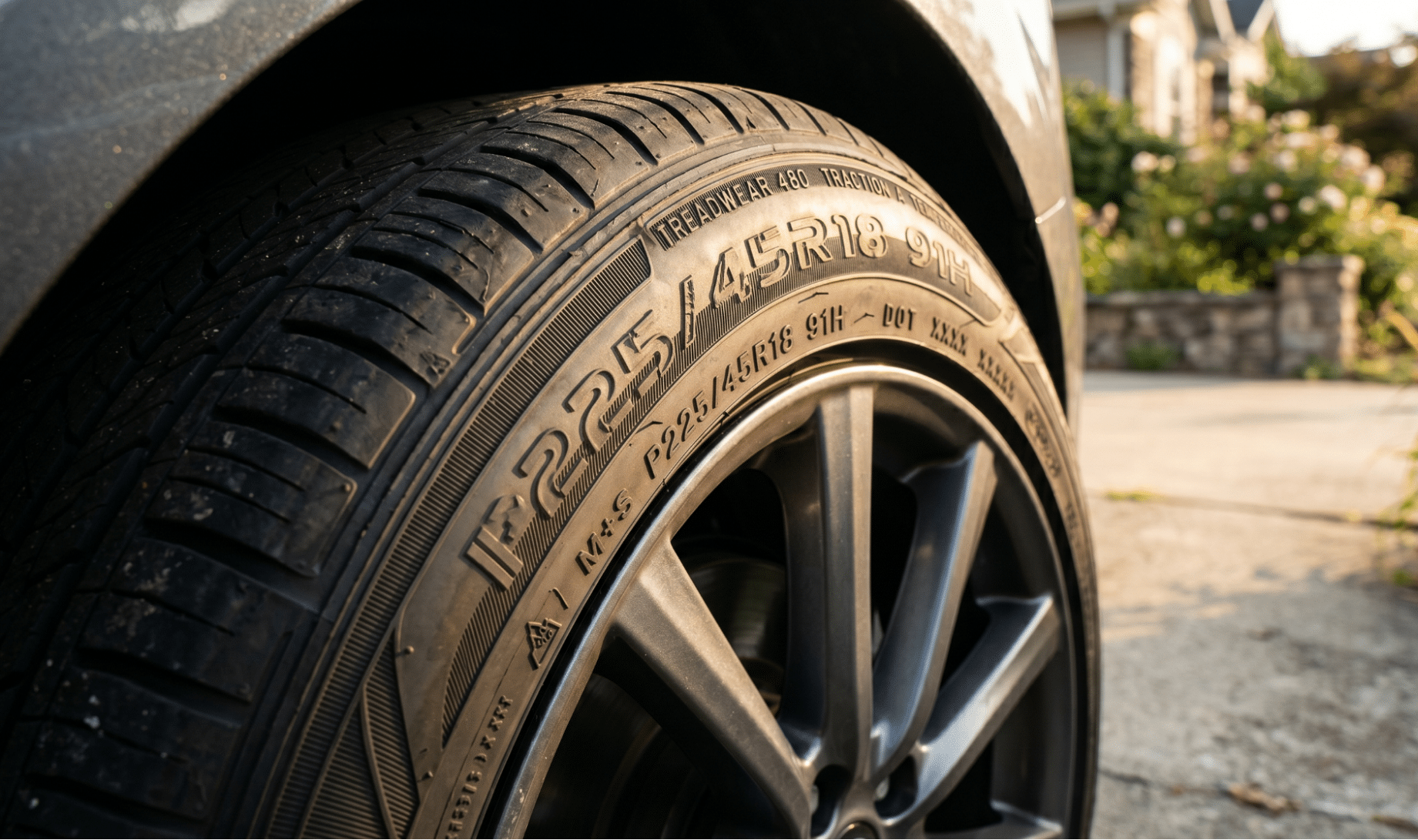
A tire sidewall is the smooth outer surface between the tread and the wheel. Manufacturers mold the legally required information into the rubber, and the markings cluster into a few predictable groups: the size and construction line, the service description with load index and speed rating, the DOT identification number with its date code, and the UTQG quality grades. Other markings include the brand and model name, maximum load, and maximum inflation pressure.
Reading these in a set order keeps things simple. Start with the size, move to the load index and speed rating, check the special weather markings, then find the date code. Compare what you read against the placard on your driver's door jamb, which lists the tire size and pressure the automaker specified for your car.
Decoding the Tire Size Code
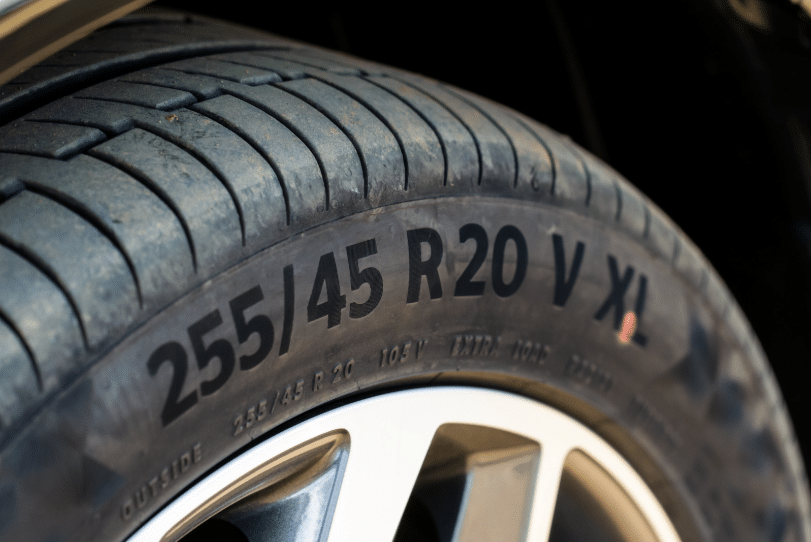
The most prominent string on the sidewall is the size code, and it often reads something like P225/65R17. Each piece describes one part of the tire's job.
- P is the service type. "P" means passenger metric, the most common type on cars and crossovers. "LT" marks a light truck tire, "T" a temporary spare, and "ST" a special trailer tire. A size with no leading letter is a Euro-metric tire, common on many European models.
- 225 is the section width in millimeters, measured across the widest part of the tire.
- 65 is the aspect ratio. The sidewall height equals 65 percent of the section width, so a lower number means a shorter, sportier sidewall.
- R is the construction type. "R" stands for radial, standard on modern passenger tires. A "B" would indicate older bias-ply construction.
- 17 is the wheel diameter in inches, and it must match your wheel exactly.
Matching the full size matters more than matching width alone. Two tires can share the same width and rim diameter yet differ in load capacity or speed capability, which makes one a poor substitute for the other. Many drivers in our area run European and Asian models with specific staggered or low-profile fitments, so verifying every value against the door placard protects both ride quality and safety. If your vehicle pulls or wears tires unevenly after new rubber goes on, a proper alignment during your tire and alignment service usually solves it.
Load Index and Speed Rating
Right after the size, you will see a number followed by a letter, for example 97H. These two values form the service description.
The tire load index is the two- or three-digit number, and it corresponds to a maximum weight each tire can carry at proper inflation. A load index of 97, for instance, maps to roughly 1,609 pounds on the standardized load chart. The number is a coded value, not a literal pound figure, so you read it against a chart rather than taking it at face value. Installing a tire with a lower load index than your vehicle requires reduces the safety margin your automaker built in, which is why dropping below spec is never a good idea.
The letter is the tire speed rating, the maximum sustained speed the tire is certified to handle under controlled test conditions. Common passenger ratings include T, H, V, and W, climbing as the letters advance, with one quirk: H actually sits between U and V. A speed rating reflects a laboratory test, not a license to drive fast, and it only holds if the tire is properly inflated, undamaged, and not worn out. For most Atlanta commuters, the practical takeaway is to match or exceed the original rating so handling and heat resistance stay where the engineers intended.
Because load and speed ratings depend on the chassis carrying them, worn components can undercut even a perfectly rated tire. That connection between the tire and the rest of the corner is one reason a suspension check protects tire life, since failing parts wear rubber faster than the road ever would.
The DOT Date Code: How Old Are Your Tires?
Every tire sold in the United States carries a DOT identification number that starts with the letters "DOT" and ends in a four-digit date code. Those last four digits are the ones to find: the first two are the week of manufacture, and the last two are the year. A code ending in 2323 means the tire was built in the 23rd week of 2023.
Age matters even when tread looks healthy. Rubber compounds harden and lose flexibility over time as they cycle through heat, sunlight, and ozone exposure. Many manufacturers and safety groups suggest considering replacement around six years from the manufacture date, and inspecting more closely past that point, regardless of how much tread remains. A spare hidden in the trunk can look brand new and still be dangerously old, so check its date code too.
One catch: on some tires, the complete DOT code only appears on the inboard sidewall, the side facing the vehicle. If you cannot find the four-digit code on the outer face, you may need to look on the inner side or have it checked during a service visit.
UTQG: Treadwear, Traction, and Temperature
The Uniform Tire Quality Grade, or UTQG rating, appears as a line such as "TREADWEAR 500 TRACTION A TEMPERATURE A." The National Highway Traffic Safety Administration created the system to give drivers a comparison tool across passenger tires.
- Treadwear is a relative number. A tire graded 400 is built to wear roughly twice as long as one graded 200, though brands test their own tires, so the figure compares best within a single manufacturer's lineup.
- Traction grades wet stopping ability from AA (highest) down through A, B, and C.
- Temperature grades heat resistance from A (highest) to C, measuring how well the tire dissipates heat at speed before failing.
That temperature grade deserves attention in Georgia. Hot pavement, long summers, and heavy interstate driving all push tire temperatures up, and heat is hard on rubber. A higher temperature grade signals a tire designed to shed heat more effectively, which adds a margin of confidence for drivers logging highway miles in July. Keep in mind that UTQG grades reflect new tires; an aging tire with an A temperature grade no longer resists heat the way it did when fresh.
Winter and All-Season Markings
Two markings often cause confusion. M+S stands for Mud and Snow and appears on most all-season tires, but it reflects tread geometry rather than a standardized traction test. The Three-Peak Mountain Snowflake (3PMSF) symbol is the one that confirms a tire passed an actual snow-traction test. Atlanta rarely sees deep snow, so most local drivers do fine on all-season rubber, but anyone heading north to the mountains in winter should look for the snowflake rather than relying on M+S alone.
Max Load, Max Pressure, and the Door Placard
The sidewall also lists a maximum load and a maximum cold inflation pressure, often shown in both pounds and PSI. These are the tire's limits, not your target settings. The pressure your car should actually run is the figure on the driver's door placard or in the owner's manual, which the automaker tuned for ride, handling, and even tire wear. Inflating to the sidewall maximum usually makes the ride harsh and wears the center of the tread early. Checking pressure monthly, and before long trips, is one of the simplest habits that extends tire life and keeps fuel economy steady, and it fits naturally into routine preventative maintenance.
Reading the Sidewall Before You Buy or Visit the Shop
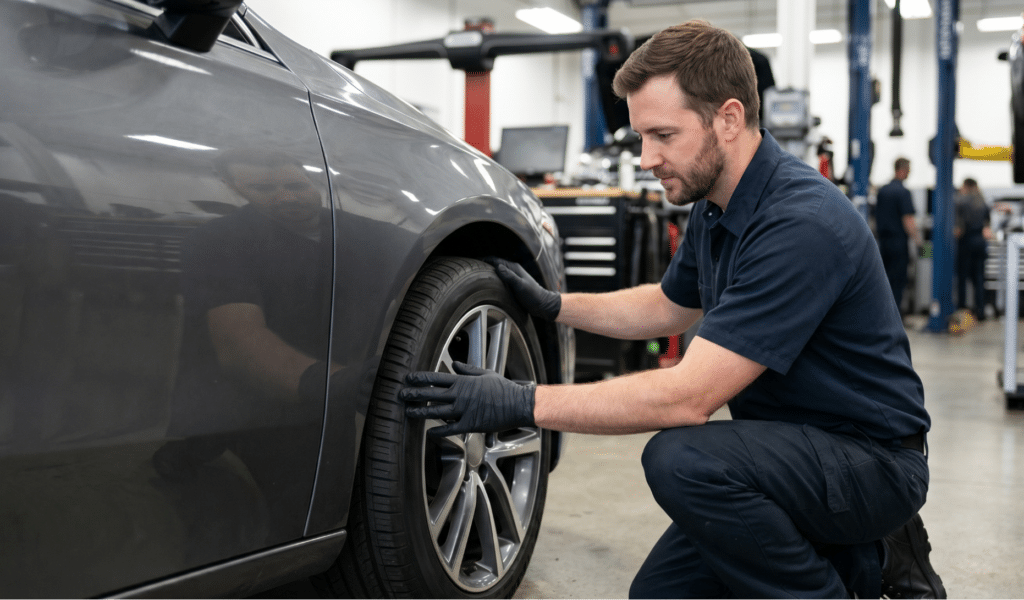
Put it together and the sidewall becomes a quick checklist. Before buying, photograph the full sidewall of each installed tire and store the images on your phone so you have size, load index, speed rating, and date code ready at any shop. When comparing replacement options, confirm the size matches the door placard, the load index and speed rating meet or beat the original, the date code is recent, and the temperature grade suits a hot climate. If you notice uneven wear while you are down there, that is often a sign of alignment or rotation needs rather than a tire defect; watching for the signs your tires need rotating helps you catch it early.
Knowing how to read a tire sidewall turns you from a passive buyer into an informed one. In two minutes beside your car, the string of characters stops being a mystery and becomes a clear record of what your tires can do and when they were made.
Frequently Asked Questions
What does the P at the start of a tire size mean?
The "P" identifies the tire as a passenger metric, the standard type for most cars and crossovers. Other prefixes include "LT" for light truck, "T" for a temporary spare, and "ST" for special trailer tires. A size with no leading letter is a Euro-metric tire, common on many European vehicles.
How do I find the manufacture date on my tire?
Look for the DOT identification number on the sidewall and read the final four digits. The first two are the week of manufacture and the last two are the year, so "2323" means week 23 of 2023. On some tires the full code is only on the inboard side facing the vehicle.
Can I install tires with a different load index or speed rating?
You can move up to a higher load index or speed rating, but you should never drop below your vehicle's original specification. A lower load index reduces weight capacity, and a lower speed rating reduces the tire's certified heat and speed limits, both of which shrink your safety margin.
Does the temperature grade really matter in Atlanta?
Yes. Atlanta's hot summers and frequent highway driving raise tire temperatures, and heat accelerates rubber breakdown. A higher UTQG temperature grade indicates a tire built to dissipate heat more effectively, which is worth considering for drivers who log long miles in warm weather.
Is an M+S tire the same as a winter tire?
No. M+S means Mud and Snow and appears on most all-season tires based on tread design, not a traction test. Only the Three-Peak Mountain Snowflake symbol confirms a tire passed a standardized snow-traction test, so look for the snowflake if you need verified winter grip.
Should I inflate my tires to the number on the sidewall?
No. The sidewall lists the maximum cold pressure, not the recommended setting. Use the pressure on your driver's door placard or in the owner's manual, which the automaker set for safe handling, comfortable ride, and even tread wear.
Schedule Your Tire Service in Metro Atlanta
Still unsure what your sidewall is telling you, or noticing uneven wear, vibration, or aging rubber? Our certified technicians can read every marking, check your tires against your vehicle's specs, and recommend the right fit for Atlanta roads. Call (404) 266-1699 or schedule a service online to keep your vehicle riding safely and confidently.
About Blue Ridge Automotive
Blue Ridge Automotive serves drivers across Metro Atlanta with dealership-quality care for Asian, Domestic, and European vehicles. With decades of combined experience and locations in Buckhead, Chamblee, Decatur, and Marietta, our certified technicians handle everything from tire and alignment work to steering and suspension repair, explaining what your vehicle needs so you can make confident decisions without pressure.