
The Cabin Air Filter Most Atlanta Drivers Forget to Replace
Sharing this:
Most drivers know their car has an engine air filter. Most know it has an oil filter. Far fewer know it also has a cabin air filter, and even among those who do, replacement is one of the most consistently skipped maintenance items on the schedule. In Atlanta, that's a problem. The same yellow pollen that coats every windshield in March and April is also coating the filter that decides what air you breathe inside your car, and the cumulative cost of ignoring it goes well beyond uncomfortable allergy mornings.
This post covers what the cabin air filter actually does, why Atlanta drivers wear them out faster than most of the country, the specific symptoms that mean yours is overdue, and what skipping the $30 replacement eventually costs in real money. If your last memory of changing one is "I don't think I ever have," you're not alone, and now's a good time to fix that.
What the Cabin Air Filter Actually Does
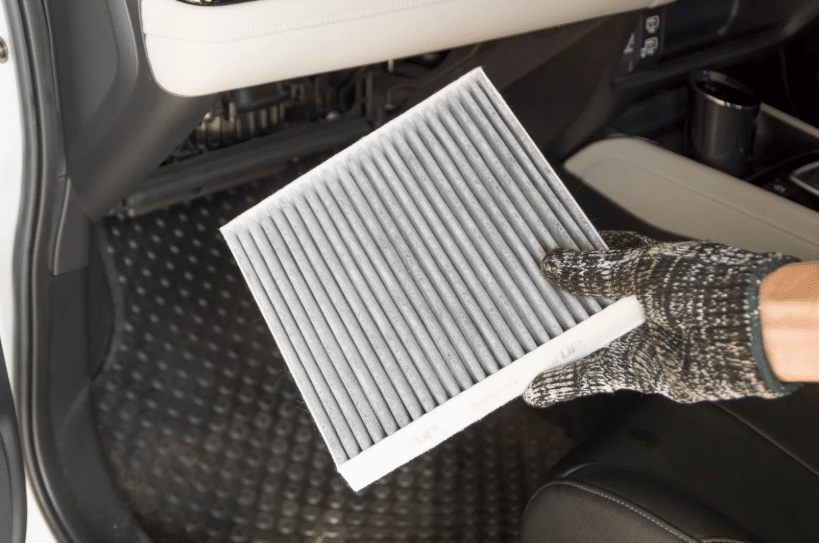
The cabin air filter is a pleated paper or carbon-impregnated filter that sits in the air intake path of your vehicle's HVAC system. Every cubic foot of air that comes through your vents, whether the system is set to fresh air or recirculation, passes through this filter first. Its job is to trap pollen, dust, mold spores, road grit, soot, and whatever else is floating in the air before it reaches the cabin.
This is a different filter than the engine air filter. The engine air filter feeds combustion air to the engine. The cabin air filter feeds breathable air to you. Most people think of "the air filter" as a single thing, which is why the cabin filter quietly accumulates years of debris while the engine filter gets routine attention.
Cabin filters were rare on American vehicles before the late 1990s. Today they're standard on essentially every passenger vehicle on the road, but because they don't have a dashboard reminder light and they don't affect how the car drives, drivers often go 50,000 miles or more without ever touching one.
Why Atlanta Drivers Get Hit Harder Than Most
Metro Atlanta consistently ranks among the worst cities in the United States for airborne allergens. Spring pollen season, dominated by tree pollen from oak, pine, birch, and maple, runs from late February through May with daily counts that regularly exceed 1,000 grains per cubic meter. The "yellow rain" that turns every parked car into a dusted-over mess is the visible part of a much heavier load that's also being pulled through your HVAC intake every time you drive.
Fall brings ragweed and weed pollens that extend the high-allergen season into October and beyond. Between the two seasons, you have most of the year putting heavy demand on a filter that was designed assuming relatively clean air.
Add daily commuting through dense traffic on the connector, 285, and 400, and the filter is also catching diesel particulate and carbon monoxide from the vehicles around you. This is a real consideration that ties into the broader effects covered in our article on how stop-and-go traffic affects your car. The cabin filter is your first line of defense against breathing what's coming out of the tailpipe of the truck in front of you.
What a Clogged Cabin Filter Actually Does to You and Your Car
The consequences fall into two buckets. The first is health. A saturated filter loses its ability to trap allergens, so pollen, mold spores, and exhaust particulates start passing straight through into the cabin. People with asthma, seasonal allergies, or general respiratory sensitivity often experience worse symptoms in their cars than they do at home, and the cabin filter is usually the reason.
A clogged filter also collects moisture over time, especially in humid Atlanta summers. That moisture combined with trapped organic material creates ideal conditions for mold and mildew growth on the filter media itself. The musty smell that hits you when you turn on the A/C after the car has sat for a while is often coming from a filter that's become a mold farm.
The second consequence is mechanical. Your HVAC blower motor is sized to push air through a filter with normal restriction. When the filter gets heavily clogged, the blower has to work harder to maintain airflow. That extra strain accelerates blower motor wear, and a $30 cabin filter problem can become a $300 to $700 blower motor replacement when the motor finally burns out. Restricted airflow also reduces cooling and heating efficiency, which makes the entire system work harder and contributes to faster wear on related components covered under car A/C repair.
Signs Yours Needs Replacement Now
Weak airflow even at maximum fan speed is the most common symptom. If you're cranking the dial all the way up and getting what feels like medium fan output, the filter is restricting flow.
A musty, stale, or sour smell when the system first starts is the second biggest indicator. That smell almost always traces back to mold growing on a saturated filter or in the evaporator drain. A new filter often resolves it; if it doesn't, the evaporator may also need cleaning.
Other signs include unusual fan noise that wasn't there before (the blower whining or whistling as it forces air through restriction), excessive dust accumulation inside the car despite regular cleaning, allergy symptoms that worsen specifically when you're driving, and windows that fog up easily and won't clear normally even with the defroster on. If you're experiencing two or more of these, the filter is overdue.
The Recommended Interval and Why Atlanta Cuts It Short
Most manufacturers recommend cabin air filter replacement every 12,000 to 15,000 miles or once a year, whichever comes first. That recommendation assumes typical operating conditions, which Atlanta's pollen and traffic don't match.
In this climate, every 8,000 to 10,000 miles or twice a year is a more realistic interval. The ideal timing is one replacement in late February or early March, before spring pollen ramps up, and another in late August or early September before fall allergens arrive. That schedule keeps a fresh filter in place when air quality demand is highest, and it costs about $30 to $80 per replacement at a shop or $15 to $40 if you do it yourself.
A good practice is to have the filter inspected at every other oil change services appointment. Most shops will check it for free and let you decide whether to replace it. A visibly dark, dust-caked, or damp filter is overdue regardless of mileage.
Where the Filter Actually Lives in Your Car
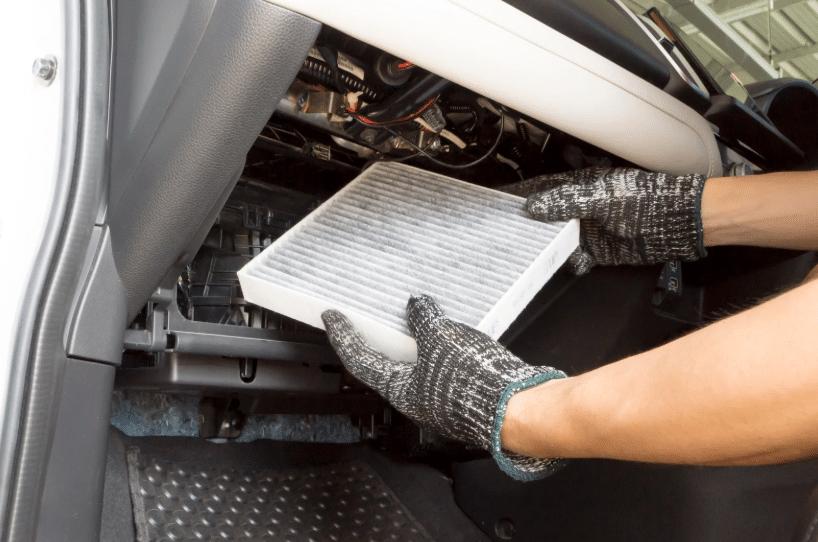
On most modern vehicles built since the early 2000s, the cabin air filter sits behind the glove box. The procedure is usually straightforward: open the glove box, squeeze the sides to release the stops so it drops down further, remove a small access panel, and slide the old filter out. The replacement slides in the same way, with arrows on the filter frame indicating airflow direction. Total time is usually 5 to 10 minutes.
Some vehicles, particularly older models and certain trucks, locate the filter under the hood near the base of the windshield in the cowl area. These can also be accessed quickly but may require removing wiper arms or cowl panels.
European vehicles and some luxury models often package the filter in less accessible locations. Some require dashboard disassembly that turns a five-minute job into an hour-long shop visit. If your vehicle falls into this category, pairing the filter replacement with another service that's already opening up the dash makes sense.
Standard vs. Carbon-Activated Filters
Most replacement cabin filters fall into one of two categories. Standard pleated paper filters trap particulates: pollen, dust, mold spores, road grit, and visible debris. They handle the majority of what you want a cabin filter to handle, and they're the cheapest option.
Carbon-activated filters, also called charcoal filters, add a layer of activated carbon that absorbs odors, exhaust gases, fuel vapors, and volatile organic compounds. They're typically $5 to $15 more than standard filters, and they make a noticeable difference if you spend a lot of time in heavy traffic where you'd otherwise smell exhaust through the vents.
For Atlanta drivers commuting daily on 285 or the connector, the upgrade to carbon-activated is one of the better small investments you can make in cabin comfort. The filter also lasts about the same amount of time as a standard filter, so the only real cost is the modest price difference at purchase.
What It Costs to Replace (and What It Costs to Skip)
A cabin filter replacement at a shop typically runs $30 to $80 depending on the vehicle, including parts and labor. DIY replacement on accessible vehicles costs the price of the filter alone, usually $15 to $40 for a quality unit. This is one of the cheapest maintenance items on any modern car.
The cost of skipping it is where the math gets uncomfortable. A blower motor replacement, when the strained motor finally fails, runs $300 to $700 depending on the vehicle and whether the resistor or controller goes with it. Evaporator cleaning to address mold buildup that originated on a saturated filter runs $150 to $400. Combined with the cumulative health impact of breathing recirculated allergens through your daily commute, the total cost of "I'll get to it eventually" easily reaches 20 to 40 times the cost of just replacing the filter on schedule.
This is also one of the items most likely to be flagged during a thorough inspection alongside other services. A good diagnostic service appointment or annual checkup catches an overdue cabin filter before it causes secondary problems.
How to Make This Part of Your Routine
The simplest approach is to pair cabin filter inspection with every oil change. Most shops will check the filter and show it to you if it's dirty, leaving the decision in your hands. Twice a year is a reasonable cadence for Atlanta, and tying it to a season makes it easy to remember.
Set a recurring reminder for late February or early March before pollen season really starts. Set a second one for late August or early September before fall allergens kick in. If you do your own work, keep a spare filter in the glove box so the replacement happens whenever you remember rather than getting deferred until the next parts store run.
For drivers who like to bundle services, the spring filter change pairs naturally with scheduled maintenance that includes A/C system inspection, since both relate to having a comfortable cabin during summer driving. The fall filter change pairs well with coolant services and other cold-weather prep.
Frequently Asked Questions
Can I just clean my old filter and reinstall it?
You can vacuum or tap out a cabin filter to extend its life by a few weeks, but the filter media itself loses effectiveness over time and can't be fully restored. Once a filter is visibly dark or saturated, cleaning is at best a temporary fix. Replacement is cheap enough that there's no real reason to push beyond that point.
Does running the system on recirculation help during pollen season?
Yes, it helps. Recirculation pulls air from inside the cabin and runs it back through the filter rather than constantly drawing in fresh outside air loaded with pollen. The catch is that you need a clean filter for recirculation to do you any good. A clogged filter on recirculation just keeps cycling the same dirty air past the same saturated media.
Could a clogged cabin filter be why my A/C seems weaker than it used to?
Often, yes. A restricted filter reduces airflow across the evaporator, which means less cold air reaches the vents even when the A/C system itself is working fine. Before assuming a refrigerant issue or compressor problem, replacing the cabin filter is the cheap first step. Our article on how often to recharge your A/C covers when refrigerant is actually the issue versus when something simpler is at play.
Will a new filter fix the smell coming from my vents?
If the smell is musty or sour, a new filter resolves it about half the time. The other half points to mold or organic buildup on the evaporator coil itself, which requires evaporator cleaning to fully address. Replacing the filter is the right first move regardless, since a clean filter prevents the problem from coming back as quickly.
Can a dirty cabin filter affect fuel economy?
Indirectly, yes. The blower motor draws power from the alternator, and an overworked blower trying to push air through a clogged filter pulls slightly more current. The effect on fuel economy is small but measurable over time, especially on vehicles that run the HVAC fan continuously.
Do European cars need different cabin filters?
European vehicles often use specific OEM-spec filters with particular construction or sealing requirements. Generic aftermarket filters sometimes fit physically but don't seal correctly, which lets unfiltered air bypass the media. For BMW, Mercedes, Audi, VW, Porsche, and similar makes, OEM or premium aftermarket equivalents matter more than they do on most domestic and Asian vehicles.
About Blue Ridge Automotive
Blue Ridge Automotive has served Metro Atlanta drivers since 2010, offering honest, reliable vehicle repair and maintenance across four convenient locations in Buckhead, Chamblee, Decatur, and Marietta. Our ASE-certified technicians inspect cabin air filters at every routine service visit and can recommend either standard or carbon-activated replacements based on your specific driving conditions. We service Asian, domestic, and European vehicles with the same level of care, and every service we perform is backed by a 24,000-mile, 24-month warranty on parts and labor through TechNet.
Get Ahead of Atlanta's Next Allergy Season
If you can't remember the last time your cabin air filter was replaced, it's almost certainly overdue. Replacement is one of the cheapest, fastest services on any car, and the difference in air quality after a fresh filter goes in is often immediate. Our technicians can check your filter as part of any routine visit and swap it on the spot if it's due.
Call (404) 266-1699 or schedule a service online to book your cabin air filter check at the Blue Ridge Automotive location nearest you.