

How Atlanta Drivers Can Tell Their Shocks and Struts Are Worn Out
Sharing this:
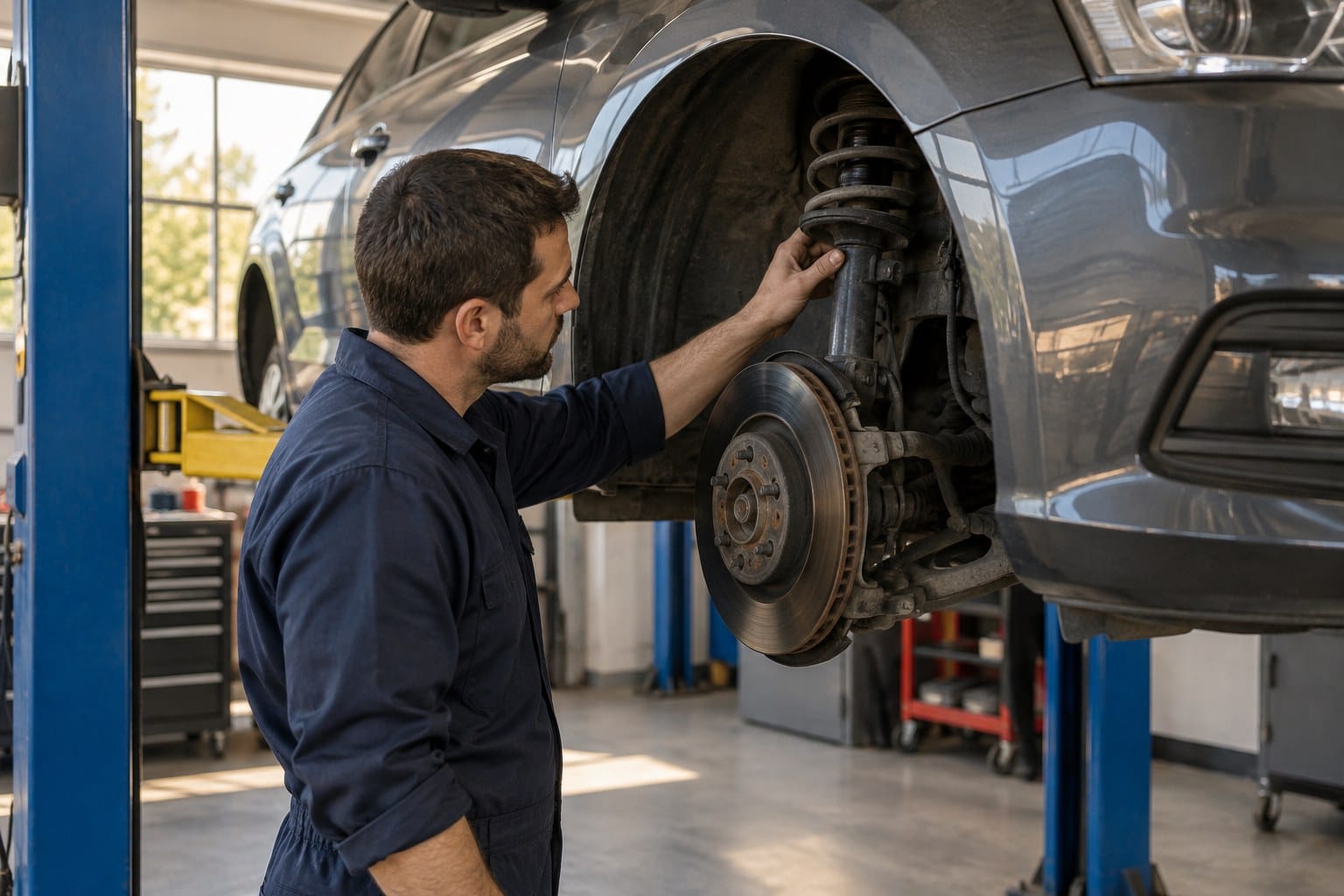
Worn shocks and struts symptoms rarely show up overnight. They creep in so slowly that most drivers adjust without noticing, until the car feels floaty on I-75 or the nose dips hard every time traffic stops short on Peachtree. We inspect suspensions every day at our Buckhead shop on Roswell Road, and the honest answer is that most cars we see with tired dampers have been that way for months. The good news is that a few simple checks can tell you a lot before a technician ever lifts the car.
Car feeling bouncy or loose over Atlanta pavement? Let our technicians take a look.
Key Takeaways
- Shocks and struts control how your springs move, so worn units affect braking, steering and tire grip, not just comfort.
- The most common early signs are extra bouncing after bumps, nose dive under braking, body roll in turns and a car that wanders at highway speed.
- Oily residue on a shock body, cupped tire wear and clunks over potholes are physical clues you can spot or hear yourself.
- Atlanta's rough streets, steep hills, construction plates and summer heat speed up wear on dampers and their rubber mounts.
- Our technicians confirm the problem with a road test and lift inspection, then give you a clear price before any work begins.
Your springs hold the car up. Your shocks and struts keep those springs from bouncing endlessly. Each one is a hydraulic damper filled with oil (and often pressurized gas) that turns spring motion into heat. A strut does the same job but also serves as a structural part of the suspension, holding the spring and locating the wheel. Most modern cars use struts up front and either struts or shocks at the rear.
Because the damper loses a little control with every mile, there is no single moment when it "breaks." That is why it helps to know what to watch for. If you want a broader checklist, our earlier piece on signs it's time to replace shocks and struts covers the full list. Here we focus on what Atlanta drivers actually feel on local roads and how to check it at home.
What Worn Shocks and Struts Symptoms Feel Like Behind the Wheel
Most people notice worn dampers through the seat and the steering wheel first. These are the sensations we hear about most often from customers in Buckhead, Midtown and Brookhaven.
Bouncing That Keeps Going After a Bump
A healthy suspension settles almost immediately after a dip. If your car rises and falls two or three times after crossing a railroad track on Marietta Street or a dip on Northside Drive, the dampers are no longer absorbing that energy. Passengers in the back seat often feel it before the driver does.
Nose Dive When You Brake
When you brake, weight shifts forward. Worn front struts let the front end drop sharply, which shifts even more weight off the rear tires. On a sudden stop in traffic on GA 400, that can add stopping distance and make the rear feel light. If the hood seems to bow toward the road every time you brake, pay attention.
Squat and Rear Sag on Acceleration
The opposite happens when you accelerate. The rear drops and the nose lifts. It is most obvious pulling away uphill, which Atlanta gives you plenty of chances to test, from the climbs around Ansley Park to the ramps onto I-85.
Body Roll and Sway in Turns
If the car leans heavily on highway ramps, like the long curves at the I-285 and I-75 interchange, or feels like it takes a moment to "set" before it turns, the dampers are allowing too much body motion. You may also feel the car rock side to side in crosswinds or when a tractor trailer passes.
Wandering or Floating at Highway Speed
A floaty, disconnected feel on the highway, where you are constantly correcting the wheel, can point to worn struts. It can also point to alignment or steering wear, which is why a proper inspection matters. Our post on Atlanta roads and wheel alignment explains how those two problems often show up together.
Signs You Can See and Hear Without Special Tools

You do not need a lift to gather useful clues. Try these checks in your driveway or a parking deck with the car parked on level ground and the engine off.
Look for Oil on the Shock or Strut Body
Peek behind each wheel with a flashlight. A light film of dust is normal. A wet, oily coating on the body of the shock or strut usually means the seal has failed and the fluid that does the damping is leaking out. Once that fluid is gone, the damper cannot do its job. Pollen season makes this easier to spot, since the yellow dust sticks to any oily surface.
Check Your Tires for Cupping
Run your hand across the tread. Cupping, also called scalloping, feels like a pattern of high and low spots around the tire. It happens when the tire bounces instead of staying planted, so it is one of the more reliable physical signs of worn dampers. Uneven wear can also come from skipped rotations, so our post on tire rotation symptoms is a useful comparison.
Listen for Clunks and Knocks
A dull clunk over potholes or speed bumps often comes from worn strut mounts, bushings or a damper that has lost its internal control. A knock when turning the wheel at low speed, like in a tight parking deck in Lenox, can point to a worn upper strut mount or bearing. Noises are worth taking seriously because they can also come from ball joints, sway bar links or a failing wheel bearing.
Notice a Sagging Corner
Stand back and look at the car from the front and side. If one corner sits lower than the others, the spring or strut assembly may be tired. This is common on older SUVs and on vehicles that regularly carry heavy loads.
The Bounce Test, and Its Limits
Push down hard on one corner of the car and let go. If it bounces more than once or twice before settling, the damper on that corner may be worn. The honest answer is that this test only catches badly worn units. Modern gas charged struts can pass a bounce test and still perform poorly at highway speed, so treat a "pass" as a maybe, not a clean bill of health.
Noticed one of these signs? Our technicians can confirm what is going on with a road test and lift inspection.
Symptom Quick Reference Chart
Use this chart to connect what you notice with what it might mean. Several of these symptoms overlap with other problems, so treat it as a starting point for a conversation with a technician.
| What You Notice | Likely Cause | Other Possible Causes | How Soon to Act |
|---|---|---|---|
| Car keeps bouncing after bumps | Worn shocks or struts | Broken spring | Soon |
| Front end dives hard when braking | Worn front struts | Brake issues | Soon, affects stopping |
| Oily film on shock or strut body | Leaking damper seal | Nearby oil or fluid leak | Soon |
| Cupped or scalloped tire wear | Worn dampers | Imbalance, missed rotations | Soon, protects tires |
| Clunk over potholes | Worn mounts or bushings | Sway bar links, ball joints | Inspect promptly |
| Wandering on the highway | Worn struts | Alignment, steering parts | Inspect promptly |
| Steering wheel shakes, car pulls hard, or a loud bang followed by a lean | Possible broken spring or mount failure | Tire or wheel damage | Stop driving and call for help |
Why Atlanta Roads Wear Out Shocks and Struts Faster
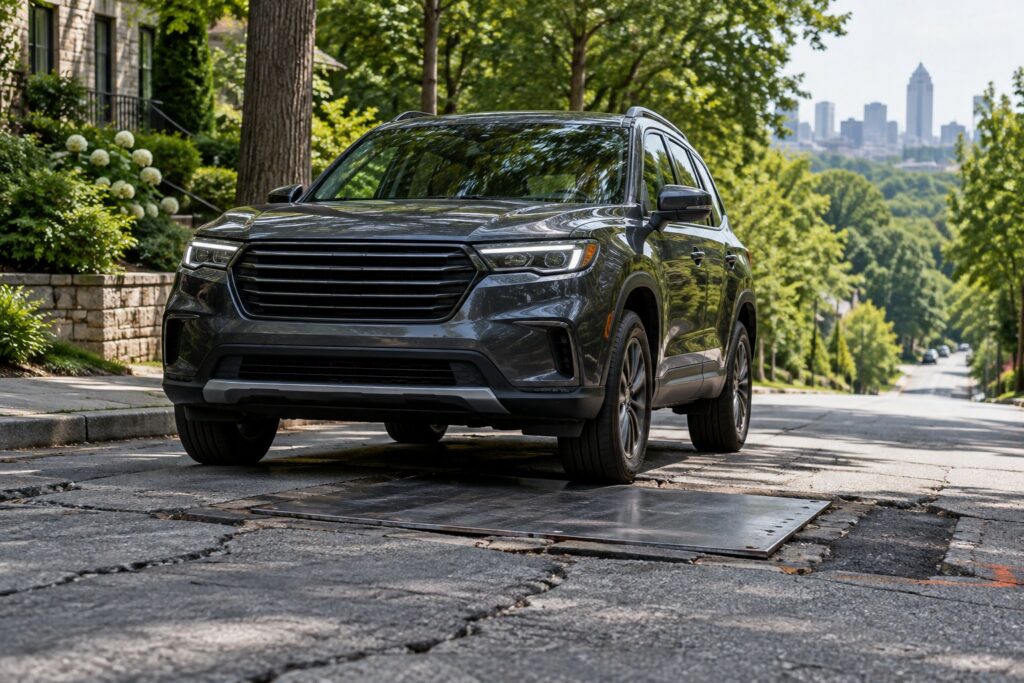
Damper life depends heavily on where and how you drive. Many manufacturers and parts makers suggest having them inspected around 50,000 miles, but metro Atlanta driving can shorten that window.
Potholes, Patches and Construction Plates
Between utility work, MARTA projects and constant road resurfacing, Atlanta drivers hit steel plates, uneven patches and potholes on a daily basis. Every hard impact pushes the damper through its full travel and stresses the mounts and seals. One big pothole on Piedmont Road can bend a part or blow a seal on an already tired strut.
Hills and Stop and Go Traffic
Atlanta is hillier than many visitors expect. Constant braking on descents and accelerating up grades loads the front and rear dampers over and over. Add the daily crawl on I-285 and Peachtree, and your suspension works hard even at low speeds. Our post on how stop and go traffic affects your car goes deeper into that kind of wear.
Georgia Heat and Humidity
Long summer stretches in the 90s bake the rubber boots, bushings and seals around your suspension. Over time that rubber hardens and cracks, letting in dirt and moisture that speed up seal failure. The occasional winter ice storm, and the road treatment that follows, adds another layer of stress.
Heavier Vehicles and Performance Suspensions
Many Buckhead drivers own heavier SUVs, electric vehicles or European cars with sport or adaptive suspensions. Extra weight works dampers harder, and electronically controlled or air suspensions on brands like BMW and Mercedes have their own sensors and components that need proper diagnosis when a warning light appears.
What Happens If You Keep Driving on Worn Shocks and Struts
Worn dampers are not usually an emergency, but they are a safety item. Ignoring them affects more than ride comfort.
Longer Stopping Distances
Tires stop the car only when they stay pressed against the road. When worn dampers let the wheels bounce and the body pitch forward, the tires lose some of that contact. That can mean longer stops, especially on bumpy pavement or in the sudden Atlanta downpours that leave standing water. Keeping your brakes in good shape helps, but healthy brakes cannot make up for a tire that is skipping.
Reduced Control in Emergencies
A swerve to avoid debris on the Downtown Connector puts heavy, fast loads on your suspension. Worn dampers allow more body roll and slower recovery, which can make the car harder to control. Systems like stability control work best when the tires have consistent grip, and the NHTSA notes that tire condition plays a direct role in vehicle safety.
Faster Wear on Tires and Other Parts
Cupped tires wear out early and get noisier. Excess motion also puts extra load on ball joints, tie rods, CV axles and steering parts. Replacing dampers when they are worn often protects a set of tires and avoids a longer repair list later.
When to Pull Over
If you hear a loud bang and the car suddenly leans to one side, the steering feels very different, or a wheel seems to be rubbing, pull over somewhere safe, turn on your hazards and do not keep driving. A broken coil spring or failed strut mount can damage a tire or affect steering. Call for a tow, and if you are stopped on a busy highway and feel unsafe, call 911.
How Our Technicians Inspect and Replace Shocks and Struts
We start with a conversation about what you feel and when it happens. Then we follow a consistent process so you know exactly what we found.
Road Test and Lift Inspection
A technician drives the car over a familiar route with bumps, braking and turns. Then we put it on a lift and check each damper for leaks, damage and worn mounts, along with springs, bushings, ball joints, tie rods and tires. Our steering and suspension repair team looks at the whole system so we do not replace a strut when the real culprit is a sway bar link.
Replace in Pairs
Shocks and struts are normally replaced in pairs on the same axle, front or rear. A new damper on one side and an old one on the other can make the car handle unevenly. If only one side is leaking and the vehicle has low mileage, we will explain your options honestly.
Quick Struts, Parts Choices and Alignment
Many vehicles can use a complete strut assembly, which includes the spring and mount, and that can save labor. We will walk you through OEM and aftermarket parts options for your car. Because replacing struts changes suspension geometry, we recommend a wheel alignment afterward to protect your tires.
What It Costs
Cost depends on your vehicle, whether it uses conventional, adaptive or air suspension, and whether you choose complete assemblies. We give you a clear price before any work begins. For a deeper look at budgeting, see our post on suspension repair costs.
Why Atlanta Drivers Trust Blue Ridge Automotive - European & Domestic for Shock and Strut Repair
We are an independent shop that works on European, Asian and domestic vehicles, from daily commuters to luxury SUVs. Our Buckhead location sits on Roswell Road, close to Chastain Park, Garden Hills and the Lenox corridor, so getting your car to us is easy whether you live nearby or commute through.
- Plain-English explanations. We show you what we found, including photos of leaks or worn mounts, and explain what can wait.
- Clear price before any work begins. No surprises when you pick up your car.
- Experience with complex suspensions. Our technicians handle adaptive and air suspension systems as well as conventional setups.
- Highly rated on Google. Atlanta drivers trust us with their vehicles, and we work to keep it that way.
Ready to find out if your suspension is due? Book a visit at our Buckhead shop.
Frequently Asked Questions
How long do shocks and struts usually last?
There is no fixed number because driving conditions vary so much. Many manufacturers suggest an inspection around 50,000 miles, and plenty of dampers last longer on smooth roads. In metro Atlanta, frequent potholes, hills and heat can shorten that. The best approach is a quick suspension check during routine service so you catch wear before it affects your tires.
Can I replace just one shock or strut?
In most cases we recommend replacing them in pairs on the same axle so both sides respond the same way. Mixing a new damper with a worn one can cause uneven handling and braking. If a nearly new unit failed early or was damaged in an accident, replacing one may make sense, and we will explain the trade-offs clearly.
Is a little oil on my shock always a problem?
A light misting near the seal can be normal on some designs. A wet, dripping or heavily coated body usually means the seal has failed and the damper is losing fluid. Since oil from the engine or power steering can also land on suspension parts, we confirm the source before recommending any replacement.
Do worn struts cause the steering wheel to shake?
They can contribute, especially when they lead to cupped tires that vibrate at speed. Steering shake more often comes from tire balance, bent wheels, brake rotors or worn steering parts. A road test and lift inspection help us pinpoint the real cause so you only pay for the repair you actually need.
Do I need an alignment after replacing struts?
Usually, yes. Struts help locate the wheel, so removing and installing them can shift camber and toe settings. Skipping the alignment can lead to pulling and uneven tire wear, which undoes some of the benefit of new parts. We will tell you up front whether your vehicle needs one.
Is it safe to drive with worn shocks and struts?
For short trips it is usually possible, but worn dampers can lengthen stopping distances and reduce control in emergency maneuvers. If you notice severe bouncing, a loud bang, a sudden lean or a wheel rubbing, stop driving and have the vehicle towed. Otherwise, schedule an inspection soon rather than waiting for the next service.
Knowing the worn shocks and struts symptoms, from extra bounce and nose dive to oily dampers and cupped tires, helps you catch suspension wear before it costs you tires or control. Drivers from Buckhead, Brookhaven, Sandy Springs, Midtown, Vinings and across north Atlanta can count on our team for a careful inspection and an honest recommendation.
Ready to Get Started with Blue Ridge Automotive - European & Domestic?
If your car bounces, dives, wanders or clunks, our technicians will find the cause and walk you through your options in plain English. Stop by our Buckhead shop at 3190 Roswell Rd NW, Atlanta, GA 30305, Monday through Friday from 8AM to 5PM.
Reach out at (404) 266-1699 today to schedule your shock and strut inspection.