

Signs Your Fuel Injectors Are Dirty and What Chamblee Drivers Should Do About It
Sharing this:
Your car runs a little rough. Gas mileage has slipped. The engine hesitates when you pull onto Buford Highway and then smooths out once you hit speed. Those are textbook dirty fuel injector symptoms, and they're easy to dismiss until the check engine light comes on or you fail Georgia's emissions test. Fuel injectors are precision components, and Atlanta's stop-and-go driving cycles deposit carbon and varnish on the nozzle tips faster than most drivers expect.
At Blue Ridge Automotive – European & Domestic on N Peachtree Rd, our ASE-certified technicians have been diagnosing fuel system issues for Chamblee drivers since 2021, and the fix is usually straightforward when you catch it early. Rough idle, poor mileage, or a check engine light? Get your fuel system looked at before a small problem turns into a costly one.
Key Takeaways
- Clogged injector signs include rough idling, engine misfires, poor fuel economy, and hard starts.
- Atlanta's stop-and-go traffic accelerates deposit buildup on injector nozzles faster than highway driving does.
- A clogged injector can trigger a check engine light and cause Georgia emissions test failures.
- Injector cleaning is far less expensive than the engine damage a misfiring cylinder causes over time.
- A full fuel system inspection, not just the injectors, is the right starting point for diagnosis.
You're sitting at a red light on Buford Highway, somewhere between Chamblee and Doraville, and the car has a faint shudder at idle. Not a shake. Just a subtle vibration you feel through the steering wheel. The engine light is off. The car drives fine once you're moving. So you ignore it.
That shudder is often one of the first signs of dirty fuel injectors. Most drivers dismiss it for weeks, sometimes months. By the time a warning light appears, the repair cost has grown well past what early attention would have cost.
What follows covers what fuel injectors actually do, the clogged injector signs you can feel before any dashboard light triggers, what causes buildup, and what Chamblee drivers should do next. A proper fuel system diagnosis can confirm whether injectors are the culprit before any parts get ordered.
What a Fuel Injector Actually Does
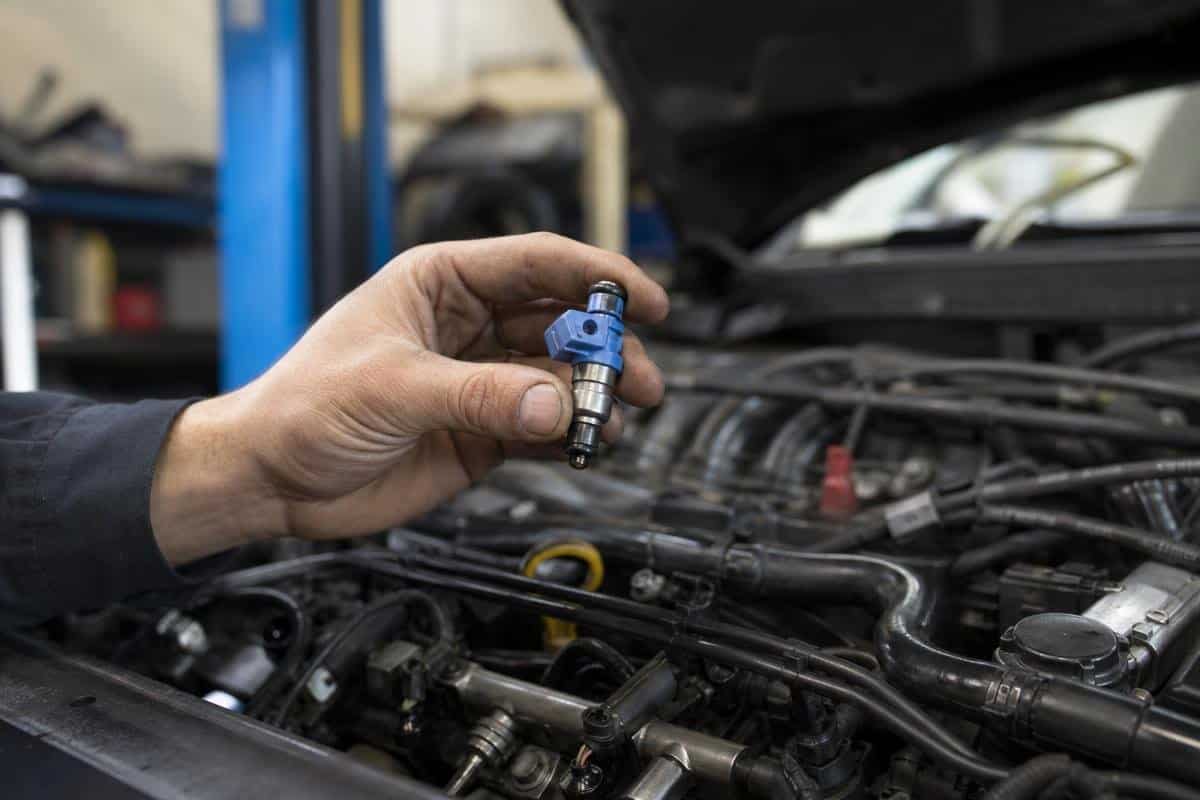
A fuel injector is a precision electronic valve that sprays a measured mist of fuel into the engine at exactly the right moment to enable combustion. The engine control unit, which is the car's main computer, tells each injector when to open and for how long. We're talking milliseconds. Get that timing or spray pattern wrong, and the combustion event falls apart.
Spray pattern is everything. A healthy injector produces a fine, cone-shaped mist that mixes evenly with air. Too much fuel and the mixture runs rich, wasting gas and coating your catalytic converter with unburned residue. Too little fuel and the mixture runs lean, which causes misfires and can overheat the combustion chamber. A clogged nozzle that dribbles instead of mists throws off both. That's when these symptoms start showing up at the driver's seat.
European vehicles like BMW, Mercedes, and Volkswagen add another layer. They use direct injection, meaning the injector sprays fuel straight into the cylinder rather than upstream into the intake port. It's more efficient, but fuel no longer washes over the intake valves, so carbon deposits build up faster. If you drive one of these in Tucker or Dunwoody, injector service requires a different approach. Our European auto repair service in Atlanta accounts for that difference.
What Causes Fuel Injectors to Get Dirty or Clog?
Fuel Quality and Deposit Buildup
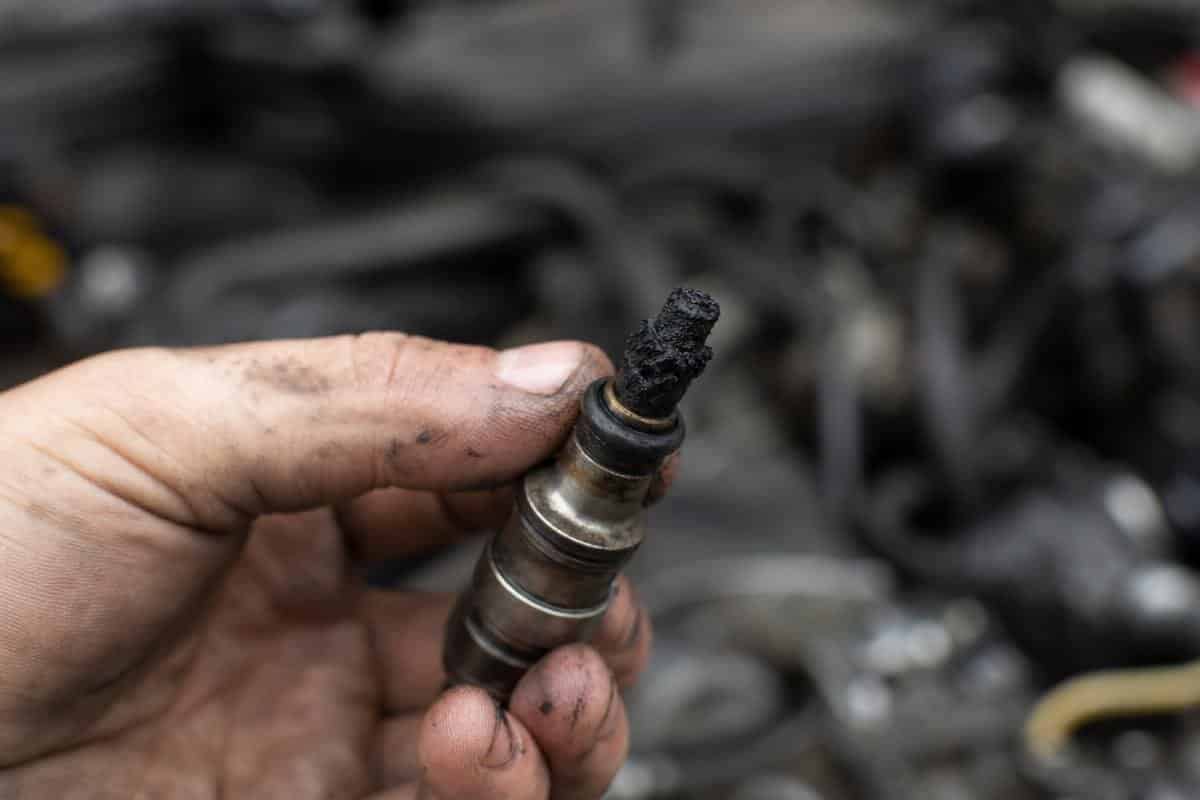
Yes, the grade of gas you buy actually matters. Lower-quality gasoline carries fewer detergent additives than higher-grade fuels. Over thousands of miles, hydrocarbon deposits from that fuel accumulate on the injector tip and gradually narrow the spray opening. A precise cone-shaped mist becomes a dribble. The engine compensates badly, and that's when drivers start noticing the effects at idle and acceleration.
Buford Highway through Chamblee is a good example of where this compounds fast. Constant stop-and-go traffic keeps engines at low RPM for long stretches. There's no sustained highway-speed flushing effect to burn deposits off. Georgia's standard E10 fuel blend adds another layer: 10% ethanol absorbs moisture, especially in summer humidity, and that contributes to corrosion and deposit buildup inside the injector over time.
High-Mileage Wear and Heat Soak
Heat soak is the other major cause, and it's one most drivers haven't heard of. When you shut the engine off, residual heat bakes any fuel left in the injector nozzle into a hard carbon crust. On direct-injection engines, where the injector tip sits directly inside the combustion chamber, this process is accelerated.
Meaningful accumulation typically starts around 60,000 to 80,000 miles. Metro Atlanta summers, with temperatures above 90 degrees from June through September, make heat soak worse every time you park.
Extended Intervals Between Oil Changes
The honest answer is that skipping oil changes contributes to injector deposit problems in ways most drivers don't expect. Degraded engine oil produces more combustion byproducts. Those byproducts circulate through the system and add to carbon deposits on the injectors. Using the wrong oil viscosity for your specific engine makes it worse.
Staying current on oil changes is one of the simplest ways to slow deposit buildup in the fuel system, and it costs a fraction of what injector cleaning or replacement runs.
Dirty Fuel Injector Symptoms: What You'll Actually Notice From the Driver's Seat

Dirty fuel injector symptoms are the drivability changes you feel before any dashboard light triggers: rough idle, hesitation, dropping fuel economy, hard starts, and eventually misfire codes. They rarely announce themselves all at once. They creep in gradually, and most drivers chalk them up to bad gas, traffic, or just the car "getting old." Your body is usually the best diagnostic tool you have. Here is what clogged or failing injectors actually feel like from behind the wheel.
Rough or Unstable Idle
You pull up to a red light on Buford Highway and the car shudders. The RPM needle bounces instead of sitting steady. That loping, uneven rhythm is what uneven fuel delivery feels like. Each cylinder needs a precise fuel spray at a precise moment. When one injector is partially clogged, that cylinder gets less fuel than it needs, and the engine rocks to compensate.
Most drivers dismiss this as normal. It is not.
A rough idle is usually the first sign of dirty fuel injectors, and it is the easiest moment to catch the problem cheaply.
Engine Misfires and Hesitation Under Acceleration
A clogged injector delivering a poor spray pattern causes incomplete combustion in that cylinder. You feel it as a stumble or jerk when you press the accelerator. On an I-85 on-ramp, where you need smooth, consistent power to merge safely, that hesitation is not just annoying. It is a real hazard.
There is a second problem that makes misfires expensive fast. Unburned fuel passes through the exhaust and hits the catalytic converter at high temperature. Do that long enough and the converter overheats and fails. What started as a cleaning job becomes a catalytic converter replacement, which costs several times more.
Declining Fuel Economy
When an injector delivers less fuel than the engine needs, the engine control unit (the computer that manages fuel delivery) compensates by adding more fuel from the other injectors. The engine stays running, but your MPG drops. The drop is gradual enough that most drivers blame stop-and-go traffic or summer heat rather than the fuel system.
If you have noticed you are filling up more often without a clear reason, that is worth paying attention to. Fuel economy loss that builds over weeks is a classic sign of dirty fuel injectors.
Check Engine Light and Misfire Codes
Misfires trigger diagnostic trouble codes in the P030X range, where X is the cylinder number. A steady check engine light means the system has logged a fault. A flashing check engine light means an active misfire is happening right now and the catalytic converter is at immediate risk of damage.
Do not drive on a flashing check engine light. Pull over when it is safe to do so. Understanding why regular diagnostics can help prevent major repairs is exactly the difference between catching it early and facing a catalytic converter replacement.
Hard Starts or Engine Stalls
Severely clogged injectors can make the engine hard to start, especially on cold mornings. During Chamblee's January and February cold snaps, fuel atomizes less efficiently in cold air, and a partially blocked injector makes that worse. The engine cranks longer than it should before catching.
Stalling at idle is a step further. That usually points to an injector that is failing outright rather than one that is merely dirty. Either way, it needs attention before it leaves you stranded.
Fuel Smell From the Exhaust
A leaking injector does not just under-deliver fuel. It can drip raw gasoline into the intake or exhaust stream. If you smell gasoline from the tailpipe, that is unburned fuel passing through the engine. It is distinct from normal exhaust odor, and it is not something to wait on.
Raw fuel hitting the catalytic converter accelerates converter failure fast. If you notice that smell, our exhaust system repair service can confirm whether the converter has already taken damage, so you know exactly what you are dealing with before any work is authorized.
How Mechanics Actually Diagnose a Dirty or Failing Injector
Guessing is not a diagnostic process. At Blue Ridge Automotive – European & Domestic on N Peachtree Rd, we see this pattern regularly with both domestic and European vehicles, and a good technician confirms it's the injectors and not spark plugs, ignition coils, or a compression problem before recommending any service. Here's exactly how that confirmation happens.
Reading Live Data With a Scan Tool
The first step is plugging into your car's OBD-II port, the diagnostic connector under your dash, and pulling live data while the engine runs. We're looking at three numbers: fuel trim values, misfire counts per cylinder, and injector pulse width.
Fuel trim is the ECU's correction signal. Long-term fuel trim above +10% means the engine is running lean and the computer is adding fuel to compensate. That's a signal the injectors aren't delivering what the engine expects. Misfire counts tell us which cylinder is affected. Injector pulse width, the duration the injector stays open each firing cycle, tells us whether the ECU is overcompensating.
Together, those three data points let us separate a fuel delivery problem from an ignition or mechanical one. Our engine diagnostics service in Chamblee runs this full data set before any repair recommendation is made.
Injector Balance Testing
If the scan data points to fuel delivery, the next step is an injector balance test. Each injector is activated individually for a precise pulse width while we measure the resulting pressure drop in the fuel rail, the metal line that feeds fuel to all injectors.
An injector that drops less pressure than the others is restricted. One that drops more may be leaking fuel into the cylinder when it shouldn't be. No injector removal required. The test isolates exactly which injector is the problem and tells you whether it's clogged or mechanically failing.
When Cleaning Is Enough vs. When Replacement Is the Answer
The honest answer is that cleaning works when the injector is dirty but still mechanically sound. Ultrasonic off-car cleaning or a professional on-car flush can restore flow rates close to factory spec. That's a reasonable service for deposit buildup from stop-and-go driving on Buford Highway or ethanol-blended Georgia fuel.
But a cracked injector body, a failed O-ring, or a worn needle valve, the internal pin that opens and closes the fuel port, cannot be fixed by cleaning. If the balance test shows a mechanical failure, cleaning that injector means paying twice. You'll spend money on the cleaning, the symptom won't resolve, and you'll pay again for the replacement. Proper diagnostics upfront is what separates a repair that holds from one that doesn't.
Not sure if it's the injectors? Our diagnostic scan will tell you exactly what's going on, with the live fuel-trim and balance data to back it up.
How to Prevent Fuel Injector Problems Before They Start
Fuel Quality Matters More Than Most Drivers Think
Yes, the quality of gas you buy actually matters. Higher-quality fuels carry a greater concentration of detergent additives than the federal minimum standard requires. Those additives slow deposit formation on injector tips and intake valves. This is not about buying premium grade every fill-up. It is about choosing quality-certified stations over discount pumps with minimal additive packages.
Stop-and-go driving through Atlanta's metro corridors keeps your engine running at low RPM for long stretches. That driving pattern is exactly where fuel quality has a measurable long-term effect on injector condition. Lower-quality fuel with minimal detergent additives leaves more residue behind with every cycle. Over tens of thousands of miles, that adds up.
Scheduled Maintenance That Protects the Fuel System
A few specific services make a real difference. First, replace the fuel filter on schedule. A clogged filter forces debris toward the injectors. Second, stay current on oil changes. Combustion byproduct buildup accelerates when oil goes stale, and that buildup reaches the fuel system. Third, plan a fuel system service around every 30,000 miles if you drive primarily in city traffic. That interval is a practical guideline, not a hard rule, but it is the right ballpark for urban driving conditions.
If you drive a direct-injection vehicle, BMW, Volkswagen, Audi, or similar, intake valve cleaning is a separate service from injector cleaning. Direct injection sprays fuel directly into the cylinder, bypassing the intake valves entirely. That means detergent additives never wash the valves, and carbon builds up fast. Our European auto repair work covers this regularly. It is one of the most overlooked services on those platforms.
Fuel injector cleaning in Atlanta is not something most drivers think about until symptoms appear. The honest answer is that staying ahead of it costs far less than diagnosing a misfire after the fact.
What Atlanta Driving Conditions Do to Your Fuel System
Yes, local driving conditions genuinely make fuel injector problems worse here than in most cities. Three specific factors stack against your fuel system in this region: stop-and-go traffic patterns, summer heat, and the fuel itself.
Stop-and-Go Traffic Accelerates Deposit Buildup
The I-285 and I-85 interchange is one of the most congested stretches of highway in the country. Peachtree Road through Dunwoody adds more of the same. When you spend 45 minutes crawling at low RPM, your engine never reaches the sustained operating conditions that help burn off light deposits naturally. The injectors cycle constantly at low pressure, leaving partial fuel droplets that bake onto the nozzle tips. Do that five days a week for a year, and the buildup is real.
Summer Heat Makes It Worse After You Park
June through September, temperatures hold above 90 degrees for weeks at a time. When you shut the engine off after a Chamblee errand or a Decatur lunch run, residual heat soaks into the injector nozzles. Fuel sitting in those nozzles vaporizes and leaves a waxy carbon residue behind. Repeat that cycle daily across a full summer and you have a measurable restriction in fuel flow. These are some of the most common signs of dirty fuel injectors we see come through the door after Labor Day.
E10 Fuel and Humidity Add Moisture to the Mix
Most pump fuel sold in this region is E10, meaning 10% ethanol. Ethanol pulls moisture from the air, and summer humidity here gives it plenty to work with. That moisture contributes to internal injector corrosion over time. If you want to understand how that connects to broader fuel system wear, our guide on why regular diagnostics prevent major repairs covers the chain reaction well.
Dirty Injectors and Emissions Testing
Metro-area counties, including DeKalb, require emissions testing. A misfiring or fuel-rich engine from clogged injectors is a straightforward path to a test failure. Getting a full fuel system diagnostic before your test date is a practical move, not an upsell.
Frequently Asked Questions
Can I drive with dirty fuel injectors?
You can, but it depends on what the engine is doing. Rough idle and mild hesitation are nuisances. A flashing check engine light is a different situation entirely. That flash means active misfires are pushing unburned fuel into the exhaust, which overheats and destroys the catalytic converter. A converter replacement costs significantly more than a fuel system service. If the light is flashing, stop driving and have the vehicle towed in.
How much does fuel injector cleaning cost?
The method determines the price. An in-tank additive costs almost nothing. A professional on-car flush or ultrasonic bench cleaning costs more and does considerably more. We give you upfront pricing before any work begins, and we run a diagnostic first to confirm the injectors are actually the problem. Paying for a cleaning when the real issue is a failing engine diagnostic finding something else entirely is money wasted.
Will fuel injector cleaner from the gas station fix the problem?
The honest answer is: sometimes, for mild cases. Detergent additives can dissolve light varnish deposits if you catch them early. They will not fix a mechanically failed injector, clear a severely clogged nozzle, or correct a distorted spray pattern. Treat them as maintenance, not repair.
How do I know if it's the fuel injectors or the spark plugs causing a misfire?
Both cause misfires and trigger P030X codes. A technician isolates the cause using live scan data, fuel trim readings, and cylinder contribution testing. On high-mileage vehicles, swapping spark plugs first is reasonable because they are cheaper. Read more about why worn spark plugs cost more than just the replacement fee before assuming the injectors are guilty.
How often should fuel injectors be cleaned?
There is no universal manufacturer interval. Thirty thousand miles is a practical guideline for city-driven vehicles. European direct-injection engines, including BMW, Audi, and Volkswagen models, may need more frequent attention because carbon builds up on the intake valves and compounds injector deposit problems faster than port-injected engines.
Does Blue Ridge Automotive – European & Domestic service all vehicle types for fuel system issues?
Yes. We work on European, Asian, and domestic vehicles. That includes Volkswagen, Lexus, Ford, and everything in between. Blue Ridge Automotive – European & Domestic has served Metro Atlanta drivers since 2021 with ASE-certified technicians and holds a 4.9-star rating across more than 1,144 reviews.
If your engine is idling rough, hesitating under acceleration, or the check engine light just came on, bring it in before a small fuel system issue becomes a catalytic converter replacement. Our ASE-certified team diagnoses and services fuel systems on European, Asian, and domestic vehicles at our shop at 3733 N Peachtree Rd in Chamblee. Call us at (770) 216-8474 or schedule online, and we will give you a clear answer and upfront pricing before any work begins.
Ready to Get Started with Blue Ridge Automotive – European & Domestic?
Get in touch to speak with our team directly. We're ready to answer your questions, walk you through your options, and help you find the right solution for your needs. Whether you're just starting to plan or ready to move forward, we'll make the process simple and stress-free. Reach out today and let's talk about how we can help.