
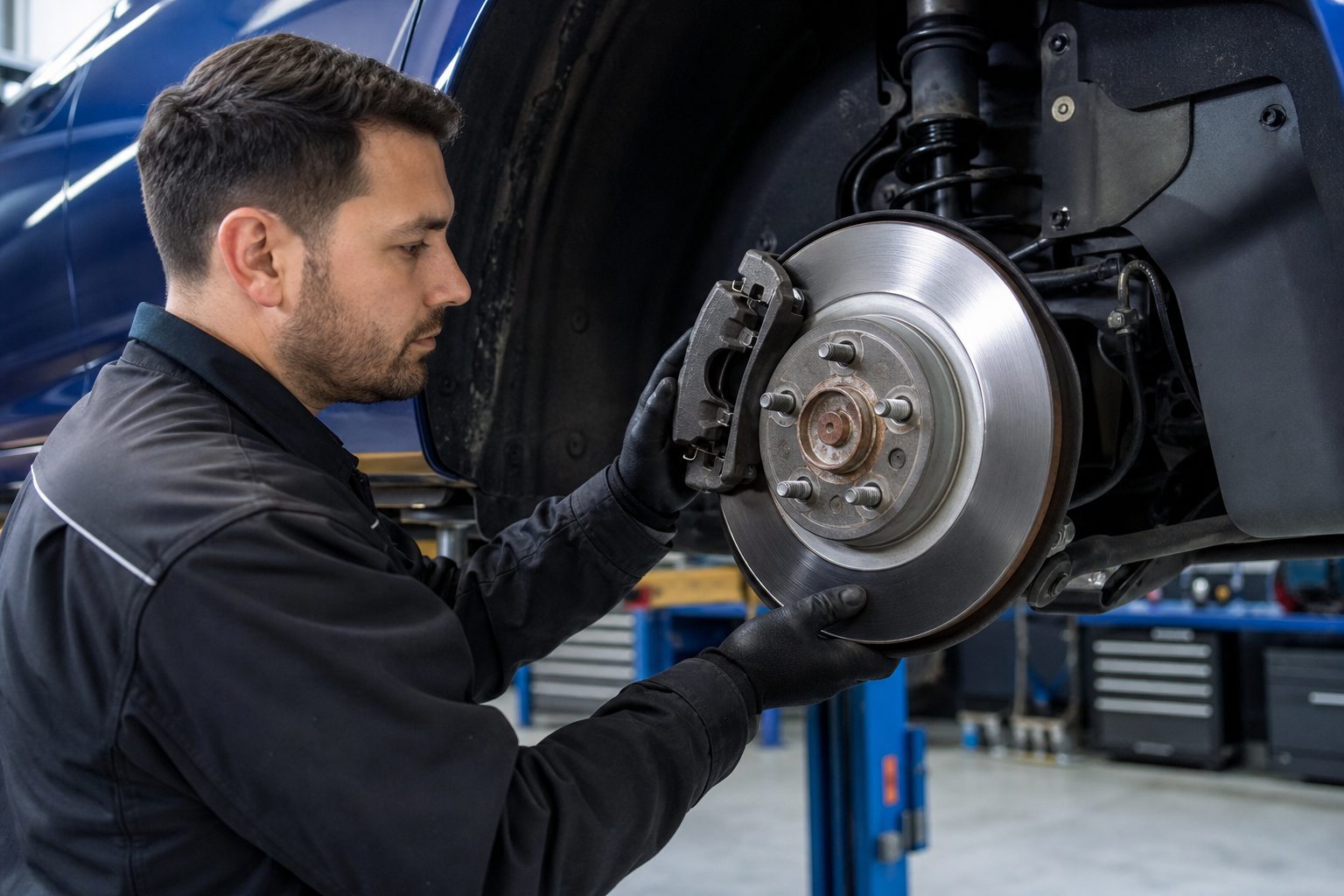
Brake Repair in Decatur for European, Asian, and Domestic Vehicles
A scrape at every stop might come from worn pads, but a car that also pulls can have a sticking caliper behind the damage. Replacing the pads alone would leave that cause in place. Tell us what you hear, when it happens, and whether the pedal has changed so we can trace the problem instead of guessing.
We repair brake problems on European, Asian, and domestic vehicles, including BMW, Mercedes-Benz, Audi, Volkswagen, Ford, Chevrolet, GMC, and Jeep. A warning on an imported sedan can require a different diagnostic path from a hydraulic leak on a domestic SUV. The goal is the same for either vehicle: identify the damaged or failed part and explain what will correct it.
You do not have to decide from a symptom alone. We explain the findings behind each recommendation, including why a related part may need replacement and what the proposed repair is intended to solve.
For sudden pedal changes, persistent grinding, or a brake warning, contact us about diagnosis. If stopping ability is reduced or fluid is leaking, leave the vehicle parked rather than driving here.
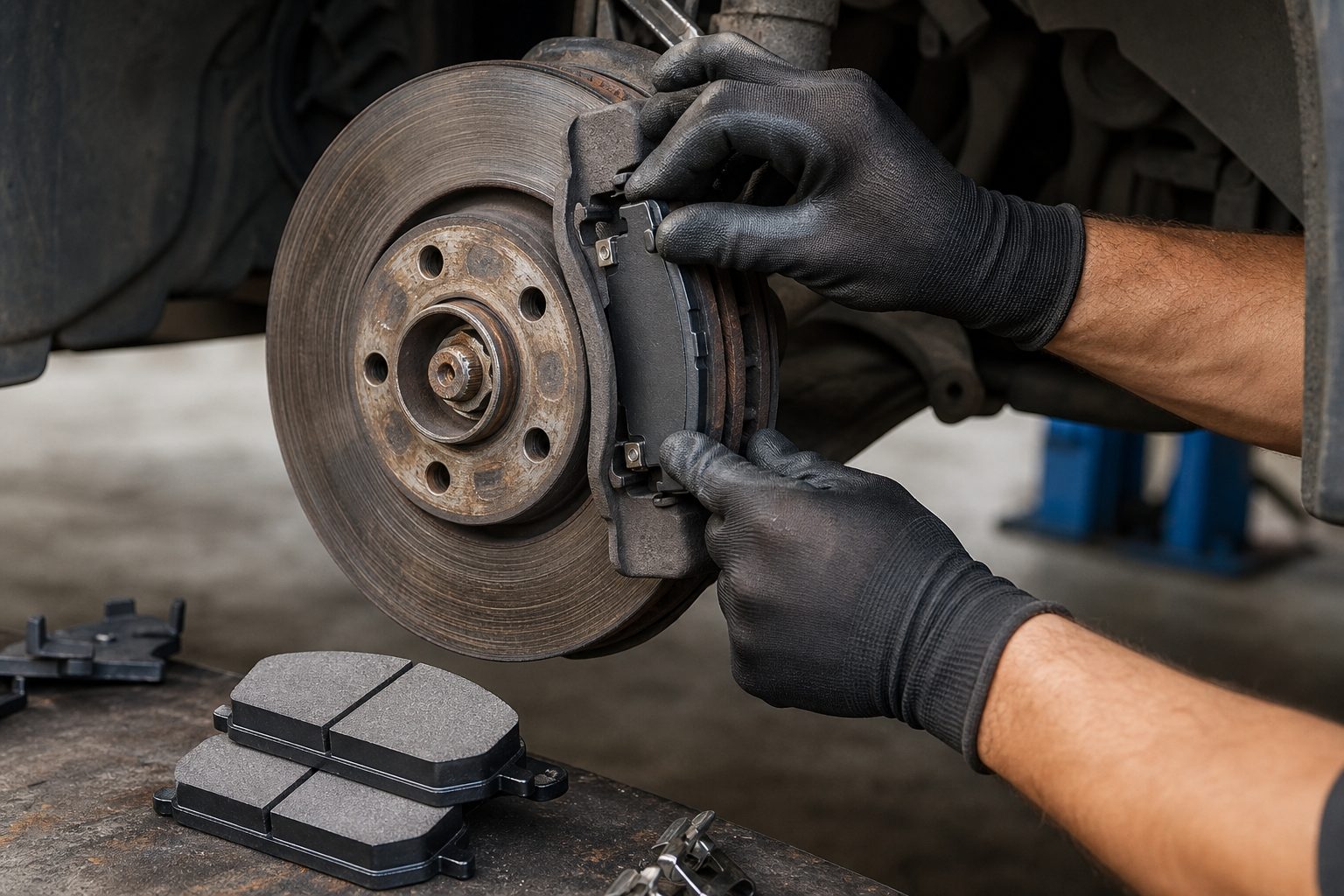
Which Brake Failures Can We Repair?
Effective brake repair addresses why the vehicle is not stopping correctly, not just which part looks worn. Pads can grind after their friction material wears away, while a binding caliper can damage replacement pads if the underlying fault remains. A sinking pedal may come from an external leak or a master cylinder that cannot hold pressure internally. Pulsation can involve rotor thickness variation, and an ABS warning can begin with a missing wheel speed signal. Those problems need different tests and different fixes. We use the symptoms and diagnostic findings to build a repair recommendation, then explain which components need attention and why.
This page is for an active problem: noise, vibration, pressure loss, a dragging brake, or a warning that needs diagnosis. For scheduled checks and upkeep when there is no known failure, our brake services in Decatur page covers routine inspections and maintenance. Keeping those needs separate helps you choose the right appointment and explain what has changed before we begin tracing the fault.
The repair procedure also depends on the vehicle. Some European models require a scan tool to retract an electronic parking brake mechanism before rear brake repairs. Others use separate pad wear sensors that need replacement when damaged or worn through. We account for those details rather than treating a warning reset or a fresh set of pads as a complete fix.
Depending on the confirmed fault, a repair may address:
- Worn pads: Replace damaged friction material and affected brake hardware.
- Damaged rotors: Replace discs with excessive wear, scoring, or cracking.
- Binding calipers: Correct seized slide pins or replace failed calipers.
- Fluid leaks: Repair leaking lines, hoses, or other hydraulic components.
- Pressure loss: Replace a failed master cylinder when testing confirms it.
- Electronic faults: Diagnose ABS signals, parking brake faults, and wear sensors.
Repairs Matched to the Part That Failed
Two vehicles can make a similar noise and need different repairs. We look for the source of the complaint and any damage it caused, then recommend the work that addresses both rather than assuming every symptom needs new pads.
Replacing Worn Pads and Damaged Hardware
When worn pads cause squealing or grinding, replacement restores the friction material that slows the vehicle. We also look for uneven wear, damaged retaining hardware, and a caliper that is not releasing. Replacement pads must suit the vehicle's braking system, but selecting the right pads will not solve noise or rapid wear caused by another failed component.
Replacing Rotors That Cannot Brake Evenly
Deep scoring, cracking, insufficient thickness, or confirmed thickness variation can make rotor replacement necessary. We explain the measurements and damage behind that recommendation instead of assuming every vibration comes from the rotor.
A dropping pedal or reduced stopping power means the vehicle should stay parked.
Freeing Sticking Calipers or Replacing Failed Units
A seized piston or binding slide pin can keep a pad pressed against the rotor, causing heat, pulling, and uneven wear. We determine whether the problem can be corrected at the pins or hardware, or whether a damaged or leaking caliper needs replacement.
Restoring Pressure After Hydraulic Failure
A pedal that slowly drops under steady pressure can indicate a leak or internal master cylinder failure. We trace the pressure loss before recommending a replacement. Once the failed component is repaired or replaced, the affected hydraulic circuit needs proper bleeding to remove air. Adding fluid alone does not correct a leaking system.
Repairing Leaking Brake Lines and Hoses
Corroded metal lines, damaged fittings, and split flexible hoses can release brake fluid and reduce braking pressure. We locate the leak and replace or repair the affected components, then verify that the repaired circuit holds pressure.
Resolving ABS and Wheel Speed Sensor Faults
An ABS code identifies a diagnostic starting point, not an automatic parts order. We evaluate wheel speed signals, wiring, and related faults before recommending sensor replacement or further ABS module diagnosis.
From Reported Symptom to Approved Brake Repair
Your description helps direct the diagnosis, but it does not determine the parts list. We connect what you noticed with test results, explain the cause, and obtain approval for the repair plan before beginning the work.
Step 1: Trace the Reported Fault
Tell us whether the problem occurs during light braking, after several stops, or while the vehicle is parked. We then examine the components connected to that complaint. Depending on the symptoms, diagnosis can include measuring pads and rotors, checking caliper movement, locating fluid leaks, testing hydraulic pressure, or reading ABS fault information and wheel speed data. A warning code or a visible worn pad is evidence, but we also look for the reason it failed before preparing the repair recommendation.
Step 2: Review the Findings and Repair Price
We put the proposed repair and its price in a written estimate, with an explanation of the findings. You can ask about each recommendation and approve the estimate before any repair work begins.
Step 3: Correct the Confirmed Failure
The approved work may involve replacing pads and rotors, correcting caliper binding, replacing a leaking hose, or installing a master cylinder. Electronic faults follow their own repair path. Where required, we use a scan tool for parking brake retraction and complete the applicable reset or relearn after replacement.
Step 4: Confirm the Repair Addresses the Complaint
Verification follows the original concern. A hydraulic repair needs checks for leaks and pressure retention. A dragging brake needs confirmation that it releases, while an ABS repair calls for checking the relevant signals and fault status. A road test is appropriate only once the vehicle is safe to drive. If vibration or pulling points beyond the brakes, we explain that finding rather than replacing more brake parts without evidence. Our steering and suspension repair page explains related systems that may also need diagnosis.
Brake Symptoms That Call for a Repair Diagnosis
Pay attention to what changes, not just how loud it becomes. A new scrape, a pedal that travels farther, or a brake that stays applied can signal different failures. Some symptoms allow time to arrange diagnosis; reduced stopping power, a sinking pedal, or an active fluid leak means you should not continue driving. These six patterns help explain the complaint, but none identifies the failed part by itself.
Squealing That Returns With Each Stop
Repeated squealing can come from a pad wear indicator, damaged hardware, or a friction surface problem. We check the pads and related components before recommending a fix. A brief description of when the sound starts helps distinguish the possible causes.
Harsh Scraping or Grinding During a Stop
Grinding can mean the pad backing is contacting the rotor, but trapped debris or damaged hardware can also scrape. Stop driving if braking is compromised. Diagnosis establishes whether the repair needs pads, replacement rotors, hardware, or another damaged component.
A Pedal That Drops Under Steady Pressure
A sinking pedal can indicate hydraulic leakage or internal master cylinder failure. Air in the system can also make the pedal feel spongy. Do not keep driving or rely on pumping the pedal; the source of pressure loss needs diagnosis.
Sideways Pull or a Brake That Drags
Uneven braking force can come from a sticking caliper, restricted hose, or contaminated friction material. A burning smell may accompany a dragging brake. Strong pulling, smoke, or reduced braking means stop safely and do not continue.
A Shudder You Feel While Slowing
Pulsation may involve rotor thickness variation, uneven friction deposits, or another wheel assembly problem. We measure and investigate before deciding on rotor replacement. Vibration that also occurs without braking may require diagnosis outside the brake system.
Brake, ABS, or Parking Brake Alerts
These warnings do not all mean worn pads. A red brake warning can involve low fluid or another serious braking fault, while an ABS alert may concern wheel speed data. Parking brake warnings need a separate diagnostic path. Our vehicle diagnostic work helps trace the fault rather than simply clearing the message.
When the Problem Goes Beyond Pads and Rotors
ABS Warnings
An ABS warning deserves more than a code reset. The system compares wheel speed information to help manage braking when a wheel is about to lock. A damaged sensor, wiring fault, or signal problem can interrupt that process, and module faults require their own testing. We use the stored fault information alongside signal checks to narrow the cause. Replacing a sensor because its name appears in a code can miss a wiring issue. Likewise, recommending an ABS module without confirming its inputs can lead to an unnecessary replacement. The repair should follow the evidence, not the dashboard message alone.
Electronic Parking Brake Faults
Electronic parking brake faults can leave a rear brake applied or prevent the parking brake from engaging. On European models that require it, a scan tool retracts the mechanism before rear brake work. A seized mechanical component, actuator fault, wiring problem, or control issue needs to be distinguished before replacing parts. We also separate parking brake faults from pad wear sensor warnings, which serve a different purpose. Replacing a worn or damaged wear sensor may be necessary with the associated repair, but it will not correct an unrelated parking brake failure.
Brake Fluid Leaks
A fluid leak can change a repair from a noise complaint into a safety issue. Low fluid alone does not identify the source: the loss may be at a line, hose, caliper, fitting, or master cylinder. Corroded tubing and damaged flexible hoses require different repairs, and a master cylinder can also lose pressure internally without leaving a puddle beneath the vehicle. We trace the failure and explain what needs replacement. The repair must address the cause of pressure loss, followed by bleeding and verification as needed. Repeatedly topping off the reservoir is not a substitute for repairing the leak.
4.9 Stars Across 1,000+ Reviews
Choose a Brake Repair Plan You Can Understand
Repair Coverage Across European, Asian, and Domestic Vehicles
Our coverage includes Porsche, Volvo, Land Rover, and Jaguar, along with Asian vehicles and domestic makes such as Ram, Dodge, Cadillac, and Lincoln. That range lets you discuss brake problems across different vehicles with one shop. The procedure still follows the individual vehicle: an electronic parking brake fault and a leaking hydraulic line do not receive the same repair plan.
Repair Decisions With the Price in Writing
A starting price helps with planning, but the failed components determine the final estimate. A pad replacement and a repair involving damaged rotors or a seized caliper are different jobs. We explain that difference in writing before you approve the work. If diagnosis reveals an additional problem, we discuss the revised repair scope and obtain approval before proceeding.
Most Repairs Carry a 24-Month/24,000-Mile Warranty
Blue Ridge Automotive - European & Domestic provides a 24-month/24,000-mile warranty on most repairs. Ask how the warranty applies to your proposed brake repair so you understand the coverage before approving it. It is a concrete detail to consider alongside the diagnosis, written estimate, and explanation of the recommended work.
You'll find the shop at 803 Church St, Decatur, GA 30030. Our hours are Monday to Friday, 8 AM to 5 PM. Contact us with your symptoms and vehicle details so we can discuss the next step for diagnosis.
Related Vehicle Repairs at Our Decatur Shop
Braking complaints can overlap with other vehicle faults. Explore related repairs when diagnosis points beyond the brakes.







Get a Clear Plan for Your Brake Repair
You do not need to know whether the problem is a caliper, rotor, hose, or sensor before contacting us. Describe the noise, pedal change, warning message, or pulling you have noticed, and we can discuss diagnosis. Blue Ridge Automotive - European & Domestic handles brake failures on European, Asian, and domestic vehicles, with a written repair estimate for your approval before work begins.
Choose online scheduling or call (404) 549-9424 to discuss your brake symptoms.
Tell us what changed in your braking. We'll explain the findings and proposed fix before you decide on the repair.
Answers About Brake Faults and Repair Costs
A new braking problem deserves a clear explanation, not a guessed parts list. Request a repair appointment online or call (404) 549-9424. If braking is reduced, keep the vehicle parked and discuss the symptoms with us first.