
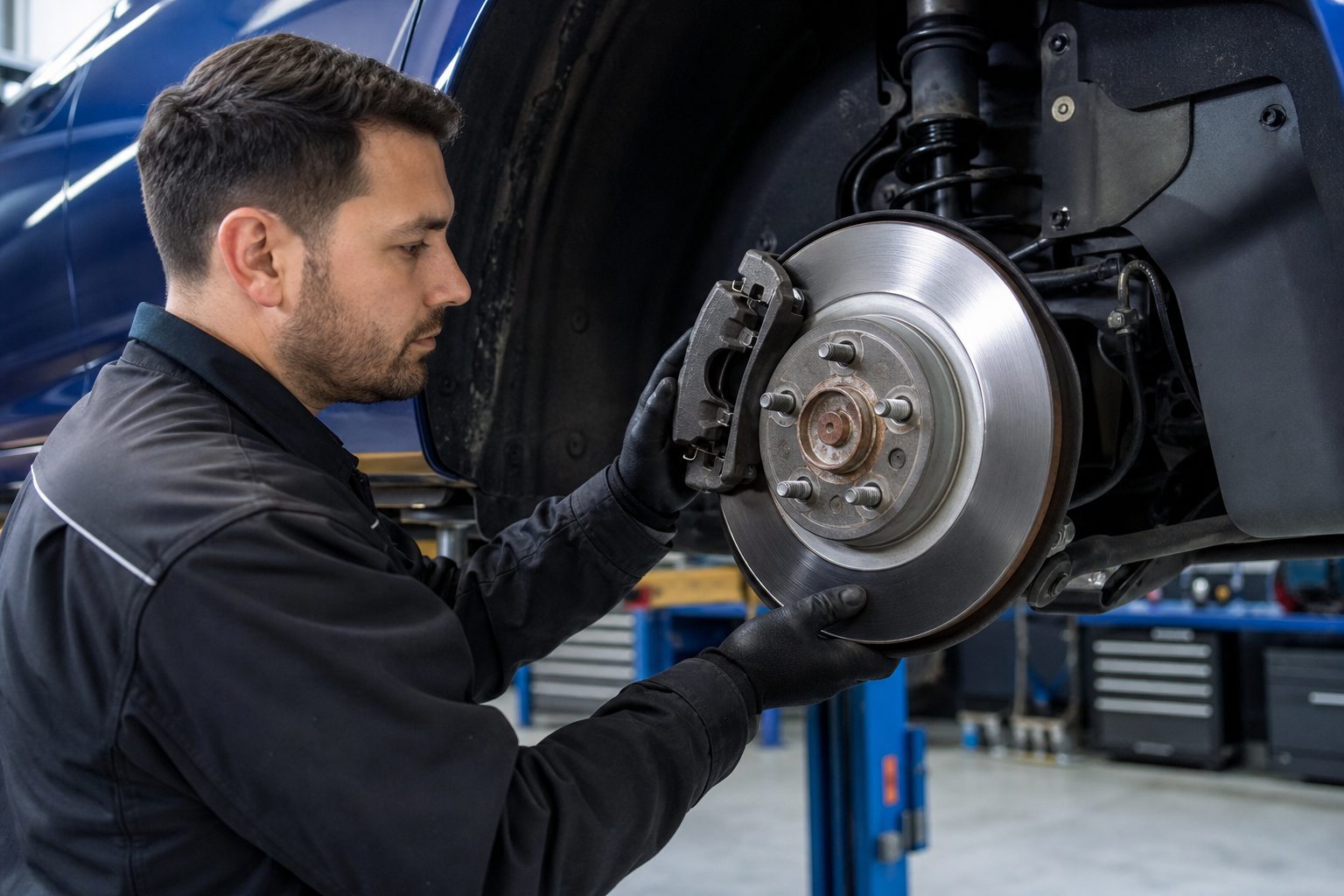
Brake Repair in Chamblee for Grinding, Soft Pedals, and Warning Lights
Maybe the pedal keeps dropping while you hold it at a stop, or a harsh scrape has replaced the squeal you heard yesterday. Those details help narrow the problem, but they cannot confirm it by themselves. A pedal that sinks can indicate pressure loss, while grinding can mean damaged friction parts. If stopping ability changes, stop safely and do not continue driving.
Our brake repair work includes replacing worn pads and damaged rotors, repairing sticking calipers, and correcting leaks in brake lines or hoses. We also diagnose master cylinder failures, ABS wheel speed sensor faults, and electronic parking brake problems. Whether the problem involves a European sedan or a domestic SUV, the recommendation starts with evidence from that vehicle rather than an assumed repair package.
Blue Ridge Automotive - European & Domestic has a 4.9-star rating across 1,000+ reviews. For your brake problem, we pair that established record with a straightforward process: identify the failure, explain the recommended correction, and let you approve the written estimate before any work.
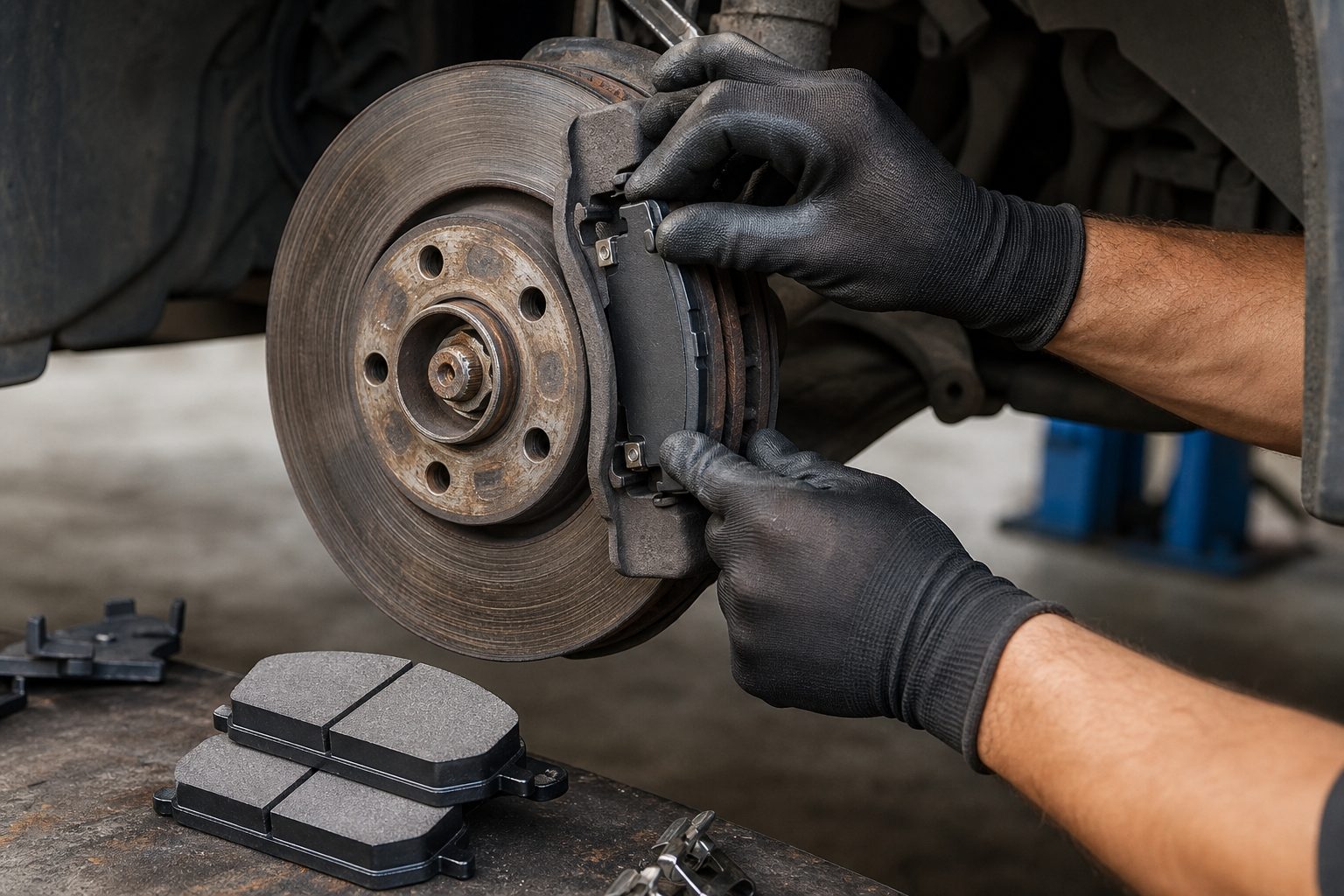
Find the Fault Before Choosing the Fix
A brake symptom tells us where to begin, not which part to order. Grinding may come from pads worn down to their backing plates, but a sticking caliper can be the reason those pads failed early. Pedal vibration may involve uneven rotor thickness, while a soft pedal points toward the hydraulic system. Replacing friction parts without finding a pressure leak or binding caliper can leave the original problem unresolved. We connect the symptom to the damaged component, then consider what caused that component to fail before recommending the repair.
The repair plan depends on what testing reveals. These are examples of faults we investigate, with the correction tied to the condition we actually find rather than a preset list:
A complete explanation should connect three things: what you noticed, what testing found, and how the proposed repair addresses it. If one pad is much thinner than its partner, the estimate should account for that uneven wear rather than just list new pads. If fluid is escaping, the leak needs a repair. That connection helps you understand why the recommended work belongs on your vehicle.
- Worn pads: Grinding or persistent squealing can lead us to damaged friction material. Replacement addresses the worn pads, while related hardware and caliper movement help explain uneven wear.
- Damaged rotors: Deep grooves, cracks, or thickness below the vehicle's limit call for replacement. Pulsation also requires checking disc thickness variation and mounting conditions.
- Sticking calipers: A seized piston or binding slide pin can keep a pad against the rotor. We determine whether caliper repair or replacement is needed to restore proper application and release.
- Pressure loss: A sinking pedal can result from an external fluid leak or an internally failing master cylinder. The repair must address where pressure escapes, not simply add more fluid.
- Faulty lines and hoses: Corroded tubing, leaking connections, or a damaged flexible hose can compromise braking. A restricted hose may also hold pressure at one wheel after you release the pedal.
- Electronic faults: An ABS warning may involve a wheel speed sensor, wiring, or the control module. Parking brake alerts and pad wear warnings need their own diagnosis, with sensor replacement or electronic parking brake repair matched to the confirmed fault.
Brake Problems We Diagnose and Repair
A confirmed fault determines the work needed. These repairs address worn friction parts, hydraulic failures, and electronic problems that can affect braking or parking brake operation.
Worn Pad and Damaged Rotor Replacement
When worn pads or damaged discs explain the noise or reduced braking, we recommend the necessary replacements. Rotor condition and caliper operation help determine whether pads alone can address the problem or whether rotors also need replacement.
Sticking Caliper and Slide Pin Repairs
A caliper that cannot move or release correctly can create pulling, excess heat, and rapid pad wear. We evaluate piston and slide pin movement, then explain whether correcting the binding hardware or replacing the caliper addresses the failure.
Leaking Brake Line and Hose Repairs
Lost fluid means lost hydraulic pressure. We trace leaks to the affected line, connection, hose, or brake component before recommending a repair. A hose that restricts return flow also needs attention, even when there is no visible puddle underneath.
Master Cylinder Replacement for Pressure Loss
When a pedal sinks without an external leak, internal master cylinder failure is one possibility. Testing separates that fault from other hydraulic problems before we recommend replacement and restore the system's hydraulic operation.
ABS Sensor and Module Fault Diagnosis
An ABS code points toward a circuit or operating problem, not automatically a failed module. We evaluate wheel speed information, sensor signals, and related wiring before recommending sensor replacement or further module diagnosis.
Electronic Parking Brake and Wear Sensor Repairs
Parking brake faults and pad warnings require different corrections. We replace failed wear sensors and diagnose electronic parking brake problems, using a scan tool for retraction where the vehicle requires it.
From Your First Symptom to a Confirmed Repair
We build the repair plan around your complaint, the vehicle's condition, and the diagnostic findings. You get an explanation before a repair recommendation, a written estimate to approve, and verification after the approved work.
Step 1: Trace the Reported Brake Problem
We begin with what happens, when it happens, and whether the vehicle can be tested safely. Noise calls for examining friction parts and hardware; pulling calls for comparing brake application and release. A soft pedal requires tracing hydraulic pressure loss and looking for leaks. With ABS or parking brake warnings, fault codes and system data guide further testing. Pad and rotor measurements support the diagnosis where wear or damage is involved, rather than serving as a substitute for finding the cause.
Step 2: Explain the Findings and Confirm Your Price
Final pricing depends on inspection. You receive a written estimate to approve before any work, with the diagnosed fault and recommended fix explained in plain language.
Step 3: Correct the Cause of the Failure
The approved repair might involve pads and rotors, a leaking hose, a failed master cylinder, or an electronic fault. If binding caliper hardware caused the friction damage, the repair plan addresses that cause too. European parking brake procedures are followed where electronic retraction or initialization is required.
Step 4: Verify Pressure, Release, and Stopping
After the repair, we check the functions connected to the original complaint. Hydraulic work calls for confirming pedal response and checking for leaks. Caliper repairs require verifying release as well as application. Electronic repairs require checking the affected system's operation, not just clearing a warning. When safe, a road test helps confirm braking behavior, with the completed work explained at handoff.
Brake Symptoms That Call for Prompt Repair
Pay attention to changes in sound, pedal travel, stopping direction, and dashboard warnings. None identifies a failed part with certainty, but each gives us a useful starting point. The symptoms below call for diagnosis, and some mean you should stop driving rather than make another trip.
New Squeals or Harsh Grinding
A squeal can come from a pad wear indicator, glazed friction material, or hardware movement. We look for the source instead of assuming every squeak needs the same fix. Persistent noise deserves diagnosis, especially when it comes with uneven braking or a change in pedal feel.
A harsh grinding sound may mean the pad backing is contacting and damaging the rotor. It can also involve trapped debris or failed hardware. Do not keep driving to see whether severe grinding clears; stop safely and arrange for the problem to be evaluated.
A Soft Pedal or Pedal That Keeps Dropping
Extra pedal travel can indicate air or a leak in the hydraulic circuit. A pedal that continues sinking may point to internal master cylinder failure. If the pedal drops or stopping weakens, stop safely and do not drive farther.
A Sideways Tug as You Slow
Unequal braking can come from a seized caliper piston, binding slide pins, or a restricted hose. Tire and suspension problems can also affect direction, so the pull needs diagnosis rather than an automatic caliper replacement. We compare brake operation across the axle to find what is applying unevenly or failing to release.
Shaking That Appears During Braking
Pedal pulsation can come from rotor thickness variation or related mounting problems. We check the discs and surrounding components before recommending replacements. When a damaged rotor is responsible, replacement addresses the disc, while any contributing caliper or mounting issue also needs correction.
Brake, ABS, or Parking Brake Alerts
These warnings do not all mean worn pads. A red brake warning can indicate a hydraulic concern, an ABS light can signal a wheel speed sensor or control fault, and a parking brake message may involve an actuator or electrical problem. We diagnose the affected system before recommending parts. If a warning appears with weak braking, a sinking pedal, smoke, or a visible fluid leak, stop safely and do not continue driving.
Why Similar Symptoms Need Different Repairs
Two Soft Pedals, Two Different Causes
Consider two vehicles with pedals that feel soft. One may have a leaking brake hose that allows fluid to escape whenever pressure rises. Another may have air in the hydraulic circuit after a component failure. A third may have a master cylinder whose internal seals allow pressure to bypass even though no fluid reaches the ground. New pads will not correct those faults, and adding fluid will not repair a leak. The diagnosis needs to establish where pressure is being lost and whether related components are affected. The repair may involve a hose or line, a leaking caliper, or master cylinder replacement, followed by bleeding and verification appropriate to the work. Explaining that distinction helps you understand the estimate. It also prevents a familiar symptom from becoming an excuse to replace unrelated parts without evidence.
Warning Lights vs. the Actual Fault
Electronic brake faults require a similar distinction between a warning and its cause. An ABS wheel speed sensor code can reflect a failed sensor, a damaged connection, or another signal problem. It does not by itself justify replacing the ABS module. Comparing wheel speed data and evaluating the relevant circuit helps narrow the fault before parts are recommended. Electronic parking brakes add another layer on some European models. A parking brake that will not release may involve an actuator, wiring, or a control issue, and forcing the mechanism can cause damage. Where the design requires it, a scan tool retracts the mechanism for repair and supports the required setup afterward. A pad wear sensor warning is a separate concern again. Replacing a worn sensor may be part of the correction, but clearing the message alone does not establish that the underlying brake problem has been fixed.
Burning Smells and Seized Calipers
A burning smell near a wheel changes the urgency of the conversation. A seized caliper piston or binding slide pin can hold a pad against the rotor after your foot leaves the pedal. A restricted hose can also trap hydraulic pressure and produce similar drag. Both can overheat friction parts, but they require different repairs. Replacing damaged pads and rotors without correcting the reason they stayed applied leaves the cause in place. We investigate the wheel's ability to release, identify damaged components, and explain which repairs address the fault and which address its consequences. If you notice smoke, a strong burning smell, severe pulling, or reduced stopping ability, stop as safely as possible and do not continue driving. Let us know those symptoms when you contact the shop so the conversation begins with safety, not just a price.
A 4.9-Star Rating Across 1,000+ Reviews
Choose a Repair Plan You Can Understand
You should not need a technical background to make a brake repair decision. Blue Ridge Automotive - European & Domestic explains the problem in terms of what failed, how it affects braking, and what the proposed work will correct. Measurements and diagnostic findings support the recommendation, while a written estimate gives you a price to approve before any work.
Repairs for European, Asian, and Domestic Vehicles
Our European repair coverage includes BMW, Mercedes-Benz, Audi, Volkswagen, Porsche, Volvo, Land Rover, and Jaguar. We also work on Asian vehicles and domestic makes including Ford, Chevrolet, GMC, Ram, Jeep, Dodge, Cadillac, and Lincoln. That range covers different caliper designs, hydraulic layouts, wear sensors, and parking brake systems. The diagnosis and repair procedure follow the vehicle's configuration, not an assumption that every braking system works identically.
Know the Starting Price and Approve the Total
Per axle, brake pads start at $189 for standard vehicles or $249 for European vehicles. Pads and rotors start at $349 standard or $499 European. Final price depends on inspection, with a written estimate approved before any work.
Most repairs include a 24-month/24,000-mile warranty. Ask us to explain the coverage that applies to your repair.
Payment Options for an Unexpected Brake Repair
Synchrony Car Care and Snap Finance are available financing options. If an unexpected hydraulic leak or failed caliper changes your plans, ask about financing while we explain the repair estimate. We can discuss the diagnosed problem and proposed work so you can consider payment choices alongside the written price, rather than guessing what the repair might involve.
Additional Help for Your Vehicle
For routine inspections and maintenance rather than an active brake problem, visit our brake services in Chamblee page. This page focuses on diagnosing and repairing faults.







Let's Address Your Brake Problem
Describe the sound, pedal change, warning message, or pulling you have noticed. Those details help us begin the diagnosis and explain the next step. If braking is compromised, do not drive the vehicle here.
Find us at 3733 N Peachtree Rd, Chamblee, GA 30341. We're open Monday to Friday, 8 AM to 5 PM. Call (770) 216-8474 to discuss your brake problem.
Not sure what the warning or noise means? Request a diagnosis so the repair recommendation starts with an identified cause.
Answers About Brake Faults and Repairs
You do not have to identify the failed part before asking for help. Tell us what you hear, feel, or see on the dashboard, and request a brake repair diagnosis. We'll explain the findings and proposed correction, with a written estimate for you to approve before any work.