

AWD vs 4WD: What the Difference Means for Your Marietta Car's Maintenance
Sharing this:
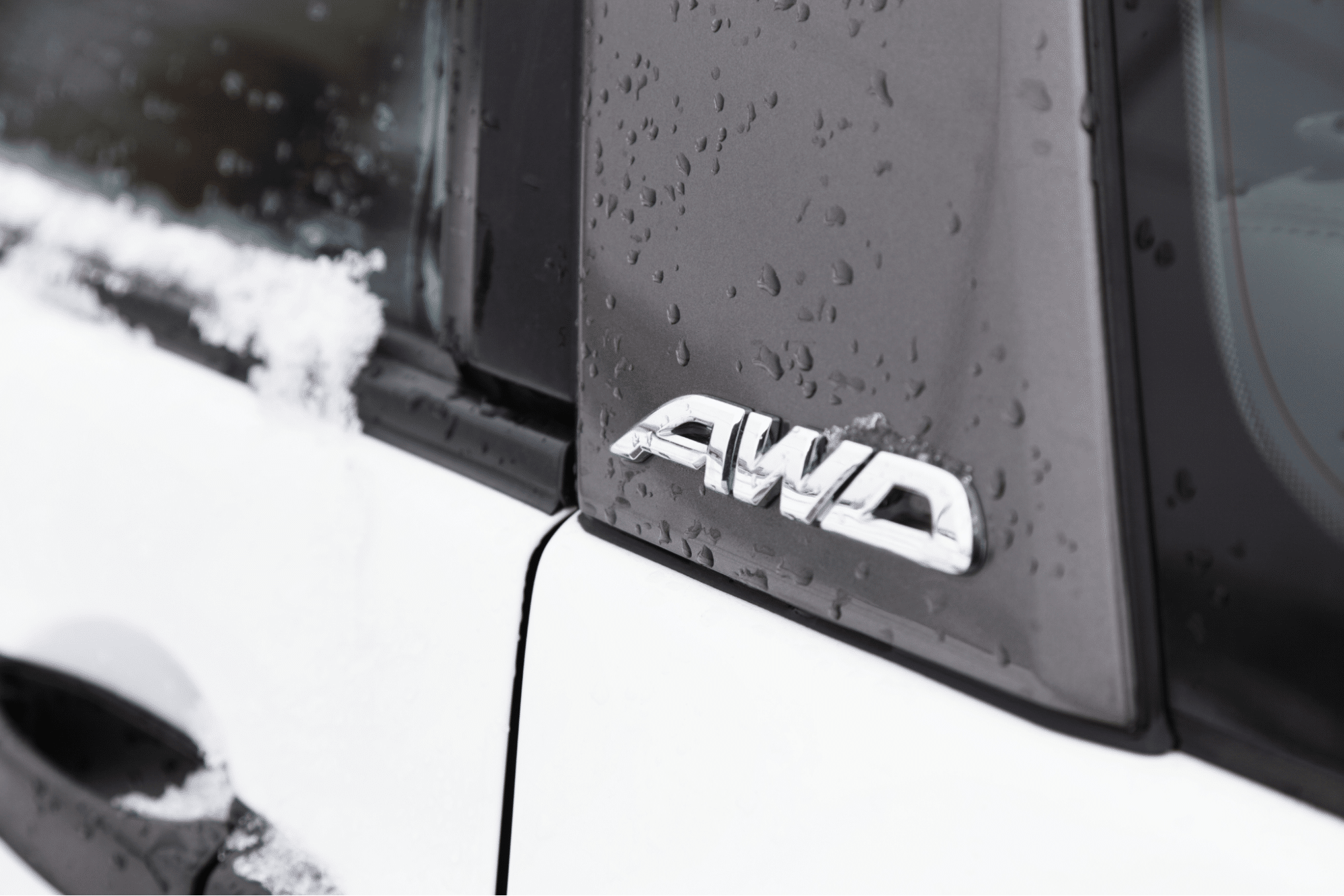
You're shopping for a used SUV, or maybe you already own one, and the sticker says AWD or 4WD. Both sound capable. Both cost more to buy and more to maintain. But the difference between AWD and 4WD matters more than most buyers realize, especially when something breaks. We work on both systems every week at our Marietta shop, and the honest answer is that the system under your vehicle matters a lot more once something goes wrong.
Not sure what's driving your wheels? Ask us about your AWD or 4WD system before your next service.
Button Text: Ask Us About Your Drivetrain
Button Link: /contact
Key Takeaways
- AWD and 4WD are mechanically different systems with different maintenance schedules and failure points.
- Understanding AWD vs 4WD and what the difference means for maintenance can save you hundreds in avoidable repairs.
- AWD systems require regular transfer case and differential fluid service, especially on high-mileage commuter vehicles.
- Part-time 4WD is designed for low-traction surfaces and can cause drivetrain damage if used on dry pavement.
- Marietta and metro Atlanta driving conditions, from highway commuting to occasional winter weather, affect AWD and 4WD wear differently.
You're sitting on I-285 in stop-and-go traffic, and somewhere under your SUV, a transfer case or a clutch pack is quietly working every time you inch forward. Most drivers never think about it. They chose all-wheel drive or four-wheel drive when they bought the vehicle, and that decision felt like the end of the conversation.
The honest answer is that it was just the beginning. AWD and 4WD are mechanically different systems with different service needs, different failure points, and different costs when something goes wrong. The metro Atlanta driving environment makes those differences matter more than most people expect: hilly terrain around Buckhead and Decatur, occasional ice that shuts down the city, and weekend runs into the North Georgia mountains all put real stress on your drivetrain in different ways.
This article covers how each system works in plain English, what all-wheel drive versus four-wheel drive actually means for your maintenance schedule, and the warning signs that something is going wrong before the bill gets much worse. Good preventative maintenance is what keeps a drivetrain repair from turning into a drivetrain replacement. Blue Ridge Automotive – European & Domestic serves drivers across Atlanta, Marietta, Chamblee, Decatur, and Buckhead, and holds a 4.9-star rating across 1,144 Google reviews.
How All-Wheel Drive Actually Works
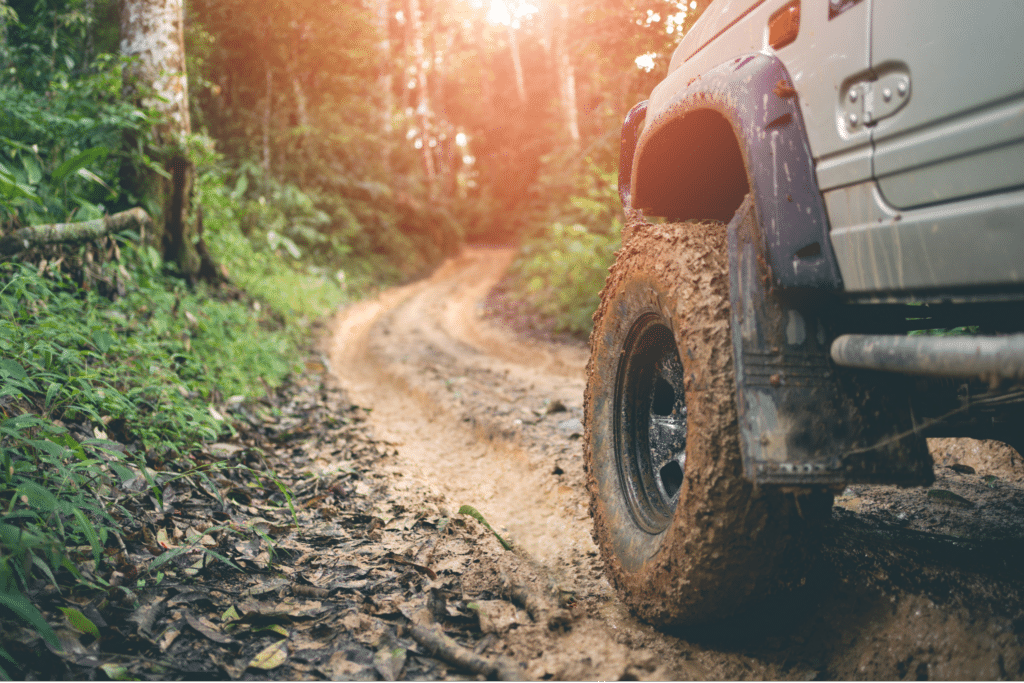
All-wheel drive is a system that automatically distributes engine torque to all four wheels based on real-time wheel speed data, without any driver input. It relies on a network of wheel speed sensors constantly reading each tire's rotation. The moment one wheel starts spinning faster than the others, the system detects slip and the computer redistributes torque to the wheels with better grip. All of this happens in milliseconds.
Full-Time vs. On-Demand AWD
Full-time AWD keeps power flowing to all four wheels at all times. Systems like BMW xDrive, Audi Quattro, and Subaru's Symmetrical AWD use a center differential or electronically controlled coupling to manage that split continuously. There is no waiting for slip to happen. The system is already working before the problem starts.
On-demand AWD is different. It runs as a front-wheel-drive or rear-wheel-drive vehicle most of the time and only engages the second axle when sensors detect wheel slip. The engagement happens through a clutch pack or viscous coupling, and that coupling is a wear item. Every time it engages and disengages, it generates heat and friction.
Here is where metro Atlanta driving matters. Stop-and-go traffic on I-285 and I-75 puts on-demand AWD couplings through repeated engage-and-disengage cycles, hour after hour. That thermal stress adds up faster than it would on a highway-dominant commute. A driver logging 20,000 miles a year in Atlanta traffic is not in the same situation as one logging the same miles on open roads. This is exactly why staying current on scheduled fluid service matters more for high-mileage Atlanta commuters than the owner's manual alone suggests.
Which Vehicles Commonly Use AWD?
AWD is the standard choice for luxury sedans, crossovers, and performance cars. If you drive a BMW with xDrive, a Genesis GV80, an Infiniti QX60, or a Subaru Outback, your vehicle uses AWD. So do most family crossovers and a growing number of electric vehicles. These systems are engineered for paved roads and mixed conditions, not sustained off-road use.
How Four-Wheel Drive Works and When You Should Use It
Four-wheel drive is a system that sends power to all four wheels through a transfer case, a separate gearbox that locks the front and rear axles together at a fixed ratio for maximum traction on loose surfaces. Unlike AWD, which allows the axles to rotate at different speeds, that locked connection is the source of both its strength and its biggest maintenance liability.
Part-Time 4WD: 4H and 4L Explained
Part-time 4WD is a system you engage manually only when conditions demand it, and it offers two speed ranges: 4H and 4L. You drive in two-wheel drive most of the time.
4H (high range) is for slippery surfaces at normal road speeds. Think ice on Marietta's surface streets or a muddy trail in Cherokee County. 4L (low range) multiplies torque dramatically and drops your speed. It is built for steep grades, deep mud, and recovery situations. If you are driving inside the perimeter, 4L is essentially irrelevant. It earns its keep on a mountain trail up near Dahlonega.
Here is the hard truth about part-time 4WD: it must never be used on dry pavement. The locked axle ratio forces the front and rear driveshafts to spin at identical speeds. On a surface with grip, the tires fight that. The result is drivetrain binding that stresses the unit that splits torque between axles, along with the front differential and driveshafts, with every mile you drive. We see this damage regularly. Atlanta's rare ice events tempt drivers to engage 4H, and then the roads dry out mid-commute. That is one of the most reliable ways to turn a minor weather event into a transfer case repair bill.
Full-Time 4WD and 4WD Auto Modes
Some trucks and SUVs offer a middle ground. Full-time 4WD and 4WD Auto modes allow some speed differentiation between axles, making mixed-surface driving safer. Certain GMC trucks and SUVs and several Cadillac models include a 4WD Auto setting specifically designed for this, often built around a BorgWarner active transfer case. It is a meaningful upgrade if your driving mixes pavement with occasional loose surfaces. Check your owner's manual before assuming your 4WD Auto mode is safe for all conditions. Not all systems are built the same way.
AWD vs. 4WD Side-by-Side: A Comparison for Atlanta Drivers
Now that we have covered how each system works mechanically, here is what those differences actually mean for your daily decisions. No competitor on the current search results page offers an Atlanta-specific comparison. This one does.
| Feature | AWD | 4WD |
|---|---|---|
| Driver input required | None. System manages itself. | Driver engages manually (part-time) or automatic (full-time) |
| Best surface | Paved roads, light rain, occasional snow | Unpaved terrain, deep mud, serious off-road conditions |
| Atlanta relevance | High. Suits I-285 commuting and hilly Buckhead or Decatur streets. | Moderate. Most useful on trips to Dahlonega, Blue Ridge, or red clay roads in Cherokee County. |
| Fuel economy impact | Minor penalty, typically 1 to 3 MPG versus two-wheel drive | Larger penalty when 4WD is engaged; negligible in 2WD mode |
| Key maintenance items | Transfer case fluid, front and rear differential fluid, AWD coupling inspection | Transfer case fluid, front differential fluid, driveshaft and u-joint inspection |
| Typical service interval | Every 30,000 to 60,000 miles depending on manufacturer | Every 30,000 to 50,000 miles; more often with heavy off-road use |
| Common failure points | AWD coupling wear, rear differential leaks | Transfer case wear, u-joint failure, locking hub problems |
For the vast majority of Atlanta commuters, AWD is the practical choice. Stop-and-go traffic on I-75 and I-285 puts real thermal stress on on-demand AWD couplings, which is one reason annual drivetrain inspections matter for high-mileage vehicles here. That same drivetrain stress also affects steering and suspension components, especially on vehicles that spend time on uneven terrain.
4WD earns its keep when you are heading north. The mountain towns of Blue Ridge and Jasper are one to two hours from the metro area. If those trips are part of your regular life, 4WD is worth the added maintenance. If they are not, AWD handles everything metro Atlanta throws at a vehicle.
Heading into the mountains this season? Get a drivetrain inspection before your first trip north.
What AWD and 4WD Mean for Your Maintenance Schedule
Most drivers think about oil changes and brake pads. They don't think about transfer case fluid until something grinds. Both AWD and 4WD systems have components that need periodic service, and skipping that service doesn't save money. It just moves the cost further down the road, where it's always bigger. A good routine service schedule covers these systems before they fail.
Transfer Case Service
The transfer case splits power between your front and rear axles. It runs on its own fluid, and that fluid breaks down from heat and age. The typical service interval is every 30,000 to 60,000 miles, but Atlanta's stop-and-go traffic on I-285 and I-75 creates more thermal cycling than steady highway driving. That heat accelerates fluid breakdown, especially in on-demand AWD couplings and power transfer units.
Running a 4WD truck on dry pavement with the system engaged is one of the fastest ways to overheat that fluid. The honest answer is that most drivers have no idea when it was last changed. If you don't have a service record for it, assume it's overdue.
Front and Rear Differential Fluid Changes
Every AWD and 4WD vehicle has at least two differentials. The differential is the component that lets your wheels turn at different speeds through a corner. It runs on gear oil, and that oil gets contaminated with metal particles over time. Neglected differential fluid leads to whining noises, progressive gear wear, and eventually a failed differential. A fluid change costs a fraction of what a differential rebuild runs.
Drivers who haul loads or run red clay roads in Cherokee or Paulding County should shorten their fluid change intervals. That kind of use puts extra load on ring-and-pinion gears, and the fluid shows it.
Driveshaft and U-Joint Inspections
4WD trucks and some AWD vehicles use driveshafts with U-joints, which are small cross-shaped joints that flex as the suspension moves. When a U-joint wears out, you feel it as vibration at highway speeds or a clunk during acceleration and deceleration. Annual inspections catch worn U-joints before they fail. A failed U-joint at speed can damage the driveshaft, the transmission, and surrounding components. That's paying twice, at minimum.
Overdue on transfer case or differential service? We can check your drivetrain and tell you exactly what needs attention.
Button Text: Get a Fluid Service Quote
AWD and 4WD in Atlanta: Ice, Traffic, and North Georgia Roads
Atlanta's Winter Weather and What Your Drivetrain Can and Cannot Do
Most years, the metro area gets two or three genuine winter weather events. That sounds minor until ice coats the grades in Vinings or the residential streets climbing out of Chamblee, and suddenly every driver with AWD feels invincible. The honest answer is that AWD helps you accelerate and hold a line on slick pavement. It does nothing to shorten your stopping distance.
Tires matter more than drivetrain type for braking on ice. A set of all-season tires with worn tread will betray an AWD vehicle on a downhill grade just as fast as they betray a two-wheel-drive car. If you drive hilly terrain around Sandy Springs or Smyrna in winter, adequate tread depth is the variable that actually keeps you out of a ditch. Your wheel alignment and tire condition deserve a check before the cold months arrive, not after.
4WD low-range is rarely relevant inside the perimeter. Where it earns its keep is on the fire roads and gravel tracks around the Ellijay area or the mountain routes north of the metro. If you regularly make that drive in November through February, a part-time 4WD system is a real tool, not a marketing feature.
Highway Commuting and AWD System Wear
Stop-and-go miles on I-75 or I-285 are harder on an on-demand AWD coupling than most drivers realize. Every time the system engages and disengages in traffic, the electromagnetic or hydraulic coupling generates heat. High-mileage commuters running those corridors daily put more thermal cycles on that coupling in a year than a rural driver puts on in three.
The result is premature wear on the rear differential and transfer case, often with no warning until the system starts shuddering or dragging. Scheduling annual maintenance that includes a drivetrain inspection catches fluid breakdown and coupling wear before the repair bill doubles. That inspection is especially worth scheduling if you drive a Subaru, a BMW xDrive model, or any other vehicle where the rear differential fluid is a separate service item from the transmission.
Warning Signs Your AWD or 4WD System Needs Attention
Most drivetrain problems don't announce themselves loudly at first. They start as something small, a faint vibration, a noise that only shows up in a tight turn, and drivers file it away as "something to check later." By the time it becomes undeniable, the bill is usually much worse than it would have been at the first symptom.
Symptoms Specific to AWD Systems
The most misdiagnosed AWD symptom is torque bind. It shows up as a shudder or bucking sensation during slow, tight turns, think parking lots and sharp intersections. It is not random vibration. It is the AWD coupling fighting itself because it cannot equalize rotational speed between axles. Drivers often assume it is a tire or brake issue and ignore it for months.
Other AWD warning signs worth taking seriously:
- A humming or whining noise that changes pitch with vehicle speed, typically a differential bearing wearing down
- The AWD or traction control warning light staying on after startup
- Uneven tire wear across all four corners, which points to a torque distribution problem and usually requires wheel alignment correction after the drivetrain issue is resolved
High-mileage commuters putting daily miles on the I-75 corridor should know that stop-and-go thermal cycling wears on-demand AWD couplings faster than highway driving does. Any new vibration or noise is a reason to schedule a diagnostic now, not at the next oil change.
Symptoms Specific to 4WD Systems
With 4WD, the symptoms tend to be more mechanical and harder to ignore. Difficulty engaging or disengaging 4WD points to a transfer case actuator or shift motor problem. A grinding noise when 4WD is active usually means the gears are worn or running critically low on fluid. A clunking sound during acceleration or deceleration is a classic sign of worn U-joints or a failing driveshaft slip yoke, and if you have felt it, you know exactly what it feels like: a sharp knock that comes right as the drivetrain loads up.
A fluid puddle under the center of the vehicle is a transfer case or differential seal leak. Do not wait on that one. We handle drivetrain oil leak repair regularly, and a failed seal caught early is a straightforward fix. The same leak ignored for two more months often means a full transfer case rebuild. Schedule an auto diagnostic at the first sign of any of these symptoms, that is the honest way to know what you are actually dealing with before it escalates.
Why Atlanta Drivers Trust Blue Ridge Automotive – European & Domestic for Drivetrain Service
Drivetrain maintenance is not one-size-fits-all work. A Subaru Outback's AWD system is mechanically different from a GMC Sierra's part-time 4WD, and both need a technician who actually knows the difference. We work on European, Asian, and domestic vehicles every day, from BMW AWD systems to GMC trucks with transfer cases that haven't seen fresh fluid in years.
Drivers coming to us from Chamblee, Marietta, and across the metro area bring us everything from luxury crossovers to work trucks. The brand range is wide. The diagnostic process is the same: find the actual problem, explain it in plain English, fix it correctly.
Our customers say it better than we can. John and Hudson get mentioned for being attentive and upfront about what a repair actually costs. Kristin and Gavin come up for being genuinely helpful, not just transactional. Jay and Miranda keep people coming back. That consistency across 1,144 Google reviews and a 4.9-star rating is not an accident.
If you are overdue on transfer case fluid, differential service, or a full inspection for your AWD or 4WD vehicle, we are straightforward to reach. Stop by or give us a call. There is no honest reason to put drivetrain service off until something breaks.
Frequently Asked Questions
Is AWD or 4WD better for Atlanta's roads?
AWD is the better fit for most drivers in the metro area. The road network here is almost entirely paved, and AWD handles rain, light ice, and hilly neighborhoods without any input from you. 4WD makes more sense if you regularly head up to the Ellijay area or other North Georgia destinations where unpaved terrain is part of the trip.
How often should I service my AWD or 4WD system?
Most manufacturers recommend differential and transfer case fluid changes every 30,000 to 60,000 miles. Heavy stop-and-go commuting on the I-285 corridor puts extra thermal stress on those fluids, so high-mileage commuters often need service closer to that 30,000-mile mark. Our maintenance inspections include a drivetrain check so nothing gets missed.
What is transfer case fluid and when does it need to be changed?
The transfer case splits power between your front and rear axles. The fluid inside lubricates its gears and bearings. When it breaks down, metal-on-metal wear starts quietly and gets expensive fast. This fluid is routinely skipped on standard oil-change checklists, which is exactly how transfer case failures sneak up on drivers.
Can I drive my 4WD truck in 4H on Atlanta highways?
No. Part-time 4WD is not designed for dry pavement. Using 4H on a dry highway causes drivetrain binding that stresses the transfer case, front differential, and driveshafts simultaneously. The damage is real and cumulative, even if nothing feels wrong right away.
Does AWD help with braking on ice?
AWD does not shorten your stopping distance. It improves acceleration and cornering traction, but braking is controlled by your tires, not your drivetrain. The honest answer is that a set of quality winter tires will do more for stopping on ice than any AWD system. Your brake system condition matters too.
How much does AWD or 4WD drivetrain service cost at Blue Ridge Automotive – European & Domestic?
Cost depends on your vehicle and what the inspection reveals. We give you a clear price before any work begins. No surprises, no approvals after the fact. Contact us for a diagnostic and estimate, and we will tell you exactly what your system needs.
If your AWD or 4WD vehicle is due for differential fluid, transfer case service, or a full drivetrain inspection, our team is ready to help. Book an appointment online or call us directly. Blue Ridge Automotive serves drivers across Chamblee, Vinings, Sandy Springs, and the surrounding metro area.
Ready to Get Started with Blue Ridge Automotive – European & Domestic?
Get in touch to speak with our team directly. We're ready to answer your questions, walk you through your options, and help you find the right solution for your needs. Whether you're just starting to plan or ready to move forward, we'll make the process simple and stress-free.
Reach out at (770) 426-4220 today and let's talk about how we can help.