

Why Is My Car Shaking When Idle in Marietta and How to Fix It

Sharing this:
Your car shaking when idle is one of those problems that feels minor until you notice it every single morning. You pull up to the light at Whitlock Avenue and the Marietta Square, and the steering wheel buzzes, the cup holder rattles, and the whole cabin seems to shudder until you hit the gas again. Then it smooths out. That pattern is a real clue, and it usually points to a short list of causes. Our technicians at our Marietta shop see rough idle complaints every week, and the honest answer is that most of them are very fixable when they are caught early.
Feeling a shake at every stoplight? Let our team find the cause before it turns into a bigger repair.
Key Takeaways
- A shake that shows up at idle and fades as you accelerate usually points to the engine, its ignition or fuel delivery, or the mounts that hold it in place.
- Misfires from worn spark plugs or failing ignition coils are among the most common reasons a car shakes when stopped.
- Vacuum leaks, dirty throttle bodies and clogged fuel injectors can all upset the air and fuel balance the engine needs at low speed.
- Worn engine and transmission mounts let normal engine vibration pass straight into the cabin, and Marietta stop-and-go traffic speeds up that wear.
- A flashing check engine light with a shake means a severe misfire, so you should limit driving and get the car checked quickly.
Every engine vibrates a little at idle. Pistons are firing hundreds of times a minute, and the engine is turning at its slowest steady speed, often somewhere around 600 to 900 rpm depending on the vehicle. Engineers design mounts, balance shafts and computer controls to keep that motion out of your seat and steering wheel. When you suddenly feel it, something in that system has changed.
Idle is also the moment when small problems are hardest to hide. At highway speed, momentum and higher rpm smooth out a weak cylinder or a slightly lean mixture. At a red light on Cobb Parkway, the engine has nothing to hide behind. That is why a rough idle is often the first warning sign of an issue that will eventually show up in fuel economy, power or emissions too.
Why Is My Car Shaking When Idle but Smooth While Driving?
When the shake disappears once you are moving, that tells us a lot. Problems with tires, wheel balance, wheel bearings or brake rotors usually get worse as speed increases, not better. A vibration that lives mainly at a stop almost always starts under the hood.
Engine speed is lowest at idle
At idle, each firing pulse is spread further apart in time. If one cylinder is weaker than the others, you feel the gap as a rhythmic stumble. Raise the rpm and the pulses blur together, so the stumble fades. If revving the engine gently in Park makes the shake go away, a combustion problem is a strong suspect.
The load changes in Drive
Many drivers notice the shake is worse in Drive at a stop than in Park or Neutral. In Drive, the transmission puts load on the engine, and the engine twists against its mounts. Worn mounts let that twist reach the cabin. If the vibration drops sharply when you shift to Neutral, mounts move higher on the list.
Accessories add load too
Turning on the air conditioning on a humid Georgia afternoon adds load from the compressor. A healthy engine bumps its idle speed slightly to compensate. If the shake appears or gets worse only with the AC running, the problem may involve idle control, a weak compressor, or a mount that can no longer absorb the extra strain. Our car AC repair team can check whether the compressor itself is part of the picture.
The Most Common Causes of a Rough Idle
There is no single cause for a rough idle, but a handful of issues account for the large majority of cases we see. Here is how they compare.
| Likely Cause | Typical Clues | How Urgent |
|---|---|---|
| Worn spark plugs or ignition coils | Steady stumble, check engine light, possible flashing light, weaker acceleration | High if the light is flashing |
| Vacuum leak | Hissing sound, high or surging idle, lean codes | Moderate |
| Dirty throttle body or idle control problem | Idle dips low, near stalling, worse when warm | Moderate |
| Clogged fuel injectors or weak fuel pump | Hesitation, rough idle when cold, poor fuel economy | Moderate |
| Worn engine or transmission mounts | Clunk when shifting, shake worse in Drive than Neutral | Moderate to high |
| Dirty sensors (MAF, oxygen) | Fuel trim codes, inconsistent idle, poor mileage | Low to moderate |
Spark plugs and ignition coils
A spark plug that is worn, fouled or gapped incorrectly can fail to light the air and fuel mixture every time. The same is true of a coil that is cracking with age or heat. The result is a misfire, and misfires are the classic rough idle. If your plugs are past their service interval, it is worth reading about why worn spark plugs cost more than the replacement itself. Unburned fuel from a misfire can overheat and damage the catalytic converter, which turns a small repair into a much larger one.
Vacuum leaks
Modern engines measure incoming air carefully. A cracked vacuum hose, a leaking intake gasket or a split PCV hose lets unmeasured air sneak in, which leans out the mixture. Rubber hoses under the hood live through years of Georgia summer heat, and they harden and crack over time. A hissing sound near the engine at idle is a common giveaway.
Throttle body and idle control
Carbon builds up around the throttle plate, especially on engines that spend a lot of time at low speed. Because the throttle is barely open at idle, even a thin layer of deposits can restrict airflow enough to make the idle drop and shake. On many vehicles, cleaning the throttle body and letting the computer relearn its idle position restores a smooth idle.
Fuel delivery
Injectors that are clogged or dripping deliver uneven fuel from cylinder to cylinder. A weak fuel pump or clogged filter can also starve the engine. If you also notice hesitation or falling mileage, our article on signs your fuel injectors are dirty walks through the symptoms in more detail.
Sensors that feed the computer
The mass airflow sensor and oxygen sensors tell the engine computer how much air is coming in and how well the fuel is burning. A dirty or failing sensor sends bad information, and the computer responds with the wrong mixture. These faults often set codes, which is one reason a proper scan is the right first step.
Not sure which of these is behind your shake? Our technicians can test it instead of guessing.
Engine and Transmission Mounts Deserve a Closer Look
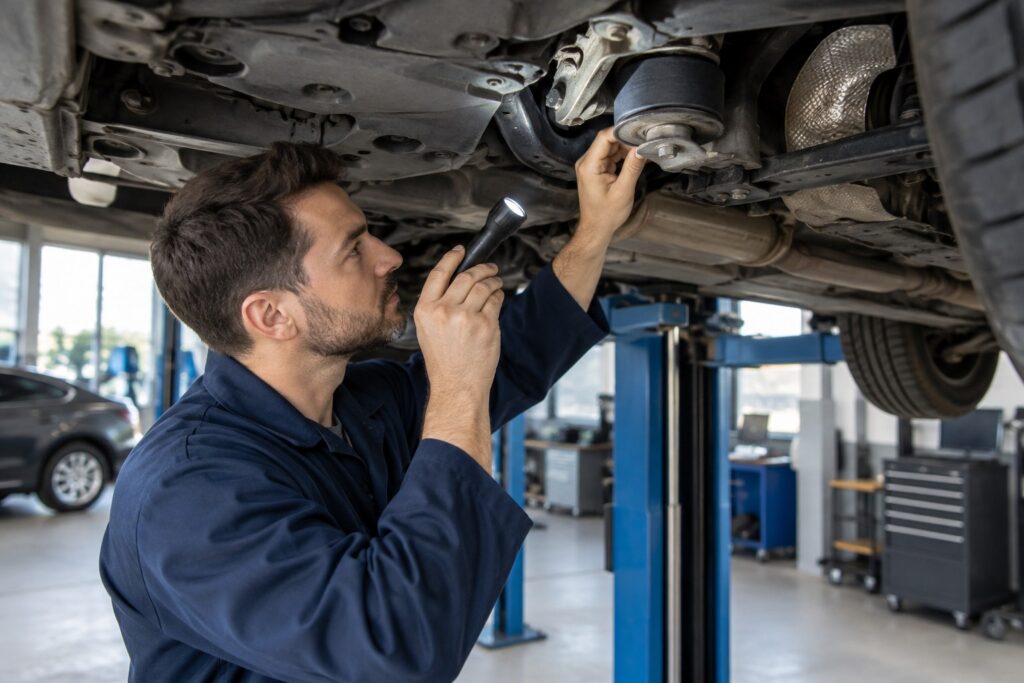
Sometimes the engine is running perfectly and the shake is still there. In those cases, the problem is often the parts that are supposed to isolate engine vibration from the rest of the car.
What mounts actually do
Engine and transmission mounts are typically rubber blocks, and some are filled with fluid or controlled electronically. They hold the powertrain in place and soak up its normal vibration. As the rubber ages, it cracks, sags or separates from its metal brackets. Fluid filled mounts can also leak. Once that happens, normal engine motion travels straight into the frame and cabin.
Why Marietta driving wears them faster
Every stop and start makes the engine rock against its mounts. A commute that crawls along I-75 near the Delk Road and Windy Hill exits, or the daily backup on the Canton Road connector, adds thousands of those cycles a week. Heat speeds up rubber aging as well. We cover more of that wear pattern in our piece on how stop-and-go traffic affects your car.
Signs your mounts are the problem
- A clunk or thump when you shift from Park into Drive or Reverse.
- Vibration that gets noticeably worse in Drive and calms in Neutral.
- The engine visibly lurching when someone revs it gently with the hood open.
- A jolt when you accelerate hard from a stop or let off the gas.
A badly broken mount is more than a comfort issue. It can let the engine shift enough to stress hoses, wiring and axles, so it is worth having checked.
When a Shaking Idle Becomes a Safety Concern
Most rough idles are not emergencies, but a few situations call for quick action. Knowing the difference keeps you safe and can save you from a much larger repair bill.
A flashing check engine light
A steady check engine light means the computer has stored a fault. A flashing light usually means an active, severe misfire that can overheat the catalytic converter. If the light is flashing and the car is shaking, ease off, avoid hard acceleration, and get the vehicle inspected as soon as you can. If the car is shaking badly or losing power, pull over somewhere safe rather than pushing on through traffic.
Stalling at stops
An engine that shakes and then dies at a light is a hazard in busy traffic, especially on roads like Roswell Road or the South Marietta Parkway. If your car stalls, turn on your hazard lights, restart if it is safe, and move out of traffic. Power steering and brake assist are reduced when the engine is off, so steering and stopping take more effort.
Smells, smoke or overheating
A raw fuel smell, smoke from under the hood, or a temperature gauge climbing toward hot are signs to stop driving. Pull over, turn the engine off, and never open a hot radiator cap. If you see flames or heavy smoke, get everyone away from the vehicle and call 911. Our article on what causes a car to overheat explains the safe steps in more detail.
You can also check for open safety recalls on your vehicle using your VIN at NHTSA's recall lookup. Some recalls involve ignition, fuel or engine control parts that can cause rough running.
How We Diagnose a Car Shaking When Idle

Guessing is expensive. Replacing plugs, then coils, then sensors one at a time can cost more than finding the real fault first. Our car diagnostic service follows a clear process.
Step 1, scan and live data
We start by reading stored and pending trouble codes, then we look at live data. Misfire counters by cylinder, fuel trims, idle speed and sensor readings show us what the engine computer sees in real time. A basic code reader shows a code. Live data shows the reason behind it. If you are curious about what those codes mean, see our overview of common diagnostic trouble codes.
Step 2, targeted tests
Based on that data, we test the likely suspects. That can include swapping a coil to see if a misfire follows it, a smoke test to find vacuum leaks, checking fuel pressure, or inspecting plugs for wear and fouling patterns.
Step 3, mount and chassis check
If the engine is running cleanly, we inspect the mounts under load and look for cracked rubber, leaking fluid mounts and broken brackets. We also confirm nothing else, like an exhaust part touching the body, is transmitting vibration.
Step 4, a clear plan
Once we know the cause, we explain it in plain English, show you what we found, and give you a clear price before any work begins. The cost depends on your vehicle and the root cause, and we will tell you which items are urgent and which can wait.
What You Can Check Before Your Appointment
You do not need tools to gather useful clues. A few observations help our technicians narrow things down faster.
Note when it happens
- Is the shake worse when the engine is cold or after it warms up?
- Does it change between Park, Neutral and Drive?
- Does turning the AC on or off change it?
- Did it start after a fill-up, a battery replacement or other recent work?
Simple things to look at
Make sure the check engine light status is noted, steady or flashing. Listen for hissing near the engine. If your vehicle is overdue for routine service, that matters too, because old plugs and dirty filters are common contributors. Our car maintenance services help keep those items on schedule.
A note about recent battery work
On some vehicles, disconnecting or replacing the battery erases learned idle settings, and the idle can be rough for a short time until the computer relearns. If the shake started right after battery work and does not settle down, let us know. If your battery is getting older, our article on how long car batteries last in Marietta is a useful read.
Ready to stop feeling that shake at every red light? Book a visit and we will track it down.
Why Marietta Drivers Trust Blue Ridge Automotive for Rough Idle Repair
Our Marietta shop at 665 Whitlock Avenue Southwest sits just west of the Square, close to the Kennesaw Mountain area, and it serves drivers from across Cobb County. We work on European, Asian and domestic vehicles, from a commuter sedan to a BMW or Mercedes with a more complex engine management system.
Drivers come back to us because we explain what is wrong in plain English, we test before we replace parts, and we give you a clear price before any work begins. That approach has helped us earn strong reviews on Google. We are open Monday through Friday, 8AM to 5PM.
Frequently Asked Questions
Is it safe to drive when my car shakes at a stop?
A mild shake with a steady or no check engine light is usually safe for short trips while you schedule service. A flashing check engine light, stalling, smoke, a fuel smell or overheating are different. In those cases, limit driving or stop and have the vehicle checked, because continued driving can damage the catalytic converter or leave you stranded.
Can bad spark plugs cause shaking at idle?
Yes. Worn or fouled spark plugs are one of the most common causes. A weak plug can fail to ignite the mixture consistently, which creates a misfire you feel as a rhythmic stumble at a stop. Plug replacement intervals vary widely by engine, so check your owner's manual or ask us what your vehicle needs.
Why does my car shake more with the AC on?
The AC compressor adds load to the engine. A healthy engine raises its idle slightly to handle it. If idle control is struggling, a mount is worn, or the compressor is failing, the extra load makes the shake more noticeable. It is a useful clue, so mention it when you bring the car in.
Will a check engine light always come on with a rough idle?
No. Worn mounts, mild vacuum leaks and early throttle body deposits often cause a shake without setting any code. That is why we look at live engine data and inspect the mounts instead of relying only on a code scan. A missing light does not mean the problem is minor.
How much does it cost to fix a rough idle?
The cost depends on your vehicle and the cause. Cleaning a throttle body is a very different job from replacing coils or a set of engine mounts. We diagnose first, explain what we found, and give you a clear price before any work begins, so there are no surprises when you pick up your car.
Can a fuel additive fix a car that shakes at idle?
Sometimes a quality fuel system cleaner helps with light injector deposits, but it will not fix a bad coil, a cracked hose or a broken mount. If the shake continues after a tank or two, it is time for a proper diagnosis rather than more bottles of additive.
A car shaking when idle is your vehicle telling you something has changed, whether that is a tired spark plug, a cracked vacuum hose or a mount that has finally given out. Catching it early usually means a simpler, more affordable repair. We help drivers from Marietta, Kennesaw, Smyrna, Powder Springs, Austell and East Cobb get back to a smooth, quiet idle.
Ready to Get Started with Blue Ridge Automotive?
If your car is shaking at stoplights, our Marietta technicians will find the real cause and explain your options clearly. Reach out at (770) 426-4220 today to schedule a diagnosis, or use the button below to contact our team.