

Why Timing Belt Replacement in Decatur Costs More Than Most People Budget For
Sharing this:
A driver looks up "timing belt replacement cost" and finds numbers that range from $400 to $700. They walk into a Decatur shop expecting a five or six hundred dollar bill and walk out with a $1,400 quote. The natural assumption is that the shop is upselling. The actual answer is more uncomfortable: the cheap online numbers are usually wrong, and the bigger quote is the job done correctly.
This post explains why the real timing belt service costs what it does, what's actually included in a proper job, why "just the belt" quotes are a setup for paying twice, and how to plan for this maintenance item before you're standing at the service counter blinking at the number on the page. The good news is that the underlying logic makes sense once you understand the labor involved. The harder news is that this is genuinely an expensive service, and there's no honest way around it.
What a Timing Belt Actually Does (And Why It Matters Here)
The timing belt is a toothed rubber belt buried behind the timing cover at the front of the engine. Its single job is to keep the crankshaft and camshafts rotating in precise synchronization. The crankshaft moves the pistons up and down. The camshafts open and close the intake and exhaust valves. If those two systems lose sync even slightly, the valves stop closing at the right time, the engine misfires, runs poorly, or in the worst case crashes the valves into the pistons.
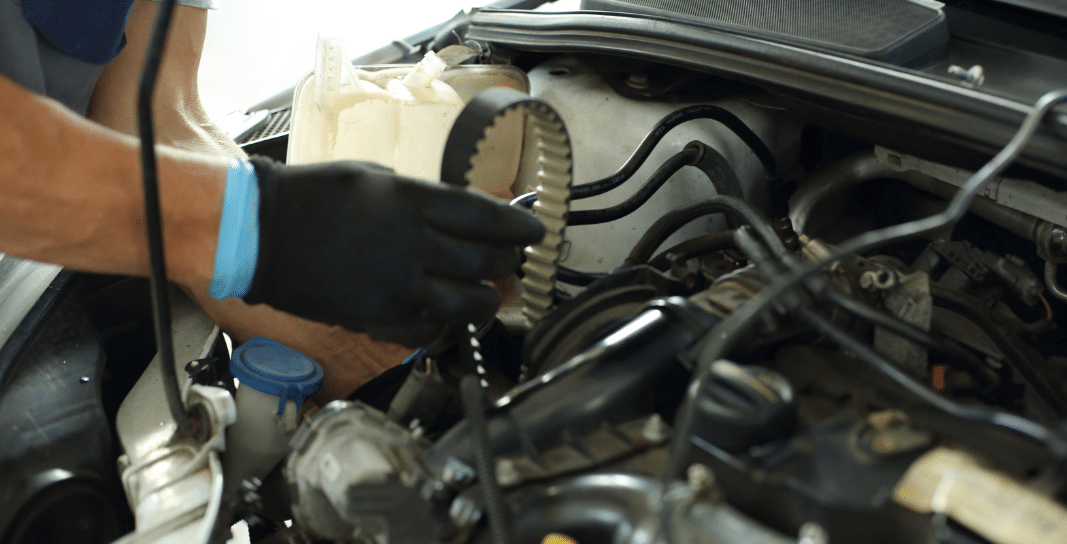
This is why timing belt replacement is a maintenance item, not an optional one. Unlike a serpentine belt, which drives accessories outside the engine and can be changed in 30 minutes, a timing belt is internal to the engine architecture. Reaching it requires removing essentially every accessory bolted to the front of the engine. That access requirement is where the cost comes from.
The Real Job Isn't "The Belt", It's the Whole Front of the Engine
When a technician tears down the front of an engine to replace the timing belt, several other components become exposed and accessible. The water pump is often driven by the timing belt itself, meaning it's literally part of the same assembly. The tensioner that maintains belt pressure has bearings that wear out on a similar timeline. Idler pulleys that route the belt have the same bearing issue. Front crankshaft and camshaft seals are right there, hidden behind components that have to come off anyway.
All of these parts have lifespans that roughly match the timing belt itself. A water pump on a 100,000-mile vehicle has a meaningful chance of failing in the next 20,000 miles, especially after sitting through one heat cycle of replacement work. Putting the engine back together with an old water pump means there's a real chance you'll be paying for the same labor again within two years.
This is the math that drives "comprehensive" timing belt quotes. The labor is already being spent. The marginal cost to replace adjacent wear items at the same time is small, often just the parts cost plus a small additional labor charge. Doing it later as a separate job means paying the full labor bill twice.
Why "Just the Belt" Quotes Are a Trap
Here's a real-world example. A shop quotes $500 to replace just the timing belt. Eighteen months later, the water pump starts leaking coolant. The repair requires the same teardown, the same hours of labor to access the front of the engine, the new water pump, and reassembly. That second visit runs $700 to $900 because all the labor has to happen again.
Total cost of the "save money" approach: $1,200 to $1,400 spread across two appointments, two service intervals, and the disruption of having the car in the shop twice.
Cost of doing it right the first time: $1,200 to $1,500 in one visit, with no surprise failures within a couple years of completion.
When you see two timing belt quotes that differ by hundreds of dollars, ask what's included. The cheap quote is almost always missing the water pump, the tensioner, or both. Sometimes it's missing the seals too. A complete quote includes everything that should be replaced together, and it's the more honest number even if it looks worse on paper. This same logic applies to many engine-adjacent jobs covered in our breakdown of 12 common engine problems and how shops decide what to replace alongside the primary fault.
The Components a Proper Timing Belt Service Includes
A complete timing belt job typically replaces the timing belt itself, the water pump, the tensioner, one or more idler pulleys, the thermostat, the front crankshaft seal, both camshaft seals (or one, depending on engine design), accessory drive belts (since they have to come off anyway), and fresh coolant to refill the cooling system.
Some vehicles also benefit from harmonic balancer replacement at the same time if the original is showing wear. Coolant hoses adjacent to the work area sometimes get replaced if they're stiff or visibly aged. The intake and oil pump gaskets occasionally come into play depending on the engine.
The point is that the parts list isn't padding. Every item on it is something that wears out on a similar schedule and would be expensive to replace separately later. A shop that quotes a comprehensive service is being thorough, not greedy. That comprehensive service often coordinates with related coolant services since the cooling system is being opened up anyway.
Why Labor Is Most of the Bill
To reach the timing belt, a technician usually has to remove the engine's right side motor mount, the accessory drive belts, the harmonic balancer (which often requires a specialty puller and impact tools), the upper and lower timing covers, and sometimes the cooling fans, radiator shroud, or even the radiator itself for clearance. On engines mounted transversely in front-wheel-drive vehicles, the available work space is often inches wide, and the technician is working blind by feel for parts of the job.
Once everything is exposed, the technician has to align timing marks on the crankshaft and camshaft pulleys, hold the camshafts in position with specialty tools so they don't rotate during the swap, install the new belt with correct tension, verify timing alignment, and reassemble everything in reverse order. A four-cylinder engine with good access can be done in 4 to 6 hours. A V6 in a tight engine bay can take 8 to 10 hours. Some Audis and Volkswagens with complex timing systems require 10 to 14 hours.
Labor rates at independent shops in the Decatur area typically run $130 to $180 per hour. Multiply that by the labor hours, add parts, and you get the quote. The number isn't arbitrary, and it isn't padding. It's the actual time and skill required to do the job correctly.
When You Need to Replace It (And Why Time Matters as Much as Mileage)
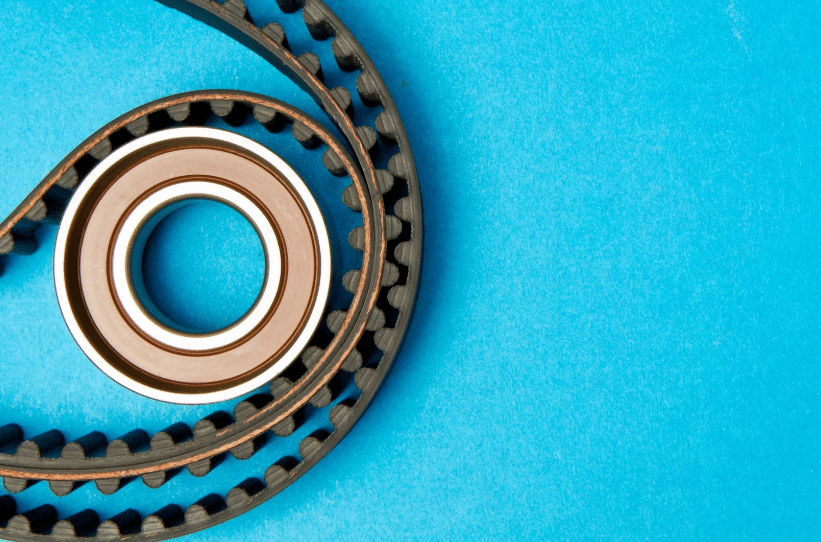
Most manufacturers specify timing belt replacement between 60,000 and 100,000 miles, with 90,000 to 100,000 being the most common interval on modern vehicles. Check your owner's manual for the exact spec on your engine. The interval varies meaningfully even within the same make.
Time also matters, often more than drivers realize. Rubber belts degrade with age regardless of how many miles are on them. A vehicle driven 5,000 miles per year is still aging the belt through heat cycles, ozone exposure, and material breakdown. Most manufacturers specify a time-based interval (typically 7 to 10 years) alongside the mileage interval. Whichever comes first is when the belt should be replaced.
This is why low-mileage older cars sometimes have belts that fail before reaching the mileage interval. A garage-kept sedan with 40,000 miles at age 12 has an old belt regardless of how few miles it has. Regular scheduled maintenance inspections track both intervals so you don't get surprised by either.
Interference vs. Non-Interference Engines: The Stakes
This is where the consequences diverge dramatically. The vast majority of modern engines are interference designs, meaning the valves and pistons share space inside the cylinder at certain points in the rotation cycle. The timing belt's job is to make sure they're never in the same place at the same time. When the belt breaks, the camshafts stop turning while the crankshaft continues spinning. Within milliseconds, the valves crash into the pistons.
The damage from this collision typically includes bent or broken valves, damaged piston crowns, cracked cylinder heads, and sometimes broken connecting rods. Repair costs run $3,000 to $8,000 depending on severity, and on some engines the damage is catastrophic enough that engine replacement becomes the more economical option. Full engine repair work after timing belt failure is one of the most expensive non-collision repairs a vehicle owner can face.
Non-interference engines are designed so the valves and pistons can never occupy the same space, even when timing is lost. A snapped belt on a non-interference engine just leaves you stranded with no internal damage. A new belt and the engine starts right back up. These designs are increasingly rare on modern vehicles, and the only safe assumption is that your engine is interference unless you've specifically confirmed otherwise.
Why Some Modern Engines Use Timing Chains Instead
Many engines built since the 2000s use timing chains rather than belts. Chains are made of metal links similar to a bicycle chain, run in an oil bath inside the engine, and are designed to last the engine's lifetime. They eliminate the maintenance interval entirely on the manufacturer's official schedule.
That doesn't mean chains never fail. Chain stretch, tensioner failure, and guide wear all happen, especially on engines that run neglected oil. But chain replacement isn't a scheduled maintenance item, and most owners of chain-driven engines never face it. If you're not sure whether your vehicle uses a belt or a chain, a service advisor or a quick lookup of your specific engine will tell you. The distinction matters because some drivers assume their car needs timing belt service when it doesn't, and others assume it doesn't when it does. The conversations covered in our article on why regular diagnostics can help prevent major repairs include this kind of clarification routinely.
What Affects the Final Price for Your Vehicle
Several factors push the number up or down. Engine layout matters. Transverse-mounted engines in front-wheel-drive vehicles often require more disassembly than longitudinal engines in rear-wheel-drive vehicles. The number of cylinders matters because V6 and V8 engines have more components to remove and more timing components to coordinate.
Whether the water pump is timing-belt driven matters. On engines where it isn't, you can sometimes skip the water pump replacement, but on engines where it is (most Honda and Toyota timing belt designs, for example), replacement is essentially mandatory.
OEM versus aftermarket parts choice is another factor. OEM parts cost more but are guaranteed to match factory specifications. Quality aftermarket kits from brands like Aisin, Gates, or Continental are often manufactured by the same OEM suppliers and cost less. Cheaper aftermarket kits sometimes use inferior materials that don't reach full service intervals. Our guide on OEM vs. aftermarket parts covers how to evaluate the trade-offs for major service items.
Make and model also factor in. European vehicles, particularly Audis, BMWs, and Volkswagens, typically run higher than Asian or domestic equivalents because of more complex timing systems and OEM parts costs. Toyota and Honda timing belt jobs are usually well-defined and reasonably priced because shops do them constantly.
What Decatur Conditions Mean for Belt Life
Heat is hard on rubber belts, and Decatur delivers a lot of it. The combination of long, hot Georgia summers and frequent stop-and-go traffic on Scott Boulevard, Ponce de Leon, and the connector creates significant heat soak in the engine bay. While the timing belt itself runs cooler than the serpentine belt because it's enclosed in the timing cover, ambient underhood temperatures still affect rubber compound degradation over time.
The practical effect is that timing belts in Decatur tend to age toward the shorter end of their rated lifespan rather than the longer end. A belt rated to last 10 years in moderate climate may show end-of-life cracking and material hardening at 7 to 8 years here. This is one more reason to take both the mileage and time intervals seriously rather than waiting for visible symptoms.
Frequently Asked Questions
Do I really need to replace the water pump if it's not leaking?
On engines where the water pump is driven by the timing belt, yes, basically always. The labor to access the water pump is essentially identical to the labor to replace the timing belt. Replacing it preventively while everything is apart costs the price of the part plus a small bit of additional labor. Replacing it later as a separate job costs the full labor bill again. Skipping it is one of the most common ways drivers end up paying more total over time.
Can I wait if I'm not at the mileage yet but past the time interval?
Time alone is enough reason to replace it. Rubber degrades whether the belt is moving or not. A belt at 50,000 miles but 11 years old has the same end-of-life material problems as a high-mileage belt. The risk of failure climbs steeply once you pass either interval. Professional inspection can give you a current condition assessment, but the safer call is to replace on time.
My belt looks fine when I peek through the timing cover. Doesn't that mean it's okay?
Visual inspection is unreliable for timing belts. Internal cracking, glazing on the back side, and material fatigue often aren't visible from the outside. Belts can look perfectly normal right up until the moment they snap. Mileage and time intervals exist precisely because visual inspection isn't a substitute for replacement.
Are timing chains truly maintenance-free?
For most owners, yes, with the important caveat that they require properly maintained engine oil. Chains run inside the engine in oil bath, and oil that's been neglected or stretched past intervals causes chain wear, guide failure, and tensioner problems. Following oil change intervals is essentially how you maintain a timing chain.
How long does timing belt replacement take?
Most timing belt jobs take 4 to 8 hours of shop time, with European luxury vehicles sometimes extending to a full day or more. Shops typically schedule the vehicle for a full day to allow for any complications discovered during teardown, even if the actual job comes in faster.
What happens if I keep driving past the recommended interval on an interference engine?
You're rolling the dice on a $4,000 to $8,000 repair every mile you drive. The belt could last another 20,000 miles, or it could snap on tomorrow morning's commute. There's no warning before failure, no pending check engine light, no dashboard alert. The first sign is the engine going silent at speed, which on an interference design also means the engine going dead. A proper diagnostic service appointment can give you a current condition assessment, but it can't predict when an aged belt will actually let go.
About Blue Ridge Automotive
Blue Ridge Automotive has served Decatur drivers since 2010 from our Decatur location, with additional convenient shops in Buckhead (Atlanta), Chamblee, and Marietta. Our ASE-certified technicians handle timing belt service on Asian, domestic, and European vehicles, and we always quote the complete job upfront with every related component included so there are no surprises and no setups for repeat visits. Every service is backed by a 24,000-mile, 24-month warranty on parts and labor through TechNet, which gives you real coverage on a major investment in your vehicle.
Plan This Service Before It Plans You
If your vehicle is approaching the manufacturer's recommended timing belt interval, or if you've already passed it and have been hoping for the best, the smart move is to get the work scheduled rather than wait for failure. Our team can look up your specific vehicle's interval, confirm whether you have a belt or a chain, and quote the complete service so you know exactly what the investment looks like.
Call (404) 549-9424 or schedule a service online to book your timing belt service at the Blue Ridge Automotive Decatur location.