

What Actually Happens When Your Car Goes In for Engine Repair in Decatur
Sharing this:
The check engine light comes on. A knocking sound starts under the hood. The car overheats on the way home from work in Decatur traffic. You drop the vehicle off at a shop, the service advisor calls with a number that makes your stomach drop, and you say yes because what choice do you really have? Three or four days later, you pick up the car and hope it was worth it.
Most drivers have no real picture of what happens between the drop-off and the pickup. That's a problem, because engine repair is expensive, the work is largely invisible, and understanding the process is the only way to tell the difference between a shop doing the job right and one cutting corners. This guide walks through every step of what actually happens during engine repair, so you know what your money is paying for and what to expect at each stage.
Why Engine Repair Feels Like a Black Box
Engines have more moving parts than almost any other system on the car, and the labor to access those parts eats up a huge portion of the final bill. When a shop quotes a high price for a repair that seems to involve "just a gasket," the sticker shock isn't because the gasket itself is expensive. It's because reaching that gasket requires removing the intake manifold, possibly the timing cover, and a collection of accessories, all of which have to go back together correctly.
That invisibility is why engine repair feels opaque. You don't see the 14 hours of disassembly, the measurements, the machine shop work, or the careful reassembly. You see an invoice, and you're expected to trust that every line item was necessary. Understanding the process makes that trust a lot easier to extend, or withhold when something seems off.
Step 1: Intake and Initial Diagnosis
The job starts when you drop the car off. A service advisor walks around the vehicle with you, asks about symptoms, and takes notes on when problems happen, under what conditions, and how long they've been going on. This conversation matters more than most drivers realize. An intermittent knock that only shows up when the engine is cold tells a technician something very different than a constant ticking noise at idle.
After intake, the vehicle gets pulled into a bay and connected to a scan tool. The tool pulls active fault codes, pending codes that haven't yet triggered the check engine light, and freeze-frame data showing the engine's operating conditions when past faults occurred. On modern vehicles, there can be dozens of stored codes across multiple control modules. A quality diagnostic service reads all of them, not just the one that tripped the dashboard light.
A technician also performs a visual inspection. Fluid levels, visible leaks, belt condition, hose integrity, coolant color, oil consistency on the dipstick. These preliminary checks often reveal the root cause within minutes, or at least narrow the possibilities enough to plan the next round of testing.
Step 2: Deeper Diagnostic Work
Scan tool data and visual inspection rarely tell the whole story. The next round of testing depends on the symptom, but common procedures include compression testing, which measures how well each cylinder seals during the compression stroke. A cylinder reading 30% below the others almost always indicates worn rings, a burned valve, or a head gasket issue.
Leak-down testing goes a step further by pressurizing each cylinder and measuring how quickly air escapes. Listening at the oil filler, exhaust, and intake reveals where the leak is coming from, which points directly at the failing component. Borescope inspection lets a technician look inside a cylinder through the spark plug hole to check for piston damage, cylinder wall scoring, or foreign object contamination.
Depending on the symptom, the diagnostic might also include fuel pressure testing, ignition system analysis, cooling system pressure testing, or oil pressure measurement at the main oil gallery. If you've wondered why shops charge for diagnostics at all, this is the reason. An hour of targeted testing often saves thousands of dollars by identifying the actual problem instead of replacing expensive parts based on guesswork. Our article on why regular diagnostics can help prevent major repairs explains the economics in more detail.
Step 3: The Written Estimate and Repair Plan
Once the diagnosis is complete, the service advisor puts together a written estimate. A good estimate lists parts and labor separately, specifies OEM or aftermarket parts where relevant, includes a labor hour count for each operation, and notes warranty coverage on both parts and workmanship.
For significant repairs, the estimate often presents tiered options. Repair the failed component only. Repair the failed component plus related items that are likely to fail soon. Or replace the entire engine or assembly with a remanufactured unit. Each path has different cost and reliability implications, and a shop worth working with explains those trade-offs clearly.
The estimate also flags possible surprises. Engine work frequently reveals additional damage once disassembly exposes internal components. A responsible shop tells you upfront that supplemental authorization might be required if new issues are found, and specifies how they'll contact you before doing additional work.
Step 4: Accessing the Problem (Teardown)
This is where the labor hours pile up. Even a repair that sounds simple on paper often requires removing a cascade of components to reach the actual problem. Replacing a timing chain on some modern engines requires pulling the intake manifold, valve covers, accessory drives, harmonic balancer, timing cover, and oil pan. None of that work is optional, and all of it takes time.
Technicians document the teardown carefully. Bolts go into labeled trays organized by location. Components get photographed before removal to record orientation, routing, and clocking. On engines that use torque-to-yield fasteners, specific bolts have to be replaced with new ones because they stretch during torquing and can't be reused safely. Skipping that detail causes repeat failures months later.
During teardown, the technician also inspects everything that becomes visible. A timing chain job often exposes a weeping rear main seal, worn cam phasers, or a failing water pump that's been quietly leaking behind the timing cover. These are the "while we're in there" items that show up on supplemental estimates. The labor to access them is already paid for, so doing the work now costs a fraction of what it would as a separate job later.
Step 5: Component Inspection and Machining
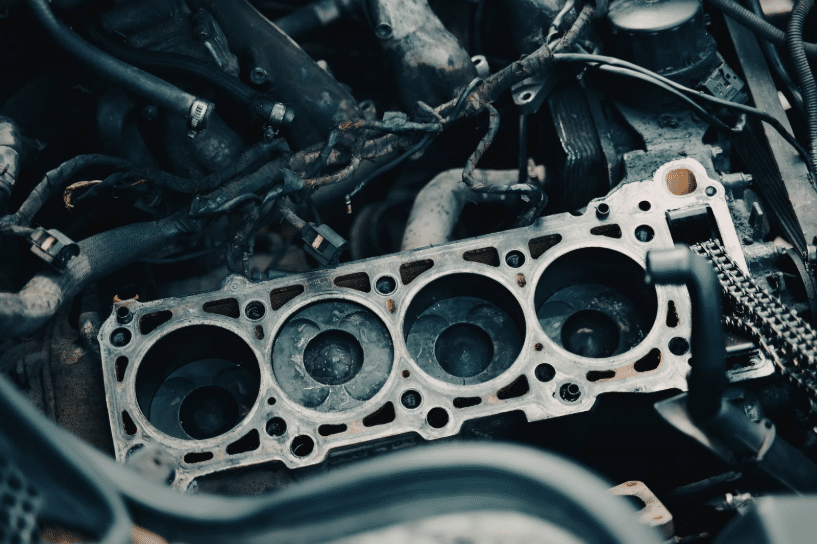
With the engine disassembled, individual components get cleaned, inspected, and measured. Cylinder bores are checked for taper and out-of-round condition. Crankshaft journals are measured with a micrometer and compared to spec. Main and rod bearings are inspected for scoring, discoloration, and wear patterns that indicate oil starvation or contamination. Cylinder heads get pressure tested and checked for warpage with a precision straightedge.
Components that are still within spec go into the reuse pile. Components that are worn beyond tolerance but still salvageable go to a machine shop for resurfacing, honing, or grinding. Components that are damaged beyond machining get replaced. This is also the point where the technician identifies the root cause of the failure, not just the symptom. A spun bearing isn't the problem; it's the result of the real problem, which might be a clogged oil pickup, a failing oil pump, or extended oil change intervals. Our breakdown of 12 common engine problems covers many of these root causes in depth.
Decisions about repair versus replacement get finalized here. If the block is cracked, if the crankshaft is damaged beyond the limits of grinding, or if machining costs plus new parts approach the price of a remanufactured engine, replacement often makes more sense. A good shop presents those numbers honestly and lets you choose.
Step 6: Reassembly with New Parts
Reassembly is where precision matters most. Every gasket surface gets cleaned to bare metal. Every sealing surface gets inspected for flatness. Fasteners get torqued in the correct sequence, in multiple passes, to the manufacturer's exact specification. Timing components get aligned to reference marks, and the alignment gets double-checked before the engine is rotated.
Fluids matter as much as parts. Fresh oil of the correct specification goes in before the first start. Coolant gets mixed to the right ratio with distilled water or comes pre-mixed from the manufacturer. Transmission fluid, power steering fluid, and any other system that was drained during the job gets filled to spec. Skimping on fluid quality at this stage undoes a lot of the careful work that came before it, which is why oil change services and fluid specifications are never areas to cut corners.
New gaskets, seals, and any scheduled-replacement items like timing chains or water pumps go in regardless of their apparent condition. The logic is simple: the labor to replace these items later, after a repeat failure, costs more than replacing them preventively now. Any honest shop bundles these items into major engine work automatically.
Step 7: Break-In and Final Testing
The first start is a careful moment. The technician primes the oil system, verifies oil pressure on the gauge before letting the engine idle, and listens for any unusual noise. On a rebuilt engine, initial break-in follows specific procedures: varying RPM, avoiding sustained load for the first hundred miles, and checking for leaks at multiple intervals.
Once initial start is clean, the technician runs the engine through its full operating range. Idle quality, acceleration response, transmission behavior under load, cooling system temperature stability, and charging system output all get verified. The scan tool goes back on to confirm that no new codes have appeared, that previously stored codes have been cleared, and that all control modules are communicating correctly. Understanding diagnostic trouble codes and what they mean helps technicians confirm the repair addressed the actual fault rather than masking it.
A road test under real driving conditions is the final check. The technician drives the car through stop-and-go traffic on roads like Scott Boulevard or Ponce de Leon, highway speeds, and varied loads to verify that the repair holds up in the same conditions where the original problem appeared. If anything feels off during the road test, the car goes back on the lift before it gets released to you.
What Affects Your Total Timeline
A straightforward engine repair can take two to four days. A full rebuild or engine replacement often stretches to one to three weeks. The biggest variables are parts availability and machine shop turnaround. Common parts for mainstream Asian and domestic vehicles usually arrive within a day or two. OEM parts for European makes or older vehicles can take a week or longer, especially when items ship from overseas.
Machine shop work adds its own timeline. Head resurfacing, crankshaft grinding, and cylinder boring all require sending parts to a specialist with their own queue. Good machine shops are busy, and rushing their work is how expensive repairs come back as warranty claims. A reputable shop builds realistic timelines into the estimate and updates you when something changes.
Diagnostic surprises during teardown can also extend timelines. If a technician finds that the cylinder head is cracked when the original estimate assumes a surface-only issue, the repair plan changes, and the conversation with you happens before additional work proceeds. That's a feature of the process, not a failure of it.
How to Tell If the Shop Is Doing It Right
A few specific signals separate quality engine work from corner-cut work. Digital inspection reports with photos of the actual components, taken during the job, give you visual confirmation of what was found and what was done. Your old parts being returned to you on request lets you verify that replaced components were actually replaced. A detailed invoice that specifies each operation, each part number, and each labor line tells you exactly what you paid for.
Written warranty coverage matters as much as the quote itself. A shop confident in its work backs major engine repair with at least 12 months or 12,000 miles of coverage on parts and labor. Extended warranties through networks like TechNet cover the repair nationwide at participating shops, which matters if you travel. A shop that won't put warranty terms in writing is telling you something about how confident they are in their own work.
Transparent communication throughout the job is the final indicator. Phone calls before supplemental work, realistic timeline updates when parts are delayed, and clear explanations of what was found and why. The shops doing this well are the ones Decatur drivers stay with for years.
Frequently Asked Questions
How long does engine repair typically take?
A focused repair like a head gasket or timing chain job usually takes three to five business days. A full rebuild or engine replacement commonly runs one to three weeks depending on parts availability and machine shop scheduling. European vehicles and older models often sit at the longer end of that range.
Should I repair or replace the engine?
The answer depends on the cost ratio and the vehicle's remaining value. As a general rule, if repair costs exceed 60 to 70% of a remanufactured engine's installed price, replacement usually makes more financial sense. A good shop walks you through those numbers honestly instead of pushing you toward the more expensive option.
What happens if the shop finds additional damage during teardown?
A responsible shop stops work and calls you before proceeding with anything outside the original estimate. You get a supplemental quote, the option to approve or decline, and a clear explanation of why the additional work is recommended. Authorization in writing protects both parties.
Does insurance cover engine repair?
Standard auto insurance typically doesn't cover mechanical failure, but it may cover engine damage resulting from a covered event like a collision, flood, or vandalism. Extended warranties and powertrain warranties often cover specific failures if the vehicle is within the coverage period. Always call your insurer or warranty company before authorizing work.
How can I avoid engine repair in the first place?
Regular oil changes with the correct specification, addressing warning lights promptly, maintaining proper coolant levels, and following the manufacturer's scheduled maintenance intervals handle 90% of preventive engine care. Most major engine failures trace back to deferred maintenance or ignored symptoms that were cheap to fix early.
How do I know if I'm being upsold?
Legitimate additional work comes with specific explanations, photos when possible, and a clear connection to the original problem. Vague recommendations without supporting evidence, pressure to authorize work immediately, or resistance to letting you see the old parts are all reasons to pause and get a second opinion. Honest shops welcome questions and verification.
About Blue Ridge Automotive
Blue Ridge Automotive has been serving Decatur drivers for years from our Decatur location, with additional convenient shops in Buckhead at (404) 266-1699, Chamblee at (770) 216-8474, and Marietta at (770) 426-4220. Our ASE-certified technicians handle everything from routine diagnostics to complete engine repair, with digital inspection reports that include photos of what we find and a 24,000-mile, 24-month warranty on parts and labor through TechNet. We service Asian, domestic, and European vehicles with the same level of transparency and craftsmanship, which is how we've earned the trust of drivers across Decatur and the metro region.
Think Your Engine Needs Attention?
Warning lights, unusual noises, and performance changes rarely get better on their own. The sooner an engine problem gets diagnosed, the more options you have and the less the repair typically costs. Our technicians perform thorough diagnostics, explain exactly what's happening with your engine, and provide written estimates before any major work begins.
Call (404) 549-9424 or schedule a service online to book a diagnostic appointment at the Blue Ridge Automotive Decatur location.