

Timing Chain vs. Timing Belt: What Every Chamblee Driver Should Know
Sharing this:
Two cars sitting side by side in the same parking lot can solve the same engineering problem in completely different ways. One uses a rubber timing belt; the other relies on a metal timing chain. Both keep your engine's internal parts moving in perfect sync, and both can sideline your car if they fail. Understanding the timing chain vs timing belt question matters because the part hiding behind your engine's front cover decides how often you need service, how much warning you get before trouble, and how serious a failure can become. For Chamblee drivers navigating DeKalb County traffic and Georgia heat, knowing which one your vehicle uses is one of the smartest pieces of maintenance knowledge you can carry.
Key Takeaways
- A timing belt and a timing chain do the same job: they keep the crankshaft and camshaft turning in precise rhythm so valves and pistons never collide.
- Timing belts are made of reinforced rubber, run quietly, and need replacement on a set mileage schedule. Timing chains are metal, last far longer, and are lubricated by engine oil.
- Many newer vehicles have shifted back to chains, while plenty of cars on Chamblee roads still run belts, so you cannot assume based on age alone.
- Ignoring a worn belt or chain on an interference engine can turn a routine repair into a major engine rebuild.
- Listening for new noises, watching for misfires, and keeping up with scheduled service are the easiest ways to stay ahead of a failure.
What a Timing Belt and Timing Chain Actually Do
Your engine runs on timing in the most literal sense. The crankshaft turns as the pistons move up and down, and the camshaft controls when the intake and exhaust valves open and close. These two shafts have to spin in a fixed relationship to each other, measured in fractions of a degree, so that valves are never open when a piston reaches the top of its travel.
A timing belt or timing chain is the component that links them together and enforces that rhythm. Picture a relay team where every runner has to hand off the baton at the exact same instant, lap after lap, thousands of times per minute. If the handoff slips, the whole system breaks down.
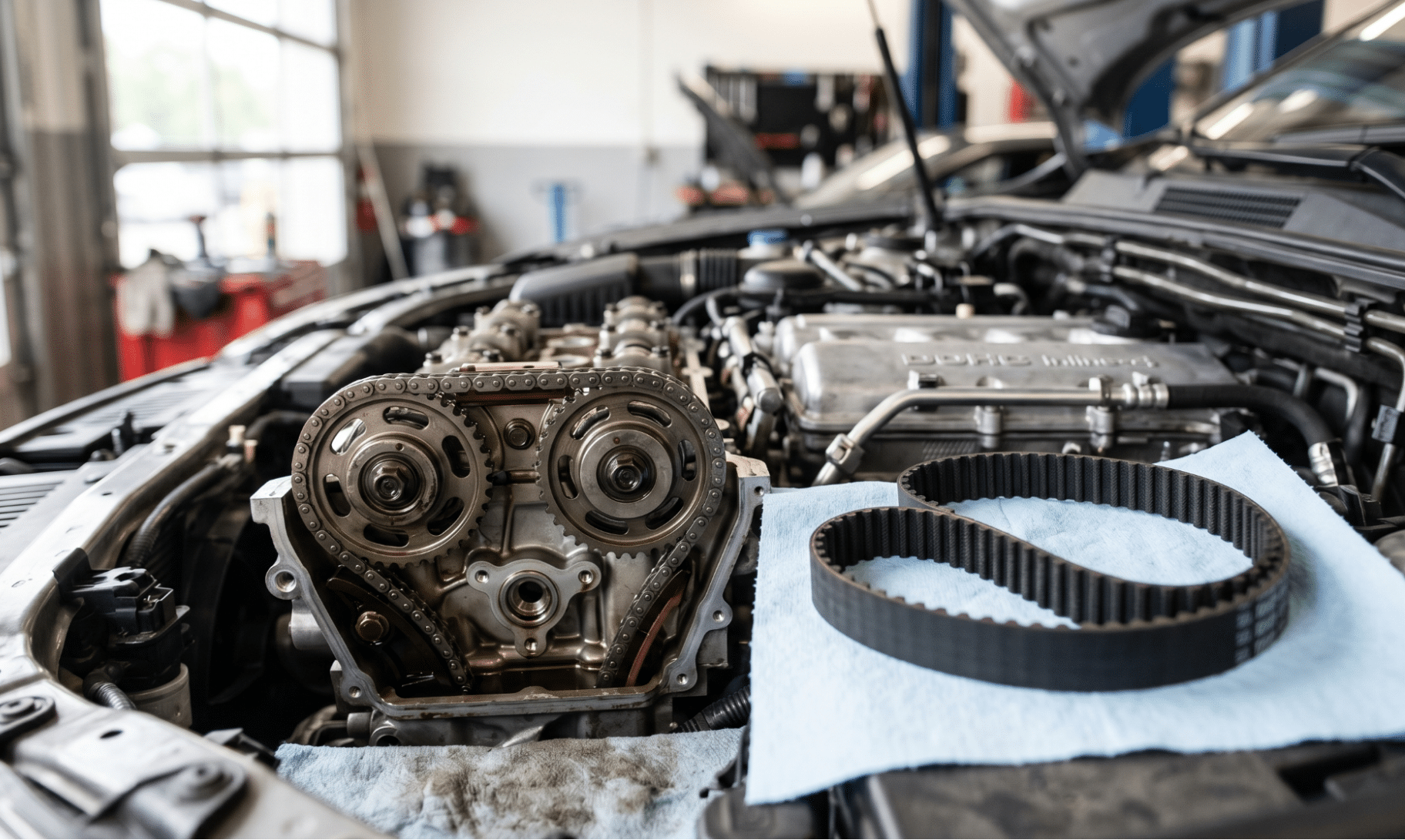
Both parts accomplish this synchronization, just with different materials and design philosophies. A belt is a toothed loop of reinforced rubber that grips matching gears. A chain looks and works much like a heavy-duty bicycle chain, riding on toothed sprockets. The result is identical when everything works correctly, but the way each part ages, sounds, and fails is where the real differences appear.
The Core Differences Between a Timing Chain and a Timing Belt
When drivers compare a timing belt vs timing chain, a handful of practical differences tend to matter most: what the part is made of, how long it lasts, how much noise it makes, and where it sits in the engine. Belts are lighter and quieter, but they wear out predictably and need scheduled replacement. Chains are heavier and built to last much longer, often the life of the engine, but they depend on clean engine oil and proper tension to stay healthy.
Here is how the two stack up at a glance:
| Feature | Timing Belt | Timing Chain |
| Material | Reinforced rubber with fiber cords | Metal links and sprockets |
| Typical lifespan | Around 60,000 to 100,000 miles | Often 150,000 miles or more |
| Lubrication | Runs dry, outside the oil system | Bathed in engine oil |
| Noise level | Very quiet | Slight whir or rattle as it wears |
| Replacement schedule | Set mileage interval | Usually only when worn or stretched |
| Location | Behind a removable front cover | Inside the engine, oil-fed |
Neither approach is automatically better. Belts run smoother and weigh less, which helps with efficiency, while chains trade a little noise for a much longer service life. Manufacturers choose based on engine design goals, which is why two cars from the same era can use opposite setups.
How to Tell Whether Your Car Has a Belt or a Chain
A question many drivers ask first is simple: does my car have a timing belt or chain? The fastest answer comes from your owner's manual, which lists the recommended timing belt replacement interval if your engine uses one. No listed interval is often a strong hint that you have a chain instead, since chains rarely carry a fixed replacement mileage.
You can also narrow it down by a few clues:
- Engine sound and feel. A belt-driven engine tends to run with a smooth, quiet front end. A faint whirring or chain-like noise from the timing cover can point to a chain.
- Model and engine research. The exact answer depends on your specific engine, not just the make. Looking up your year, model, and engine size is the most reliable shortcut.
- A quick inspection. A technician can confirm in minutes by identifying the cover and components, removing all the guesswork.
There has been a noticeable industry shift over the past decade or so, with many automakers returning to chains for newer designs. Still, plenty of belt-driven vehicles remain on the road across Metro Atlanta, so model year alone will not give you a confident answer. When in doubt, a quick check during a routine visit settles it.
Warning Signs Your Timing Belt or Chain Is Failing
Catching trouble early is the difference between a planned repair and a roadside breakdown. The symptoms overlap between the two parts, but each has a few signatures worth knowing.
Common timing belt symptoms include a ticking sound from the engine, difficulty starting, an engine that will not turn over at all, or visible cracking and fraying if the cover is removed. Because belts run dry, they degrade with heat and age even on cars that are not driven much.
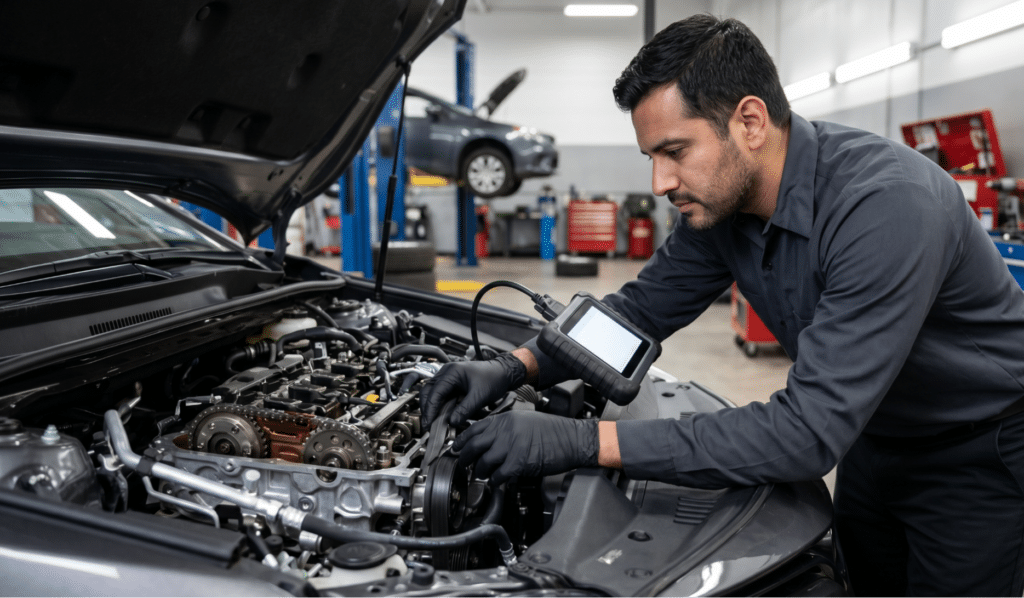
Bad timing chain symptoms tend to show up as a metallic rattle on startup, a check engine light tied to camshaft and crankshaft position sensors, engine misfires, or even metal shavings in the oil. A stretched chain can throw off timing gradually, which often triggers performance complaints before anything fails outright.
Any of these signs deserves prompt attention. A check engine light in particular is worth taking seriously, since timing-related trouble codes frequently overlap with other faults. Pinpointing the cause through a professional diagnostic service prevents misdiagnosis and wasted spending. If you want a broader view of what diagnostics can reveal, our breakdown of common engine problems found through diagnostics covers the warning signs worth watching.
Replacement Intervals and the Risk of Waiting Too Long
Knowing when to replace timing belt components is mostly a matter of mileage. Most belt-driven engines call for replacement somewhere between 60,000 and 100,000 miles, with the exact figure in your owner's manual. Many shops recommend replacing the water pump at the same time, since it is often driven by the same belt and the labor overlaps. Chains usually have no fixed interval and are replaced only when inspection shows stretching or wear, though they still depend heavily on clean oil to reach their full lifespan.
The reason intervals matter so much comes down to engine design. An interference engine is one where the valves and pistons share the same space at different moments in the cycle. If the belt or chain fails and timing is lost, the pistons can strike open valves, causing bent valves, damaged pistons, and a repair bill far larger than routine maintenance. Non-interference engines are more forgiving and usually just stall, but most modern engines are interference designs.
What Chamblee Driving Conditions Mean for Your Timing Components
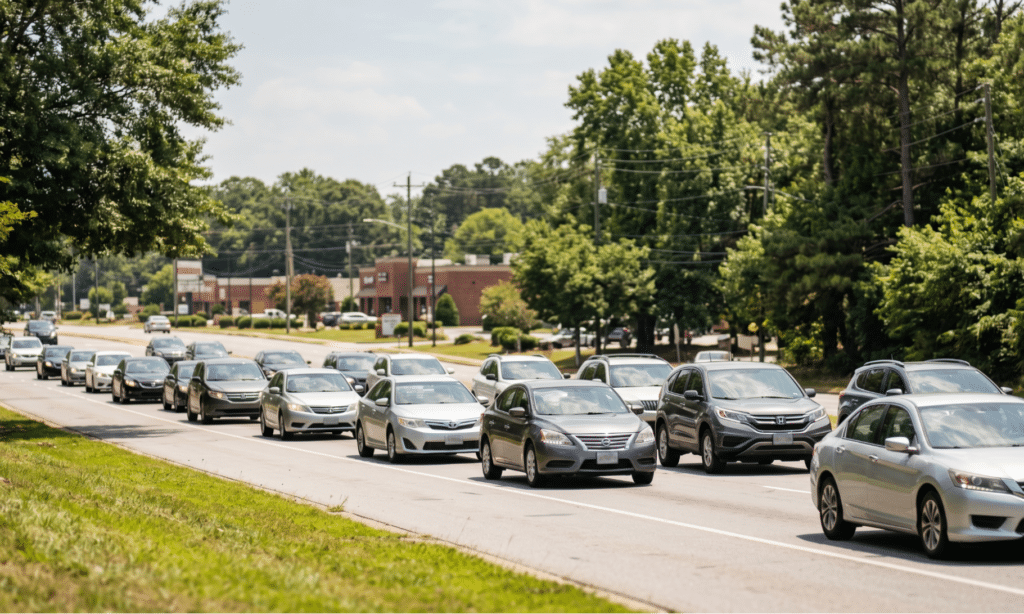
Where and how you drive affects timing components more than most people realize. Chamblee sits in the middle of dense DeKalb County traffic, with stop-and-go conditions near the DeKalb-Peachtree Airport corridor and along the MARTA Gold Line routes. Frequent idling and short trips keep engines running through more cycles per mile, and that steady use adds up over the years for both belts and chains.
Georgia heat plays a role too. High under-hood temperatures accelerate the aging of rubber timing belts, drying them out and making cracks more likely before a vehicle even reaches its mileage limit. Chains are less heat-sensitive, but they rely on oil that stays clean and at the right level, which is harder to maintain when an engine spends long stretches idling in summer traffic.
There is also an emissions angle. DeKalb County falls within the Metro Atlanta mandatory emissions testing zone, and timing problems can trigger the check engine light and the trouble codes that cause an inspection to fail. Addressing timing components early helps your car stay road-ready and test-ready. A thorough engine repair evaluation keeps these systems working together the way they should, especially for drivers logging daily miles in and around Chamblee.
Frequently Asked Questions
Is a timing chain better than a timing belt?
Neither is universally better. A timing chain generally lasts much longer and rarely needs scheduled replacement, while a timing belt runs more quietly and weighs less. The right choice depends on the engine, which is why manufacturers use both. What matters most is maintaining whichever one your vehicle uses.
How long does a timing chain last?
A timing chain often lasts 150,000 miles or more, and in many engines it is designed to last the life of the vehicle. That longevity depends on regular oil changes and proper oil levels, since the chain is lubricated by engine oil. A stretched or worn chain can still fail earlier if maintenance is neglected.
How long does a timing belt last?
Most timing belts need replacement between 60,000 and 100,000 miles, depending on the manufacturer's recommendation in your owner's manual. Heat and age matter too, so a belt can require replacement based on time even if the mileage is low. Checking your manual for the specific interval is the safest approach.
What happens if a timing belt or chain breaks while driving?
On an interference engine, a broken belt or chain can let pistons strike open valves, causing serious internal damage. On a non-interference engine, the car usually just stalls without major harm. Because most modern engines are interference designs, a failure on the road can be expensive, which is why staying ahead of replacement matters.
Can I tell if my car has a belt or a chain myself?
Your owner's manual is the quickest reference, since a listed timing belt replacement interval points to a belt. Engine sound and a model-specific lookup offer additional clues. For a definitive answer, a technician can identify the component during a routine inspection in just a few minutes.
Should I replace the water pump with my timing belt?
In many belt-driven engines, the water pump is driven by the timing belt and sits behind the same cover. Replacing both at once is a common recommendation because the labor overlaps, which saves a second teardown later. Your technician can confirm whether this applies to your specific engine.
Schedule Your Timing Inspection in Chamblee
Not sure whether your car runs a belt or a chain, or noticing a new noise from the engine? The team at our auto repair shop in Chamblee can identify your timing setup, inspect it for wear, and recommend the right next step before a small issue becomes a major one. Call or text us at (770) 216-8474 to set up an appointment with technicians who serve drivers throughout Chamblee and the surrounding DeKalb County communities.
About Blue Ridge Automotive
Blue Ridge Automotive is a trusted auto repair shop in Chamblee, GA, serving drivers across Brookhaven, Doraville, Dunwoody, and the wider Metro Atlanta area. With decades of combined experience, our certified technicians service Asian, Domestic, and European vehicles, handling everything from timing components and engine work to diagnostics and routine maintenance. We take the time to explain what your vehicle needs so you can make confident, informed decisions about your car.