

Is Your Catalytic Converter Failing in Chamblee? Watch for These Warning Signs
Sharing this:
Catalytic converters are designed to last the life of the vehicle. Most do. But the ones that don't tend to fail in expensive, predictable ways, and the warning signs almost always show up well before the converter quits completely. Catching those signals early is the difference between a planned repair you can budget for and a stranded breakdown with a tow bill attached.
This post walks through the seven most reliable warning signs that a catalytic converter is failing, what's actually causing the failure, what replacement costs in the Chamblee area, and why diagnosing the underlying problem matters as much as replacing the converter itself. If you've seen a P0420 code, smelled something off from the exhaust, or noticed your car losing power, what follows will help you tell what you're actually dealing with.
What a Catalytic Converter Actually Does
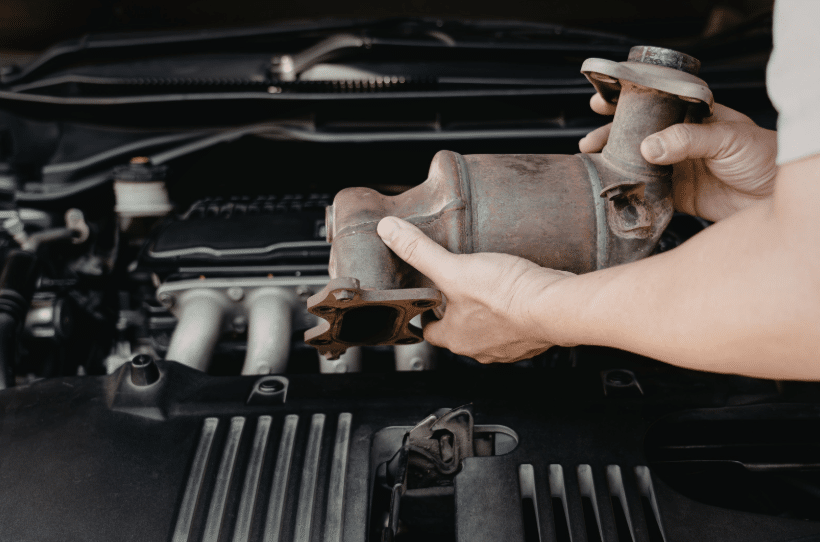
Your catalytic converter sits in the exhaust system between the engine's exhaust manifold and the muffler. Inside the converter, a ceramic honeycomb substrate is coated with precious metals like platinum, palladium, and rhodium. As hot exhaust gases pass through the substrate, those metals catalyze chemical reactions that convert harmful pollutants into less harmful ones.
The three main targets are hydrocarbons (unburned fuel), carbon monoxide, and nitrogen oxides. The reactions inside the converter turn those into carbon dioxide, nitrogen, and water vapor. A healthy converter operates at 90 percent or better efficiency. A failing converter does the same job poorly or not at all, which is why every state with emissions testing requires a functioning converter.
When the converter starts to fail, the symptoms tend to show up across multiple vehicle systems at once because the converter affects engine breathing, exhaust composition, and onboard diagnostics simultaneously. Routine exhaust services inspections often catch early degradation before it becomes a complete failure.
Warning Sign #1: Check Engine Light with P0420 or P0430 Codes
The most common warning sign is a check engine light with codes in the P0420 or P0430 range. These specifically indicate "catalyst system efficiency below threshold" on bank 1 (P0420) or bank 2 (P0430). The codes are set when the engine computer compares oxygen sensor readings before and after the converter and decides the converter isn't doing its job.
The important nuance is that these codes don't always mean the converter itself is bad. The same code can be triggered by a failing oxygen sensor, an exhaust leak before the converter, an ignition misfire that's contaminated the converter, or a fuel trim problem that's overloading it. Replacing the converter without diagnosing the root cause often just sets up the same code to return within months. A proper diagnostic service interprets these codes in context rather than treating them as automatic converter replacement orders.
Warning Sign #2: Sulfur or Rotten Egg Smell from the Exhaust
A distinctive sulfur or rotten egg smell from the exhaust is one of the clearest signs of converter failure. The smell comes from hydrogen sulfide gas, which forms from sulfur compounds present in gasoline. A healthy converter processes those compounds into odorless sulfur dioxide. A failing converter lets the hydrogen sulfide pass through unconverted.
The smell is usually most noticeable at idle, just after starting the car, or in the moments after shutting it off. It can also be more obvious in confined spaces like garages. Some drivers notice it as a sweetish, decaying odor; others describe it as the smell of rotten eggs or matches. Either way, it's a chemical signal that converter performance has dropped.
If you smell sulfur from your exhaust, the converter is not the only possible cause. A rich-running fuel mixture or a malfunctioning fuel injector can also produce excess sulfur compounds. But it's a strong reason to have the system checked.
Warning Sign #3: Reduced Engine Power and Acceleration
A clogged catalytic converter creates exhaust backpressure that chokes the engine. The engine has to push exhaust gases out against the restriction, which steals power from the wheels. The symptoms show up as noticeably reduced acceleration, difficulty maintaining highway speed when climbing grades, hesitation under heavy throttle, and a general sense that the engine is working harder than it should.
In severe cases, the converter can become so restricted that the engine struggles to run at all. You might notice it stalls at idle, won't rev past a certain RPM, or in extreme cases won't start. A converter that's been damaged by misfires, melted internally, or shattered into fragments that block the exhaust path can produce all of these symptoms. This is also when the underlying problems documented in our breakdown of 12 common engine problems often surface together.
The performance loss tends to be gradual rather than sudden, which makes it easy to miss. Many drivers don't notice until they merge onto the highway and realize the car can't accelerate the way it used to. By that point, the converter is well past the point of mild restriction.
Warning Sign #4: Rattling Noises from Under the Vehicle
When the ceramic substrate inside a converter breaks apart, the broken pieces rattle around inside the metal shell. The noise is most noticeable at startup, when driving over bumps or rough roads, or sometimes at idle. It sounds like loose gravel or marbles inside a metal can, coming from underneath the vehicle in the area of the converter.
This is a definitive symptom. A rattling converter is internally damaged, and replacement is the only real fix. The damage usually traces back to severe overheating from misfires, contamination from oil or coolant entering the cylinders, or physical impact from road debris. Once the substrate has shattered, no amount of additive or driving habit will restore it.
If you also notice rattling that comes and goes during acceleration or deceleration, it might be the catalytic converter substrate, but it could also be an exhaust heat shield that's rusted loose. The two sound similar but the fix is dramatically different. A technician with the car on a lift can confirm which is causing the noise within a few minutes.
Warning Sign #5: Drop in Fuel Economy
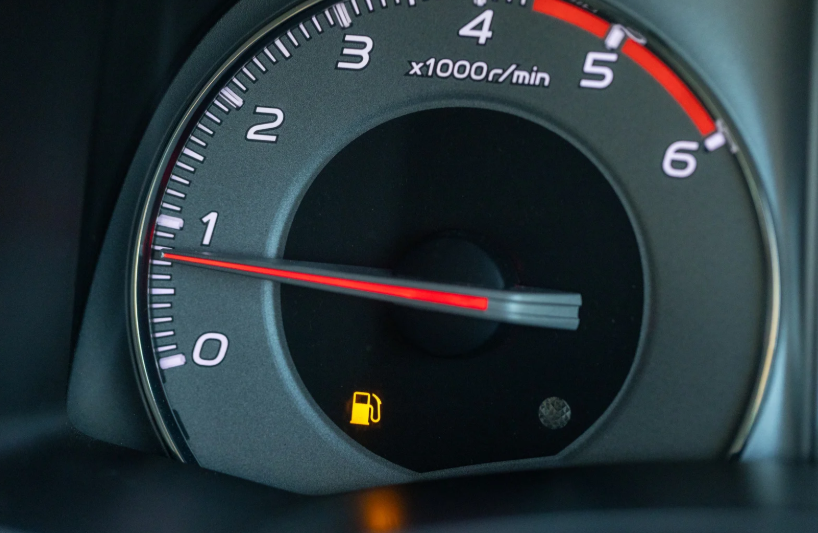
A struggling catalytic converter affects fuel economy through two mechanisms. First, the increased exhaust backpressure from a partially clogged converter forces the engine to work harder, which uses more fuel for the same work output. Second, the failing converter often distorts the readings the engine computer uses to manage fuel mixture, leading the computer to compensate by running richer than necessary.
The combined effect can drop fuel economy by 10 to 25 percent depending on how badly the converter has degraded. Most drivers don't notice the gradual decline because it happens slowly, but a year-over-year comparison of fuel costs often makes it obvious. If your MPG has been creeping down for months without an obvious cause like seasonal driving changes, the catalytic converter (or the system feeding it) deserves investigation.
This is also why fuel economy is a useful indicator even before a check engine light appears. Many converter problems develop gradually enough that the onboard diagnostics don't trigger codes until the issue is well advanced. Fuel economy can warn you weeks or months earlier.
Warning Sign #6: Failed Georgia Emissions Test
For drivers in 13 metro counties including DeKalb, where Chamblee sits, gasoline-powered vehicles between three and 25 model years old require annual emissions testing for tag renewal. A failing catalytic converter is one of the most common reasons vehicles fail this test, often without the driver being aware that anything was wrong.
The test measures hydrocarbons, carbon monoxide, and nitrogen oxides at the tailpipe, plus the OBD-II readiness check. A converter that's lost efficiency may pass everyday driving without obvious symptoms but fail the precise emissions measurements at the test station. For some drivers, the failed test is the first they hear about a converter problem.
If your vehicle has failed emissions and the technician has identified the converter as the cause, you'll need to repair it before you can renew your tag. This is one of the situations where vehicle scheduled maintenance and proactive diagnostics save real frustration, because catching converter degradation between annual tests gives you time to plan rather than scramble.
Warning Sign #7: Visible Discoloration or Glowing Red
In extreme cases, a catalytic converter that's actively overheating from severe misfires or contamination can glow red. This is visible from underneath the vehicle, particularly noticeable at night or in dim conditions. Glowing red converters are running far above normal operating temperature, which means active combustion is happening inside the substrate.
This is an emergency-level symptom. A red-hot converter is in the process of destroying itself, and continuing to drive can cause the substrate to melt completely or spread heat damage to nearby components. If you see this, shut the vehicle off immediately and have it towed to a shop. Driving any further accelerates the damage and creates a fire risk if the heat reaches fuel lines or grass under a parked vehicle.
Discoloration without glowing is also a clue. A converter shell that shows visible heat-bluing or burned paint indicates extended periods of operating above design temperature, often from misfire damage. The converter may not be glowing right now but it's been overworked enough to leave evidence.
What Causes Catalytic Converter Failure in the First Place
Catalytic converters don't just wear out. They fail because something else fed them more abuse than they were designed to handle. Five main causes account for the vast majority of failures.
Ignition misfires send raw, unburned fuel into the exhaust. That fuel ignites inside the hot converter, spiking temperatures past 2,000°F and melting or fusing the substrate. Worn spark plugs, failing coil packs, and bad injectors are common upstream causes. The relationship between misfires and converter destruction is direct enough that addressing misfires promptly is one of the best ways to extend converter life.
Coolant or oil entering the combustion chamber from a head gasket failure, valve seal failure, or worn piston rings contaminates the catalyst material, killing its ability to do chemistry. Once contaminated, the catalyst can't be restored, and the converter must be replaced. The kind of underlying issues covered in engine repair work often need to be resolved before converter replacement makes sense.
Extended use of leaded gasoline poisons the catalyst, but this is rare with modern fuel standards. Physical damage from speed bumps, road debris, or accidents can crack the converter shell or fracture the substrate. Age and accumulated wear over 150,000 to 200,000 miles eventually degrade catalyst performance even on otherwise healthy vehicles.
The Chamblee Theft Problem
Metro Atlanta has dealt with significant catalytic converter theft for several years, and Chamblee has seen its share. Thieves cut the converter out of parked vehicles using battery-powered saws, often in under two minutes, and sell the precious metals inside for a few hundred dollars per converter. The most commonly targeted vehicles are hybrids (which have larger converters with more precious metals due to lower exhaust temperatures), trucks and SUVs (because high ground clearance makes access easy), and Honda Elements, Toyota Priuses, and Ford F-Series trucks specifically.
Theft typically happens in apartment parking lots, commuter parking decks along Buford Highway and Peachtree Industrial, and quiet residential streets, often overnight. The first sign for the owner is starting the car and hearing an extremely loud exhaust noise, since the muffler and tailpipe are now disconnected from the engine downstream of the missing converter.
Prevention measures help. Anti-theft cages or shields make removal slow enough to deter most thieves. Etching your VIN or phone number onto the converter makes the part traceable. Parking in well-lit areas, in garages when possible, or with the exhaust against a wall reduces opportunity. Insurance often covers theft, but the deductible plus the inconvenience makes prevention worthwhile.
What Replacement Actually Costs
Catalytic converter replacement on mainstream Asian and domestic vehicles typically runs $800 to $2,500 installed. European luxury vehicles often run $1,500 to $4,000 because of OEM-spec parts and more complex exhaust system designs. Hybrids and large trucks with bigger converters or multiple converters in the system can run $2,000 to $5,000 or more.
EPA-certified aftermarket direct-fit converters cost less than OEM but must meet federal emissions standards and Georgia state requirements. For vehicles in emissions-tested counties, federal law requires that the replacement converter meet the original equipment specifications. Universal converters that have to be cut and welded into place are usually not legal options for emissions-tested vehicles, even if they're sold cheaply at parts stores.
Adjacent components often need attention during converter replacement. Oxygen sensors that have been exposed to a failing converter often need replacement too, and our breakdown of O2 sensor replacement cost covers what to budget for those. Exhaust gaskets, mounting hardware, and sometimes downstream pipes get replaced at the same visit while the system is opened up.
Why Diagnosing the Real Cause Matters Before Replacement
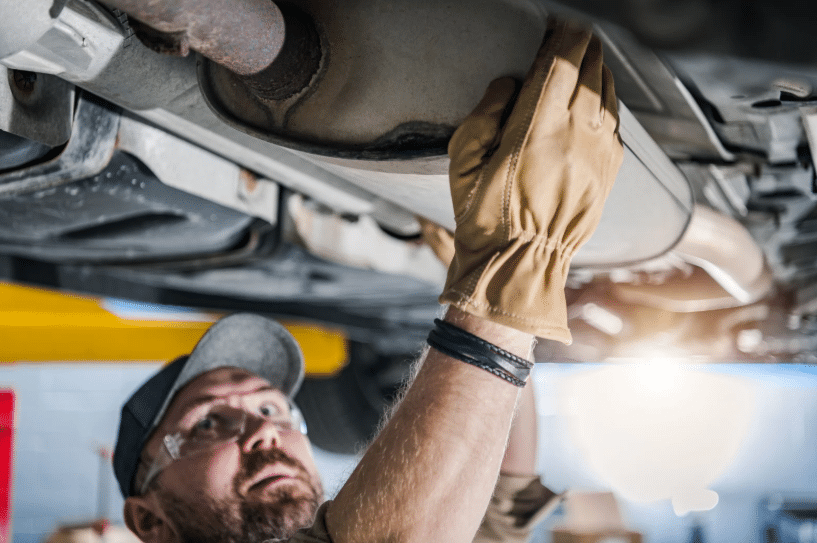
If misfires, fuel trim problems, or oil consumption caused the converter to fail in the first place, replacing the converter without addressing those underlying issues guarantees the new converter will fail too. Sometimes within months. This is one of the most common ways drivers end up paying for converter replacement twice.
A proper diagnostic identifies the upstream cause before any converter work happens. That means scanning every module for stored codes, evaluating fuel trim data, checking compression and leakdown numbers if misfires are suspected, and looking for evidence of oil or coolant entering the cylinders. The interpretation of what diagnostic trouble codes mean for converter-related faults often requires this fuller picture.
The diagnostic itself usually costs $100 to $200. The savings from not replacing a converter that didn't need replacing, or from not having a new converter destroyed by an unaddressed misfire, often runs into the thousands.
Frequently Asked Questions
Can I just clear the P0420 code and keep driving?
You can clear the code, but it will return as soon as the engine completes a few drive cycles and the diagnostics re-evaluate the converter. Beyond that, in Georgia's emissions-tested counties, the readiness monitors won't reset to "ready" status quickly, which means a failed emissions test if you're due for renewal soon. Clearing the code without addressing the underlying problem just postpones the issue.
Will a failing catalytic converter damage my engine?
Indirectly, yes. A severely clogged converter creates backpressure that increases combustion temperatures and stresses internal engine components. Continued operation with a clogged converter can lead to overheating, valve damage, and accelerated wear on the entire exhaust valve train. The effect is gradual but real over months of driving.
How long can I drive with a bad catalytic converter?
It depends on the failure mode. A converter that's failing efficiency tests but still flowing exhaust normally can be driven for weeks or months without immediate consequence beyond the check engine light and emissions concerns. A converter that's clogged enough to affect engine performance is causing active damage and shouldn't be driven beyond what's needed to get to a shop. A glowing red converter is an immediate stop-driving situation.
Are aftermarket catalytic converters reliable?
EPA-certified aftermarket converters from reputable brands are generally reliable and significantly less expensive than OEM. The key is making sure the part is certified for your specific vehicle and meets Georgia emissions requirements. Cheap, non-certified converters sometimes fail emissions testing, set codes within months, or have manufacturing defects that cause early failure.
Why do hybrids and trucks get targeted for theft?
Hybrid converters contain higher concentrations of precious metals because hybrid engines run cooler and need more catalyst material to achieve full conversion. Trucks and SUVs sit higher off the ground, giving thieves easier access to slide underneath without lifting the vehicle. Both factors make these vehicles disproportionately attractive targets.
Can a catalytic converter be repaired or cleaned?
In rare cases, a converter that's restricted by carbon buildup but otherwise undamaged can be cleaned with chemical additives or professional cleaning services. This works only on early-stage problems, not on melted, fused, or shattered substrates. Most converter failures by the time they're causing symptoms have progressed past the point where cleaning is viable. Replacement is almost always the right answer once the symptoms are clear.
About Blue Ridge Automotive
Blue Ridge Automotive has served Chamblee drivers since 2010 from our Chamblee location, with additional convenient shops in Buckhead (Atlanta), Decatur, and Marietta. Our ASE-certified technicians diagnose catalytic converter problems by identifying the root cause before recommending replacement, install EPA-certified converters that meet Georgia emissions requirements, and handle related upstream repairs like spark plugs and oxygen sensors that often need attention at the same time. Every service is backed by a 24,000-mile, 24-month warranty on parts and labor through TechNet.
Don't Wait for the Emissions Test to Find the Problem
Catalytic converter problems rarely get better on their own, and the longer the underlying cause stays unaddressed, the more expensive the eventual repair becomes. If you've seen a P0420 code, noticed performance loss, smelled sulfur from the exhaust, or just want to confirm your converter is healthy before your next emissions test, our team can run a complete diagnostic and give you a clear repair plan.
Call (770) 216-8474 or schedule a service online to book your catalytic converter inspection at the Blue Ridge Automotive Chamblee location.