
How Often Should Marietta Drivers Flush Their Brake Fluid and What Does It Cost?
Sharing this:
Most drivers can tell you when their last oil change was, roughly when the tires were rotated, and maybe even when the air filter was changed. Ask the same drivers when their brake fluid was last flushed and the answer is usually some combination of a long pause, a shrug, and "I don't think it ever has been."
That's a problem, because brake fluid degrades silently and the consequences of letting it go too long aren't theoretical. Contaminated brake fluid can boil into vapor under hard braking, the pedal can go soft or to the floor with no warning, and the corrosion that builds up inside the system can destroy expensive components like the ABS module and master cylinder long before they should fail. This post covers what brake fluid actually does, how often it really needs to be flushed, what it costs in the Marietta area, and what skipping it eventually costs.
What Brake Fluid Actually Does (And Why It Has to Be Flushed)
Your brake system is hydraulic. When you press the pedal, you're pushing a piston in the master cylinder that pressurizes brake fluid in the lines. That pressure travels to each wheel and pushes pistons in the calipers, which squeeze the brake pads against the rotors. The whole system depends on one critical property of the fluid: it has to be incompressible.
Liquid brake fluid is incompressible by design. Vapor isn't. If the fluid in your brake lines turns into vapor, pressing the pedal compresses the gas instead of moving the calipers, and your braking force collapses dramatically or disappears entirely. This is called brake fade, and in serious cases it produces the worst-case scenario: the pedal goes to the floor with no resistance and the car doesn't slow down.
The other thing brake fluid does is protect the inside of the brake system from corrosion. Fresh fluid contains additives that prevent rust and pitting on internal metal surfaces. As those additives wear out, the system starts corroding from the inside. Both of these problems get solved by flushing the old fluid out and replacing it with fresh, which is why the service exists.
The Hygroscopic Problem: Why Brake Fluid Goes Bad
Most modern brake fluids (DOT 3, DOT 4, and DOT 5.1) are glycol-based, and glycol is hygroscopic, meaning it chemically attracts and absorbs water from the surrounding air. Brake fluid absorbs moisture not just through the reservoir cap when you open it, but also through the rubber brake hoses and seals throughout the system. The brake system is closed, but it's not airtight at the molecular level.
Brake fluid typically absorbs about 1 percent moisture per year of service under normal conditions. At 2 percent moisture, the boiling point of DOT 3 fluid drops from about 401°F when fresh to roughly 284°F. At 3 percent moisture, it's lower still. DOT 4 fluid drops from about 446°F dry to 311°F at 3.7% water content. The numbers sound abstract, but they translate directly into the temperature at which your brakes will start to fade under heavy use.
Marietta's humid climate accelerates this absorption. Drier regions see slower degradation; humid Southeast cities see faster. A two- or three-year-old brake fluid in this climate is often well past the point where boiling point has been seriously compromised.
What Happens When Contaminated Fluid Boils
The failure mode is straightforward and frightening. Brake fluid heats up during normal braking, and heavy braking heats it up more. If you're descending a long grade with the brakes applied, towing a trailer, or making repeated hard stops in traffic, the fluid temperature in the calipers can climb into the 250°F to 400°F range depending on conditions.
Fresh fluid handles this without incident because its boiling point is well above those temperatures. Contaminated fluid with several percent water content boils within that temperature range. Once vapor forms in the calipers, the next pedal application compresses the gas instead of pressurizing the fluid. The pedal feels soft, sinks toward the floor, and produces little or no braking force.
The Marietta versions of this scenario are less dramatic than mountain descents but still real. Heavy stop-and-go traffic on I-75 during a hot July afternoon puts brake systems through repeated thermal cycling. Towing a boat down to Lake Allatoona with old brake fluid, descending the grades around the foothills north of the city, or even an emergency stop at the end of a long highway stretch with already-warm brakes can all bring the issue to the surface. Routine brake services appointments are the natural moment to address this before it becomes a problem.
The Other Problem: Internal Corrosion
Moisture in brake fluid doesn't just lower its boiling point. It also corrodes the inside of the brake system. The master cylinder, brake lines, ABS module, calipers, and wheel cylinders all have internal metal surfaces that water attacks slowly over years. The corrosion produces metal particles that contaminate the fluid further, and those particles abrade seals and check valves as they circulate.
The eventual cost of this corrosion is significant. ABS modules can run $800 to $2,500 to replace. Master cylinders run $300 to $700. Caliper replacements run $150 to $400 per side, and corroded brake lines often need to be replaced in sections. A vehicle that's never had its brake fluid flushed in 10 years is essentially guaranteed to need at least one of these repairs that wouldn't have been necessary with regular fluid service.
A $100 to $150 brake flush every two or three years prevents most of this. It's some of the cheapest insurance available against expensive brake system repairs, and it gets skipped more than almost any other maintenance item.
The Actual Recommended Interval
Most manufacturers spec brake fluid flush every two to three years or 30,000 to 45,000 miles, whichever comes first. Many European brands like BMW, Mercedes, Audi, and Volkswagen specify every two years regardless of mileage, because their performance-oriented designs are more sensitive to fluid contamination.
The two-year mark is a reasonable default for any vehicle in the Marietta climate. Time matters more than mileage on this service because moisture absorption happens whether you drive the car or not. A garage-kept sedan with 30,000 miles at age 5 has fluid just as contaminated as a daily driver with 80,000 miles at age 5, sometimes more so because limited driving means less heat to drive off any volatile components.
Modern vehicles with anti-lock braking systems, traction control, electronic stability control, and electronic brake distribution are particularly sensitive to fluid contamination. The hydraulic units have small valves and precise tolerances that don't tolerate sediment or corrosion well. Following manufacturer-spec intervals is one of the easiest ways to keep these systems working properly through the vehicle's life. This is the kind of preventive item that fits naturally into scheduled maintenance planning.
The Three Brake Fluid Types You'll Encounter
DOT 3 was the long-time standard for passenger vehicles and is still common on many domestic and Asian models. It has the lowest boiling point of the common types but performs adequately for normal driving.
DOT 4 has higher boiling points and is the modern standard on most newer vehicles, especially European ones. It absorbs moisture slightly faster than DOT 3 in exchange for the better thermal performance.
DOT 5.1 is a higher-spec glycol-based fluid with even higher boiling points. It's used in performance applications and some luxury vehicles, and it's compatible with DOT 3 and DOT 4 in a pinch (though not recommended to mix routinely).
DOT 5 is the outlier. It's silicone-based, not glycol-based, and it's incompatible with everything else. DOT 5 is used mainly in classic vehicles, military equipment, and some specialty applications. Never put DOT 5 in a vehicle that calls for any of the other types, and never mix them. Match what your reservoir cap or owner's manual specifies. The broader OEM vs. aftermarket parts considerations apply to fluid quality choices as well.
What the Service Actually Involves
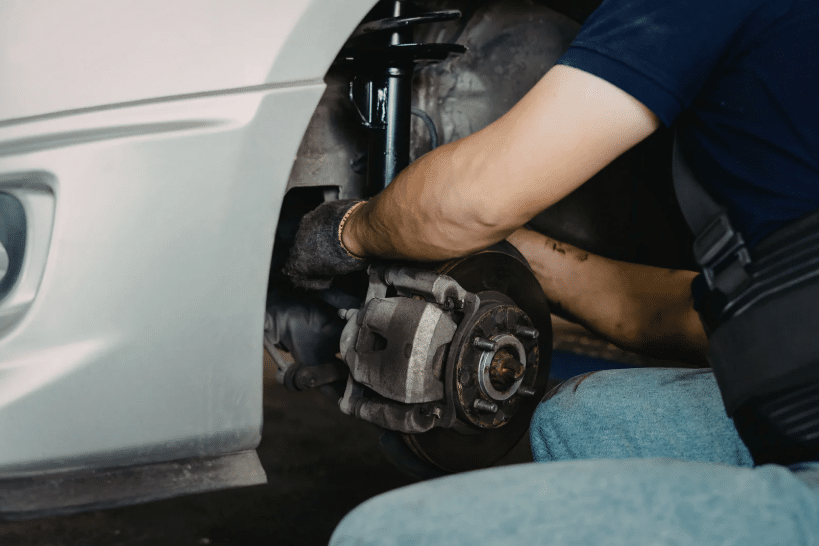
A proper brake fluid flush uses pressure to push fresh fluid through the system from the master cylinder, sending the old contaminated fluid out through bleeder valves at each caliper. A pressurized bleeder bottle attached to the master cylinder reservoir maintains positive pressure while a technician opens each bleeder in the correct sequence and watches for clean fluid to come out.
The process takes 30 to 60 minutes for most vehicles. Bleeder sequence matters because doing it wrong can introduce air into the ABS module, which sometimes requires special scan tool procedures to bleed out. This is one reason DIY brake flushes occasionally cause problems on modern vehicles where the wrong sequence or technique can leave the system worse than it started.
Some shops test moisture content with a refractometer or chemical test strips before recommending flush. A reading above 3 percent moisture means immediate flush is warranted. Below that, you may have some time, though most shops just recommend flushing at the manufacturer's spec interval to stay ahead of the problem.
What It Costs in Marietta
Standard brake fluid flush at most independent shops in the Marietta area runs $100 to $150 for mainstream Asian and domestic vehicles. European luxury vehicles typically run $150 to $250 because the fluid spec is higher and some BMW, Mercedes, and Audi designs require additional procedures or scan tool steps to properly bleed the ABS system after flushing.
Dealership pricing for the same service is typically 20 to 40 percent higher than independent shops, often without meaningful difference in the work performed. Many shops also offer reduced pricing if the brake flush is bundled with other brake work, such as pad and rotor replacement covered in our breakdown of brake pads and rotors replacement cost. If you're already having brakes serviced, adding the fluid flush usually only increases the bill by $50 to $80 because the labor overlaps.
How Marietta Climate Affects Brake Fluid Service
Humid air absorbs into glycol-based fluids faster than dry air. Marietta humidity stays above 60 percent for most of the year and routinely climbs above 80 percent during summer. Brake fluid in vehicles operating in this climate accumulates moisture noticeably faster than the same fluid in vehicles operating in Phoenix or Denver.
Heat compounds the problem. Long, hot summers push brake systems to higher peak operating temperatures. Combined with stop-and-go traffic on I-75, Cobb Parkway, and 285, the wet boiling point of contaminated fluid matters more here than it does in cooler regions. The detailed effects of heavy traffic patterns on vehicle systems are covered in our article on how stop-and-go traffic affects your car, but brake fluid degradation is one of the items most directly accelerated by this driving pattern.
The practical effect is that the two-year flush interval should be treated as a maximum for Marietta drivers, not a minimum. Annual moisture testing during routine service can identify cars that need flushing earlier than the standard interval.
Signs You're Past Due (Even If You Forgot to Schedule It)
Several visual and performance cues indicate fluid that's overdue for replacement. Fresh brake fluid is clear amber or light gold. Brake fluid that's turned brown, dark, or black has been collecting moisture and contaminants for years and needs immediate flushing.
A spongy or soft brake pedal, especially one that requires more travel than it used to before the brakes engage, often points to fluid contamination. A pedal that sinks slowly when you hold steady pressure with the engine running may indicate moisture in the fluid or a failing master cylinder seal that's been damaged by old fluid.
ABS warning lights can sometimes trace back to fluid contamination affecting the ABS module's internal valves. Visible sediment, corrosion, or rust-colored particles in the reservoir are unmistakable signals that the system has been neglected. A proper diagnostic service for brake-related warning lights typically includes fluid inspection as part of the workup.
Frequently Asked Questions
Can I just top off the reservoir instead of flushing?
Topping off doesn't address the contamination problem. The old fluid throughout the rest of the system stays in place and continues degrading. Adding fresh fluid to the reservoir gives you a slightly better mix at the top of the system but does essentially nothing for the fluid in the brake lines and calipers where it actually matters.
Is brake fluid flush really necessary if my brakes feel fine?
Yes. Brake fluid degrades silently for years before symptoms appear. By the time the brakes feel different, contamination has typically reached the point where corrosion damage to internal components has already started. The whole point of scheduled flushing is to stay ahead of symptoms, not respond to them.
Can I do a brake fluid flush myself?
You can, but the procedure has more pitfalls than most DIY jobs. Wrong bleeder sequence, allowing air into the master cylinder, contaminating fluid with the wrong type, and failing to bleed the ABS module properly are all common DIY errors that can result in spongy brakes or worse. For most owners, the $100 to $150 to have it done correctly is well spent.
What happens if I never flush my brake fluid?
Eventually, two things happen. First, fluid moisture content reaches a level where braking performance degrades noticeably under heavy use. Second, internal corrosion causes a major component to fail, typically the ABS module or master cylinder, at a cost many times what regular flushing would have cost. Most vehicles that go a decade without flushing need at least one major brake system repair as a direct result.
Will moisture meters or test strips really tell me if I need a flush?
They give you useful information. Most shops use either electronic refractometers or chemical test strips that change color based on moisture content. Above 3 percent water means flush soon; below 2 percent generally means you have time. The strips and meters aren't perfect, but they're significantly better than guessing.
Do new brake pads or other brake repairs require fluid flush?
Not always required, but often recommended. Any brake work that involves opening the system (replacing calipers, brake lines, or master cylinder) introduces an opportunity for contamination and almost always pairs with fluid flush. Pad replacement alone doesn't strictly require flush, but if you're past due and getting brake work done anyway, doing it together saves on labor and a return visit. The same logic applies to broader steering and suspension repair work that bundles related preventive items.
About Blue Ridge Automotive
Blue Ridge Automotive has served Marietta drivers since 2010 from our Marietta location, with additional convenient shops in Buckhead (Atlanta), Chamblee, and Decatur. Our ASE-certified technicians perform brake fluid flushes using pressure bleeders and proper bleeder sequencing, match the correct fluid spec to your vehicle, and verify ABS function after the service. We work on Asian, domestic, and European vehicles, and every service is backed by a 24,000-mile, 24-month warranty on parts and labor through TechNet, so you have real coverage on the work we do.
Don't Wait Until the Pedal Feels Soft
If you can't remember the last time your brake fluid was flushed, it's almost certainly overdue. The service is fast, inexpensive, and prevents some of the most expensive brake system failures down the road. Our team can test your fluid moisture content, recommend whether flushing is needed now, and complete the service the same day in most cases.
Call (770) 426-4220 or schedule a service online to book your brake fluid flush at the Blue Ridge Automotive Marietta location.