
Does Oil Type Actually Change How Often Chamblee Drivers Should Replace the Filter?
Sharing this:
Walk into any auto parts store and you'll see oil filters priced across a wide range, with labels promising performance for 3,000, 10,000, even 25,000 miles. At the same time, your owner's manual might recommend full synthetic oil at 10,000-mile intervals, while your uncle still insists the oil and filter need changing every 3,000 miles like clockwork. Who's right?
The short answer is that your oil filter should be replaced every time you change your oil. What actually changes based on oil type is how often that oil change happens, which is the real question most drivers are asking when they wonder about filter intervals. This post breaks down how conventional, synthetic blend, and full synthetic oils each shape that schedule, and what Chamblee driving conditions mean for your interval regardless of which oil you run.
What the Oil Filter Actually Does
Your oil filter's job is to trap contaminants that accumulate in engine oil over time. That includes combustion byproducts, microscopic metal particles from normal wear, dirt pulled in through the intake, and fuel or coolant that can sneak past seals. Without filtration, those contaminants would circulate through bearings, cam journals, and turbocharger oil passages until they caused measurable wear.
A filter has finite capacity. Once its media is saturated, a bypass valve opens and lets oil flow around the filter rather than through it. That's a safety feature that prevents oil starvation, but it also means the engine is now running on unfiltered oil. The question of when to replace the filter is really a question of when it's gotten full enough to matter, and that answer depends on how long the oil itself can safely stay in service.
Conventional Oil: The Traditional 3,000–5,000 Mile Cycle
Conventional oil is refined directly from crude oil, with additive packages mixed in to improve performance. It lubricates well, but the base stock breaks down faster under heat and stress than synthetic alternatives. Manufacturers that still factory-spec conventional oil, typically in older vehicles and some lower-tier fleet applications, usually recommend service every 3,000 to 5,000 miles.
Because the oil itself reaches the end of its useful life at that mileage, the filter is replaced at the same visit. Standard cellulose-media filters rated for 3,000 to 5,000 miles match this interval well. They're inexpensive, they do the job, and they're saturated by the time the oil is ready to be drained anyway. An oil change service on a conventional-oil vehicle is a relatively quick appointment, and cost-wise it's the cheapest option at the counter.
The trade-off is frequency. If you drive 15,000 miles a year on conventional oil, you're in the shop four or five times annually for oil service. That convenience cost is a real factor for Chamblee drivers with long commutes around the metro area.
Synthetic Blend: The Middle Ground at 5,000–7,500 Miles
Synthetic blends mix conventional base stock with synthetic oil, giving you some of the performance benefits of full synthetic without the higher price point. Blends typically last 5,000 to 7,500 miles between changes, which cuts oil change frequency compared to conventional while keeping per-visit cost reasonable.
The filter story follows the same logic. A mid-tier filter rated for 5,000 to 7,500 miles pairs well with blend oil, and replacement happens at each oil change. Many mainstream vehicles from the early 2010s to the mid-2020s came from the factory on synthetic blend, and the service intervals in the owner's manual reflect that.
For drivers who want longer intervals but don't want to pay for full synthetic, blends sit in the practical middle. They handle Chamblee summer heat better than conventional, they cost less per quart than full synthetic, and they don't require any filter upgrades beyond standard quality.
Full Synthetic: Extended Intervals of 7,500–10,000 Miles (or More)
Full synthetic oil is engineered from the molecule up. The base stock is chemically designed for uniform molecular structure, which means it resists thermal breakdown, maintains viscosity across wider temperature ranges, and handles shear stress in high-performance and turbocharged engines better than anything pulled from crude.
That engineering enables extended drain intervals. Most modern vehicles running full synthetic go 7,500 to 10,000 miles between changes, and some manufacturers spec intervals as long as 15,000 to 20,000 miles under ideal conditions. But here's where the filter conversation gets serious. A filter designed for 5,000-mile service will saturate well before a 10,000-mile oil interval is complete, which means the filter enters bypass mode and the last few thousand miles are on unfiltered oil. That defeats the purpose of running premium oil in the first place.
Extended-interval filters use synthetic media, reinforced construction, silicone anti-drainback valves, and higher contaminant-holding capacity. They cost more, but they're matched to the service life of the oil. Running a bargain-bin filter on full synthetic oil is a common mistake that can quietly cause the kind of long-term wear covered in our article on 12 common engine problems that diagnostics reveal.
High-Mileage and Specialty Oils: What Changes
High-mileage oils are formulated for vehicles with 75,000 or more miles on the clock. They contain seal conditioners that reduce weeping from aged gaskets and seals, along with additive packages designed to extend the life of engines that have already done most of their work. Intervals are typically similar to standard synthetic or blend recommendations, but high-mileage oils often help reduce the small leaks that eventually lead to oil leak repair appointments.
Diesel-rated oils carry higher additive loads to handle soot and combustion byproducts that diesel engines produce. Turbocharged gasoline engines benefit from oils with stronger shear resistance because turbo bearings spin at extreme RPM and subject oil to intense heat. Performance and racing oils exist in their own category, often with shorter recommended intervals because they prioritize peak protection over longevity.
In all these cases, the filter needs to match the oil's service life. An owner's manual or a conversation with your shop is the reliable path to matching filter and oil correctly, especially on engines with specific manufacturer requirements.
Why the Filter Matters Even More With Synthetic Oil
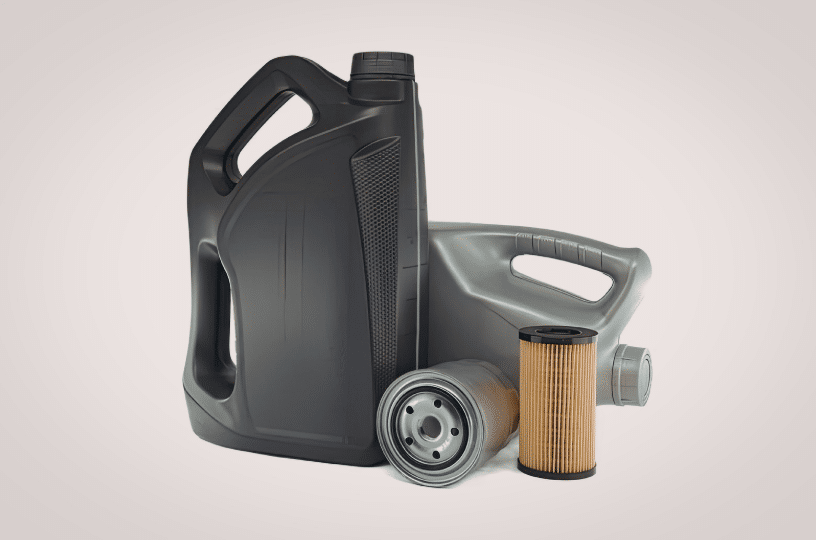
There's a counterintuitive truth here. The longer your oil change interval, the more important the filter becomes, not less. A filter on conventional oil captures 3,000 to 5,000 miles of contaminants. A filter on full synthetic captures 10,000 miles of contaminants, which is two to three times the load on the same-size filter.
If the filter hits saturation at 6,000 miles but the oil isn't scheduled for replacement until 10,000, the last 4,000 miles are on oil that's bypassing the filter entirely. Every particle of metal wear, every bit of soot, every contaminant is now circulating through the engine unfiltered. On a turbocharged engine or anything with variable valve timing, that's exactly the scenario that damages precision components.
This is why quality matters more than price on filters paired with synthetic oil. A premium filter on high-quality synthetic oil is a much better investment than an economy filter on the same oil. The OEM vs. aftermarket parts question matters here too. Some aftermarket brands match or exceed OEM specs, and some don't. Your shop should be able to tell you which filters they stock and why.
Chamblee-Specific Factors That Shorten Every Interval
Manufacturer intervals assume normal operating conditions. Chamblee driving often doesn't qualify as normal. Stop-and-go traffic on I-285, Buford Highway, and Peachtree Industrial means engines spend long stretches at low speeds and high temperatures, which accelerates oil degradation. Summer heat regularly pushes engine bay temperatures past what oil's additive package was designed to handle comfortably.
Short-trip driving is another factor that manufacturers classify as severe service. Engines that don't reach full operating temperature can't fully evaporate the moisture and fuel that accumulate in the oil, which dilutes the lubricant and accelerates sludge formation. If most of your driving is under 10 miles at a time, you're effectively operating under severe-service conditions even if you're not racking up long commutes.
Severe service in most owner's manuals means cutting the oil change interval by 25 to 50 percent. A car specced at 10,000-mile intervals under ideal conditions might need service closer to 6,000 or 7,000 miles in Chamblee traffic. Your shop can help you calibrate this based on how and where you actually drive.
What Happens If You Run an Old Filter With New Oil
Some drivers try to save money by changing oil but reusing the old filter, especially on extended-interval synthetic. It's a false economy. An old filter that's done 7,500 miles of work is already heavily loaded with contaminants. When fresh oil hits that filter, some of those trapped contaminants get knocked loose and redistributed into the new oil within the first few hundred miles.
Beyond contamination, the old filter has less remaining capacity for new debris. It saturates faster and enters bypass mode sooner, which means the second half of your new oil interval runs on unfiltered oil. You paid for a full oil change and you got half the protection. The cost of a filter is modest, and skipping it is one of the easiest ways to shorten engine life without realizing you're doing it.
This is also why shops insist on replacing the filter as part of every oil service. It's not upselling. It's basic maintenance economics that protects the much larger investment in your engine.
How to Match Your Filter to Your Oil (And Your Driving)
Start with the owner's manual. It specifies oil viscosity, oil type, filter part number or equivalent, and service interval under both normal and severe conditions. For most drivers, that manual is the most authoritative source of guidance you'll find.
If you run full synthetic on extended intervals, look for filters rated explicitly for that service life. Labels like "long-life," "extended performance," or specific mileage ratings tell you what the filter was designed for. Premium brands like Mobil 1, Purolator Boss, Bosch Premium, and Wix XP are engineered for 10,000-plus mile service. Economy filters from the same brands typically aren't.
Efficiency ratings matter too, though they're harder to decode. A filter rated at 99% efficient at 20 microns captures nearly all harmful particles in that size range. A filter rated at 95% efficient at 40 microns passes significantly more wear-inducing debris. When in doubt, a quality shop can recommend filters that match your oil and your driving. Pairing both correctly is part of what a thoughtful scheduled maintenance plan actually delivers.
Frequently Asked Questions
Can I change the oil but keep the old filter to save money?
No. The old filter is already loaded with contaminants that will redistribute into the new oil, and its remaining capacity won't carry you through the next interval. Skipping the filter cuts the protection of a full oil change roughly in half and costs you far more in long-term engine wear than a new filter would have.
Does synthetic oil require a special oil filter?
Not technically, but it essentially does in practice. Synthetic oil enables extended intervals that standard filters can't handle. Running a filter rated for 5,000 miles on oil scheduled for 10,000-mile service means the filter bypasses during the second half of the interval. For synthetic oil on extended intervals, match the filter's rated service life to the oil's service life.
How do I know which filter my car needs?
Your owner's manual lists the OEM part number, and most aftermarket filter manufacturers publish cross-reference guides that match their products to that part number. If you're unsure, any reputable shop can identify the correct filter from your VIN and recommend the right quality tier for your oil type.
Are filter requirements different on European vehicles?
Often, yes. European vehicles frequently use cartridge-style filters housed inside a canister rather than spin-on filters, and many require specific OEM-spec filters to meet manufacturer service standards. Warranties on newer European vehicles may require documented use of approved filters. Ask your shop if you're running a BMW, Mercedes, Audi, VW, Porsche, or similar.
Is the dealer's oil change interval always correct for my driving?
It's a starting point, not a guarantee. Dealers follow factory-recommended intervals, which assume normal operating conditions. If your driving qualifies as severe service, as it often does in Chamblee traffic, intervals should be shorter than the factory spec. A quick diagnostic service or oil analysis can help calibrate the right interval for how you actually drive.
What about cars with oil life monitoring systems?
Modern oil life monitors use algorithms that factor in driving conditions, engine temperature patterns, short trip frequency, and fuel dilution estimates. They're generally more accurate than a fixed mileage interval, but they're still estimates. Treat the monitor as a reliable guide while watching for early warning signs like dark oil, low level, or unusual engine noise that warrant earlier attention.
About Blue Ridge Automotive
Blue Ridge Automotive has been serving Chamblee drivers for years from our Chamblee location, with additional convenient shops in Buckhead/Atlanta at (404) 266-1699, Decatur at (404) 549-9424, and Marietta at (770) 426-4220. Our ASE-certified technicians handle everything from routine oil and filter service to complex engine repair, and we match your oil and filter to your vehicle's manufacturer spec and your actual driving conditions. Every service is backed by a 24,000-mile, 24-month warranty on parts and labor through TechNet, so the work we do comes with real coverage you can use.
Get Your Oil and Filter Service Done Right
The right oil at the right interval with the right filter is one of the simplest ways to extend your engine's life, and it costs less than almost any other form of preventive maintenance. If you're not sure whether your filter is matched to your oil type, or if you've been stretching intervals without knowing whether your filter can handle it, a conversation with our team clears it up quickly.
Call (770) 216-8474 or schedule a service online to book your next oil and filter service at the Blue Ridge Automotive Chamblee location.