

What Is a Power Steering Flush and When Do Atlanta Drivers Actually Need One?
Sharing this:
Most drivers don't think about their power steering fluid until the steering wheel starts groaning or feels heavy on a tight turn. By then, the fluid has usually been breaking down for a while. A power steering flush replaces that worn fluid with fresh fluid before it damages the pump or rack.
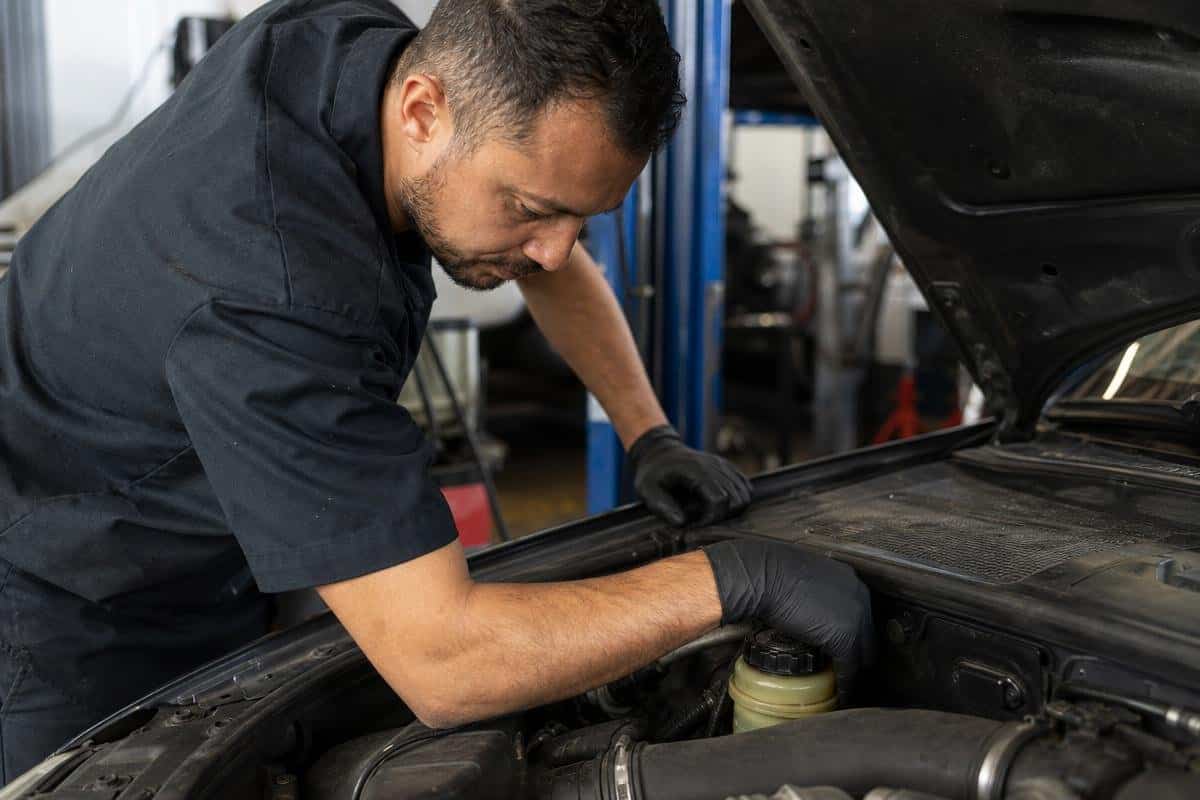
Atlanta's stop-and-go traffic on I-285 and surface streets through Buckhead and Decatur puts more low-speed steering cycles on your pump than most manufacturer intervals account for, which means the timing matters more here than the schedule suggests. Not sure if your fluid needs a flush? Bring it in and we'll pull the cap and show you the fluid condition.
Button Text: Book a Fluid Inspection
Button Link: /contact/
Key Takeaways
- A power steering flush removes old, oxidized fluid and replaces it with fresh fluid to protect the pump and steering rack.
- Atlanta's heat and heavy stop-and-go traffic degrade power steering fluid faster than the manufacturer's standard interval assumes.
- Knowing what the service is and when you need it can prevent a routine fluid service from turning into a costly pump replacement.
- Warning signs include a groaning noise when turning, a heavy steering wheel, and dark or foamy fluid in the reservoir.
- Most hydraulic power steering systems need a flush every 50,000 to 75,000 miles, but driving conditions in Atlanta can shorten that window.
You're pulling out of a Buckhead parking deck on a Tuesday morning, cutting the wheel hard to the left, and the steering feels heavier than it did last week. Maybe there's a faint whine. You file it away and merge onto I-285.
Three weeks later, a shop hands you an estimate. Somewhere in the middle of the page is a line item you didn't expect: power steering flush. You're not sure if that's a real service your steering system actually needs or something added to pad the bill.
Here are plain-English answers to all of it, no shop-speak. By the end, you'll know what the service does, what warning signs are real, and whether the recommendation you got holds up.
What a Power Steering Flush Actually Is
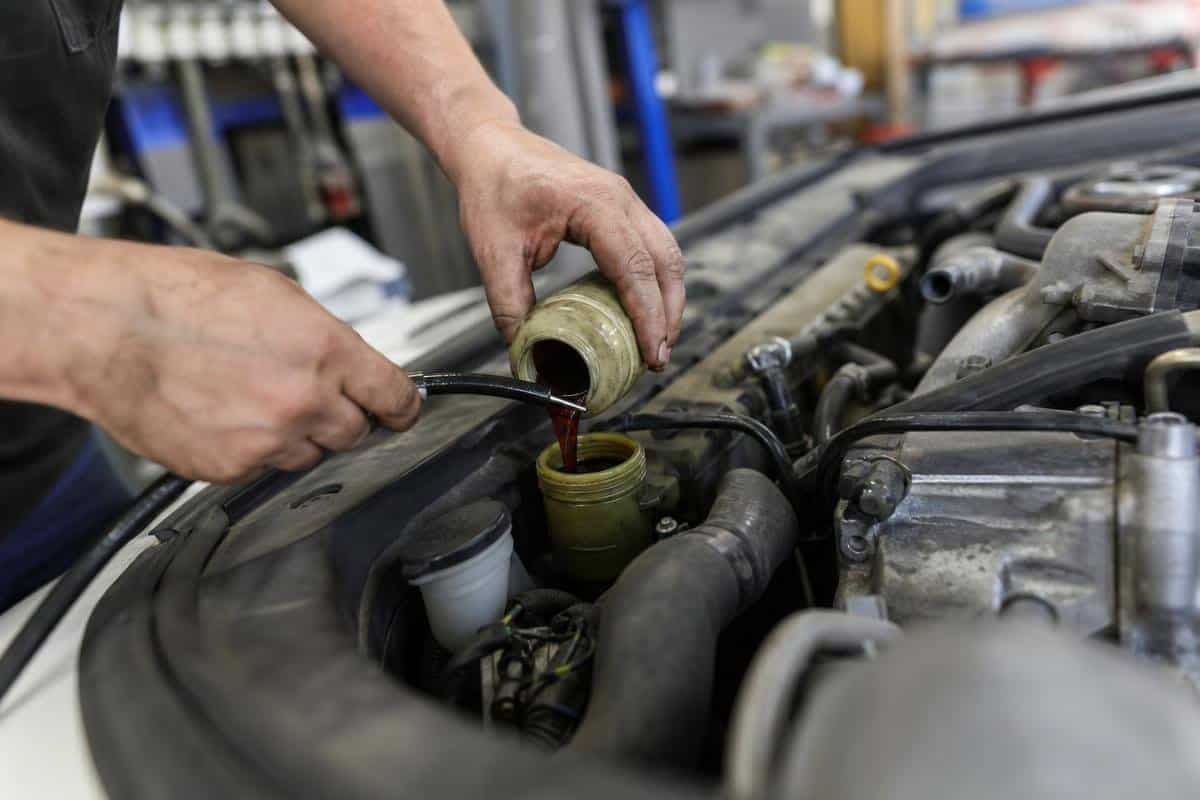
A power steering flush is not the same as topping off your fluid. Topping off means adding fresh fluid on top of the old, worn fluid already in the system. A flush pushes new fluid through the entire circuit until the old fluid is fully displaced. That includes the pump, the hoses, and the rack-and-pinion (the gear assembly that translates your steering wheel input into wheel movement).
You end up with clean fluid throughout, not a diluted mix. The distinction matters because a top-off leaves the contaminants and moisture already circulating in the system, which is what causes the wear you're trying to prevent in the first place.
How the Power Steering System Works
Hydraulic power steering uses a pump driven by the serpentine belt (the long rubber belt that runs off the engine and powers multiple accessories). That pump pressurizes the fluid and routes it through hoses to the steering gear. The pressure is what makes your wheel feel light at low speeds. Without it, you are turning against the full mechanical resistance of the front wheels.
Not every vehicle has this system. Electric power steering (EPS) uses a motor instead of fluid. Most post-2015 Fords, the majority of current Toyotas, and virtually all EVs run EPS. No fluid means no flush is needed. If a shop recommends a fluid service on an EPS vehicle, that is either a mistake or an upsell. Check your owner's manual or ask us before agreeing to any fluid work on a newer vehicle. For European makes like Mercedes-Benz or BMW, hydraulic systems stayed common well into the 2020s, so the flush question is very much real.
What the Flush Process Involves
There are two methods. A machine flush uses shop equipment to force new fluid through the system under pressure. A manual flush involves draining the reservoir, refilling it, and cycling the wheel lock-to-lock (turning it fully left, then fully right) repeatedly until the old fluid is pushed out.
Both methods work if done correctly. The goal in either case is the same: remove fluid that has absorbed moisture, oxidized, and lost its ability to hold pressure and lubricate the pump.
Worn fluid does not just look bad. It becomes abrasive. That accelerates wear on the pump seals and the steering and suspension components the fluid is supposed to protect. A fluid change done on schedule is far cheaper than a pump replacement.
The Warning Signs Your Power Steering Fluid Is Overdue
Your car will tell you when the fluid is past due. The signals are not subtle once you know what to listen and feel for. The problem is that most drivers chalk them up to "how the car drives" and keep going.
A Heavy or Stiff Steering Wheel
If the wheel feels heavier than it used to, especially in parking lots or tight turns, that is not normal wear. That is fluid past its service life failing to give the pump enough hydraulic pressure to do its job. Highway speeds mask the symptom because momentum carries the car through turns. Slow-speed maneuvering is where the assist matters most, and where bad fluid shows up first.
The honest answer is that most drivers do not notice the gradual change until it becomes obvious. By that point, the pump is already working harder than it should.
Whining, Groaning, or Squealing When You Turn
A high-pitched whine at full lock, like pulling into a parking space, usually means early-stage cavitation. That is when air bubbles form in fluid that has broken down and the pump struggles to move it. This is a fluid problem, and a flush can often resolve it before anything else fails.
A groan that is present from a cold start and does not clear up after the car warms up is a different story. That points to more severe wear or a pump already taking damage. On European vehicles, BMW, Mercedes, and Porsche in particular, pump replacement can be a significant expense depending on the model and parts availability.
At Blue Ridge Automotive – European & Domestic, our technicians see this pattern repeatedly on BMWs and Mercedes coming off Atlanta's stop-and-go corridors, where neglected fluid is a common thread in early pump failures. Catching it at the fluid stage costs a fraction of that. If the groan is not going away, get a diagnostic check before assuming it is just the fluid. Hearing a whine when you turn? Have the fluid inspected before it turns into a pump replacement.
Button Text: Contact Us
Button Link: /contact/
Visible Fluid Leak or Discolored Fluid
Power steering fluid is clear to light amber, or red and pink if your vehicle uses ATF (automatic transmission fluid) in the steering system. A puddle under the front driver's side points to a high-pressure hose, pump seal, or rack-and-pinion seal. A flush does not fix a leak. Running the pump low on fluid destroys it.
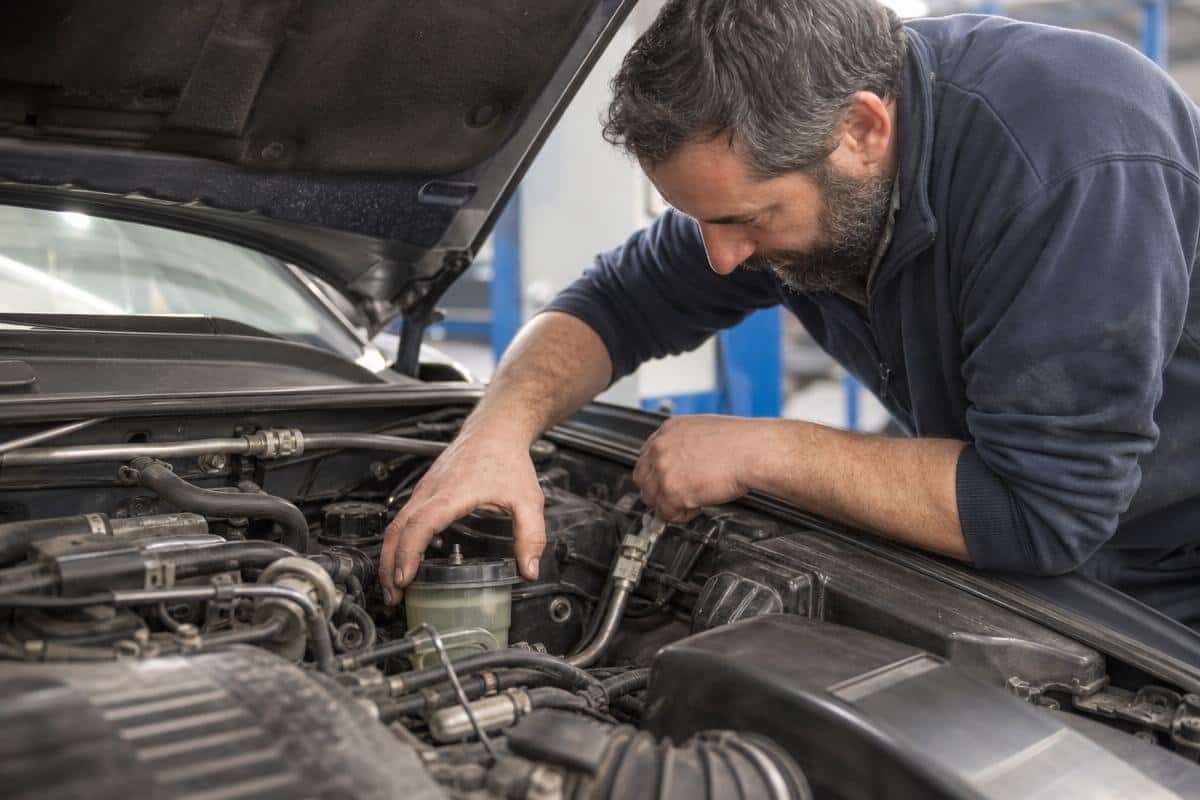
You can check this yourself right now. Pull the reservoir cap and look at the fluid. Dark brown, black, or burnt-smelling fluid means it is overdue regardless of mileage or whether you have noticed any symptoms yet.
Is a Power Steering Flush Actually Necessary?
The honest answer is: sometimes yes, sometimes no, and the difference matters more than most shops will tell you. The service is genuinely necessary when the fluid is oxidized or contaminated. It is not necessary just because a shop added it to your oil change invoice without looking at the fluid first.
When It's Genuinely Worth Doing
Pull the cap on your power steering reservoir and look at the fluid. Fresh fluid is typically clear, amber, or light pink depending on the make. If it looks dark brown, smells burnt, or has visible debris in it, the fluid has broken down and a fluid change is justified.
It's also worth doing when you've hit or exceeded the manufacturer's recommended interval, typically somewhere between 50,000 and 100,000 miles. Check your owner's manual, not the shop's service menu. If a major steering or suspension component was recently replaced, flushing old fluid at that point removes debris that the repair itself may have dislodged.
European makes carry the highest stakes here. Vehicles with high-pressure hydraulic systems, common across European auto repair in Atlanta, face pump replacement costs that can run well into four figures. Keeping the fluid clean is cheap insurance against that bill.
When a Shop Is Overselling It
If your car has electric power steering, there is no fluid to flush. Full stop. A shop recommending this service on an electric system either hasn't checked or is padding the ticket. If the fluid is clean and you're well under the manufacturer's interval, skip it. Same goes for high-mileage vehicles with a known leak. Flushing before fixing the leak is wasted money, and in some cases the fresh fluid accelerates seepage through already-stressed seals.
Before agreeing to any fluid service, ask two questions: "Can you show me the fluid?" and "Does my car actually have hydraulic power steering?" A shop that can't answer both clearly is not one you should hand the job to. Staying current on preventative maintenance in Atlanta means knowing which services your vehicle actually requires, not which ones are easy to add on.
How Often Do Atlanta Drivers Need a Power Steering Flush?
The honest answer is that manufacturer intervals are a starting point, not a guarantee. Most automakers list a fluid change somewhere between 50,000 and 100,000 miles, or every three to five years, whichever comes first. If you drive in Chamblee, Decatur, or Buckhead, that range probably needs to come down.
Manufacturer Intervals vs. Real-World Atlanta Driving Conditions
Those factory intervals assume a mix of highway and city driving. A commuter grinding through I-285 or crawling surface streets from Decatur into Midtown is doing something different. Low-speed steering cycles are the hardest condition for a hydraulic pump. More cycles at low speed means more heat, and more heat means faster fluid breakdown.
Summer ambient temperatures in the metro area regularly hit 90 to 95 degrees Fahrenheit, and underhood temps climb well past 200 degrees on a Georgia afternoon. That heat accelerates oxidation the same way it degrades coolant in high-temperature climates. A driver logging a typical northeast corridor commute may hit the real breakdown threshold closer to 40,000 or 50,000 miles, even if the owner's manual says 75,000. That gap matters.
Some Honda and Toyota models list power steering fluid as a lifetime fill. Many independent mechanics, ourselves included, dispute that for high-mileage vehicles operating in hot climates. "Lifetime" was not defined with a Chamblee summer in mind.
What the Fluid Color Tells You
You can check this yourself in about thirty seconds. Pull the cap on the power steering reservoir and look at the fluid on the dipstick or the reservoir walls.
- Clear to light amber (or red/pink if your car uses ATF): Fluid is in good shape.
- Yellow-brown or dark brown: Oxidation is underway. Schedule the service soon.
- Black with a burnt smell, or visible particles: Change it now and have the pump and hoses inspected. Debris in the fluid usually means something is already breaking down.
One thing that trips people up: BMW, Audi, and several other European vehicles use a mineral-based fluid, often CHF 11S, that looks green. That is not contamination. It is the correct fluid for those systems. Using the wrong fluid in a European hydraulic system damages the seals. If your car falls into that category, our European auto repair team knows exactly which spec your system requires. Not sure where your fluid stands? Bring it in and we'll check it while you wait.
Button Text: Schedule a Fluid Check
Button Link: /contact/
Which Vehicles Need the Most Attention to Power Steering Fluid
Not every car treats a fluid change the same way. The fluid type, the service interval, and the consequences of getting it wrong all vary depending on what you drive. This is one area where the details genuinely matter.
European Makes: Higher Stakes, Stricter Fluid Specs
European hydraulic steering systems are built to tighter tolerances than most domestic designs. That means the fluid specification is not a suggestion. BMW and Mini require Pentosin CHF 11S. Mercedes-Benz specifies MB 236.3 or 236.5. Audi and Volkswagen call for G002000 spec fluid. Pour a generic "universal" power steering fluid into any of these systems and you risk seal swelling, hose deterioration, and pump damage.
The frustrating part is that the damage often shows up later, in a different component. A rack-and-pinion failure that traces back to an incompatible fluid used two services ago is easy to miss. By the time the steering rack is leaking, the connection to that earlier fluid choice is not obvious. Our European-focused technicians see this pattern on Mercedes-Benz service and Volkswagen repair jobs regularly. If you drive a European vehicle, spec-correct fluid is not an upgrade. It is the baseline.
Drive a BMW, Mercedes, Audi, or Volkswagen? Let our European specialists confirm the right fluid for your system.
Button Text: Contact Us
Button Link: /european-auto-repair/
Our European auto repair work covers the full range of these systems, and we stock the correct fluids for each make rather than reaching for whatever is on the shelf.
Domestic and Asian Vehicles: Simpler Systems, Same Basic Rules
Domestic vehicles with hydraulic power steering, think Ford, Dodge, and Buick, typically use Dexron III ATF or a standard power steering fluid. These systems are more forgiving, the fluid is widely available, and the service itself costs less. The interval rules still apply: dark or contaminated fluid gets changed, and leaks get fixed before you consider a flush.
Asian vehicles are less predictable. Some use hydraulic systems with conventional fluid. Others moved to electric power steering earlier than domestic brands did. A Lexus RX from 2010 has a hydraulic system that needs fluid maintenance. A 2016 RX does not. Same goes for Acura models across different years. Verify what your specific vehicle actually has before booking the service. We check this before recommending any work.
What Atlanta Drivers Should Know Before Booking a Power Steering Flush
The honest answer is that local driving conditions do affect how fast your power steering fluid breaks down, and that's not a sales pitch. Stop-and-go traffic on I-285 and surface streets through Marietta and Sandy Springs puts your pump through far more low-speed steering cycles per mile than highway driving does.
Add underhood temperatures that climb well past 200 degrees on a Georgia summer afternoon, and the fluid oxidizes faster than any manufacturer interval written for mixed national driving conditions assumes. If your commute runs through that kind of traffic daily, your fluid is working harder than the schedule accounts for.
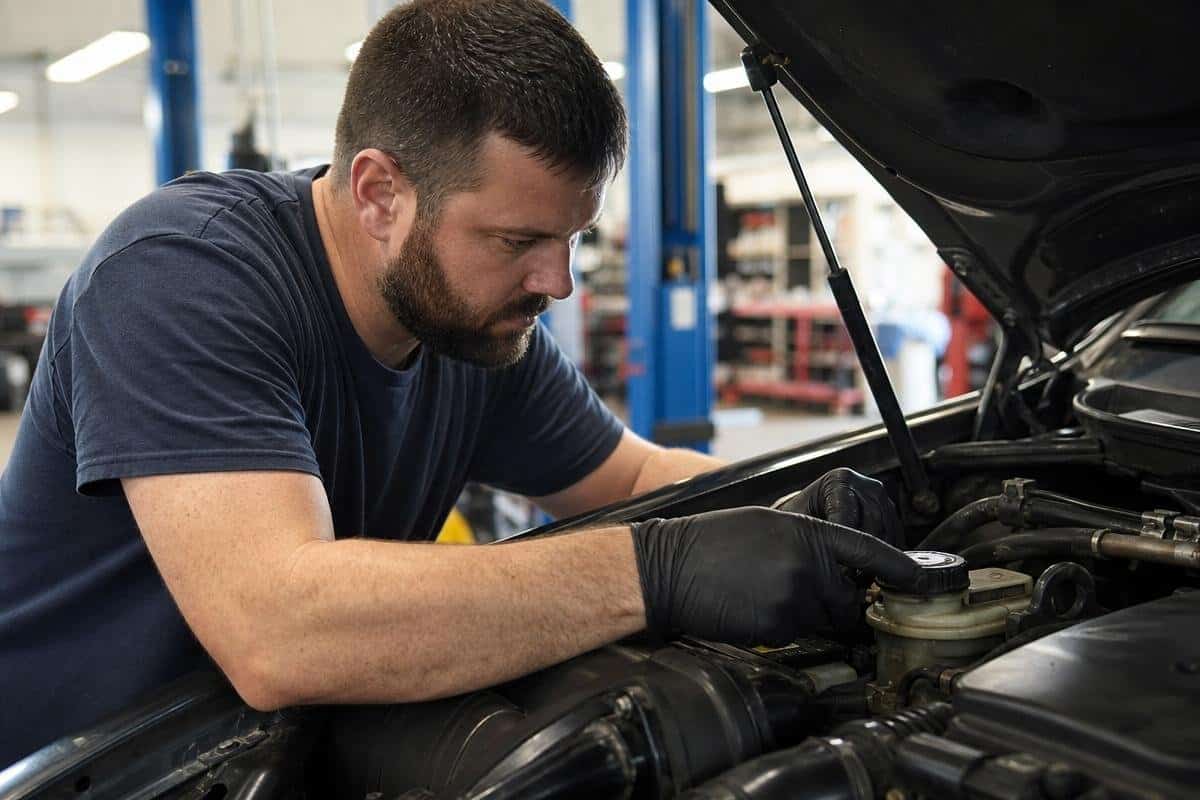
The question of independent shop versus dealerships comes up often. A shop that pulls the reservoir cap and shows you the actual fluid color is giving you real information. A service advisor reading from a mileage-based menu is not. There are real reasons why Atlanta drivers increasingly choose independent shops over dealerships for routine maintenance, and the ability to see the work and ask direct questions is near the top of that list.
The fluid spec question matters too. A flush on a Jeep calls for a different specification than one on a Volvo. Using the wrong fluid does damage. We service European, Asian, and domestic vehicles at 3190 Roswell Rd NW in Atlanta, so the spec gets confirmed before anything goes into your reservoir. With a 4.9-star rating across 1,144 reviews and Nextdoor Neighborhood Favorite recognition four consecutive years running, the track record is there in plain numbers, not marketing language.
Frequently Asked Questions
How much does a power steering flush cost?
Pricing varies depending on your vehicle and the fluid it requires. European vehicles that need mineral-based fluid typically land at the higher end of the range. We confirm pricing before any work starts. No surprise line items after the fact.
Can I drive with degraded power steering fluid?
You can, but the pump pays the price. Fluid that has broken down loses its lubricating and pressure-holding properties. Over time, sometimes within a few thousand miles, the extra load causes pump wear that a flush can no longer fix. Bad fluid turns a routine fluid service into a pump replacement that costs significantly more, depending on model and parts availability.
What happens if I never flush my power steering fluid?
The fluid oxidizes and picks up metal particles from normal wear. Those particles act as an abrasive inside the pump, hoses, and rack seals. The end result is a leaking rack-and-pinion or a failed pump, both significantly more expensive than the flush you skipped. Understanding why regular diagnostics can help prevent major repairs applies directly here.
Is a power steering flush the same as adding power steering fluid?
No. Topping off the reservoir adds fresh fluid on top of worn fluid still sitting in the pump, hoses, and gear. A flush displaces all of the old fluid. Dark or contaminated fluid cannot be corrected with a top-off.
How do I know if my car has hydraulic or electric power steering?
Open the hood and look for a power steering fluid reservoir, usually labeled with a steering wheel icon or the words "Power Steering." No reservoir means your car almost certainly has electric power steering and needs no fluid flush. Your owner's manual or a quick shop inspection confirms it in under five minutes.
Does Blue Ridge Automotive – European & Domestic perform power steering flushes in Atlanta?
Yes. We service hydraulic power steering systems on European, Asian, and domestic vehicles across Marietta, Sandy Springs, Chamblee, and the surrounding metro area. Our steering and suspension repair in Atlanta covers everything from a routine fluid flush to rack-and-pinion replacement.
If your steering wheel feels heavier than it should, or you heard a whine on your last commute through Buckhead or the surrounding Atlanta area, bring the car in. We will pull the reservoir cap, show you the fluid condition, and tell you straight whether a flush is warranted. Blue Ridge Automotive – European & Domestic is at 3190 Roswell Rd NW in Atlanta, open Monday through Friday 8am to 5pm. Schedule online or call us at (404) 266-1699.
Ready to Get Started with Blue Ridge Automotive – European & Domestic?
Get in touch to speak with our team directly. We're ready to answer your questions, walk you through your options, and help you find the right solution for your needs. Whether you're just starting to plan or ready to move forward, we'll make the process simple and stress-free. Reach out today and let's talk about how we can help.
Button Text: Contact Us
Button Link: /contact/