

How Long Do Car Batteries Actually Last in Marietta Before They Need Replacing?
Sharing this:
Ask five people how long a car battery lasts and you'll get five different answers: three years, five years, seven years, "until it dies," or "it depends." The standard answer most drivers have heard is "3 to 5 years," which is technically correct and practically useless. The real answer depends on your battery type, your climate, your driving habits, and what kind of electrical load your vehicle puts on the battery every day.
In Marietta, the answer skews shorter than most drivers want to believe. Heat is the single biggest factor in battery degradation, and Georgia summers are hard on every battery in every vehicle. This post walks through real lifespans by battery type, what makes them fail early, how to tell when yours is on borrowed time, and what to do about it.
The Three Main Battery Types in Modern Cars
Most cars on the road today use one of three battery chemistries, and the difference between them shapes the lifespan conversation entirely.
Standard flooded lead-acid batteries are the traditional design: liquid electrolyte between lead plates in a sealed or semi-sealed case. They're inexpensive, widely available, and typically last three to five years under normal conditions. Most older vehicles shipped with flooded lead-acid, and they remain a solid choice for many applications.
Enhanced flooded batteries (EFB) are a mid-tier upgrade designed to support start-stop systems that shut off the engine at traffic lights and restart when you release the brake. EFB batteries cycle more frequently than conventional designs and typically last around six years.
Absorbent Glass Mat (AGM) batteries use fiberglass mats saturated with electrolyte, which makes them spill-proof, more resistant to vibration, and better at handling deep discharges. AGM batteries last four to seven years on average, and well-maintained ones in moderate climates can push past a decade. Most newer vehicles, especially those with start-stop systems, advanced driver-assistance features, or heavy electrical loads, ship with AGM from the factory.
Why Marietta Cuts Every Estimate Short
Heat is what actually kills batteries. Cold gets blamed because batteries fail dramatically on the first cold morning of the season, but the damage was done over the previous summer. High temperatures accelerate the internal chemical reactions inside the battery, which uses up the active material faster and evaporates electrolyte from flooded cells. Over a few summers, those reactions eat through the battery's capacity even when everything looks fine at the terminals.
The numbers bear this out clearly. Batteries in cool northern climates routinely last five to seven years. The same batteries in Phoenix often give up after two to three. Marietta sits closer to the Phoenix end of that spectrum than the northern end, with long, hot, humid summers that run from late April through October. Your factory-spec five-year battery is really a three-to-four-year battery in this climate.
Stop-and-go traffic on I-75, Cobb Parkway, and 285 makes it worse. Engines sitting at idle in hot weather generate enormous underhood temperatures, and the battery cooks along with everything else. If most of your driving is commuting through heavy traffic, you're operating under conditions that shorten battery life meaningfully. Our article on how stop-and-go traffic affects your car covers the broader implications of Marietta-area driving patterns.
What Actually Shortens Battery Life (Beyond Just Age)
Short-trip driving is one of the biggest factors most drivers don't think about. Starting the engine draws a significant amount of current, and the alternator needs 15 to 20 minutes of running time to fully replace what cranking took out. A five-minute drive to the store never lets the alternator catch up, and over weeks and months the battery operates at partial charge. Chronic undercharging accelerates sulfation, which is the buildup of lead sulfate crystals on the plates that permanently reduces capacity.
Parasitic draws from aftermarket accessories, poorly installed stereos, or failing modules drain the battery while the car sits. A healthy vehicle should draw 30 to 50 milliamps at rest. A draw above 100 milliamps will flatten the battery within days of non-use.
Vibration from rough roads shakes internal plates loose over time, especially in flooded designs. Corroded or loose terminal connections force the charging system to work harder, often without fully restoring the battery. Deep discharges from leaving interior lights on or doors ajar overnight damage cells, and most lead-acid batteries lose noticeable capacity after even a single deep discharge.
How to Tell Your Battery Is Dying Before It Strands You
Dying batteries almost always warn you before they quit completely. The earliest sign is a slow crank on cold mornings. You turn the key and the starter sounds just a little less energetic than it used to, but the car still fires up. That's the first indication.
Dim headlights at idle that brighten when you rev the engine point to a charging system working around a weak battery. Dashboard lights flickering during cranking, accessories acting glitchy, the infotainment system rebooting on start, or odd behavior from power windows and locks are all symptoms of marginal voltage. A battery case that looks swollen, bulged, or deformed is telling you the battery is failing internally, often from heat damage. If you've had to jump-start the car even once in the past few months without an obvious cause like leaving lights on, that's a strong signal the battery is near the end.
A warning light specifically shaped like a battery is the dashboard telling you directly. It can indicate a failing battery or a charging system problem, and a proper diagnostic service distinguishes between the two within a few minutes.
The Three-Year Mark Is When Paying Attention Starts
A battery that's under three years old is generally fine unless there's a specific problem. Once you cross the 36-month mark, though, it's worth having the battery tested on every regular visit to the shop. Declining capacity doesn't always show up in normal operation until it's too late, and catching a weakening battery before a failure is dramatically easier than dealing with one after.
Free battery testing is widely available. Many shops, including independent repair shops, offer it as part of scheduled maintenance or oil change appointments. The test takes about five minutes and provides a state-of-health reading plus a cold cranking amps measurement compared to the factory rating. A battery measuring 70% or less of rated CCA is on borrowed time regardless of how it behaves day to day.
Getting tested at the three-year mark, then annually after that, is the single best habit for avoiding unexpected no-start mornings. The cost of a scheduled replacement is the same as an emergency replacement; the difference is convenience and not being late for work.
Why a Load Test Tells You More Than a Voltage Reading
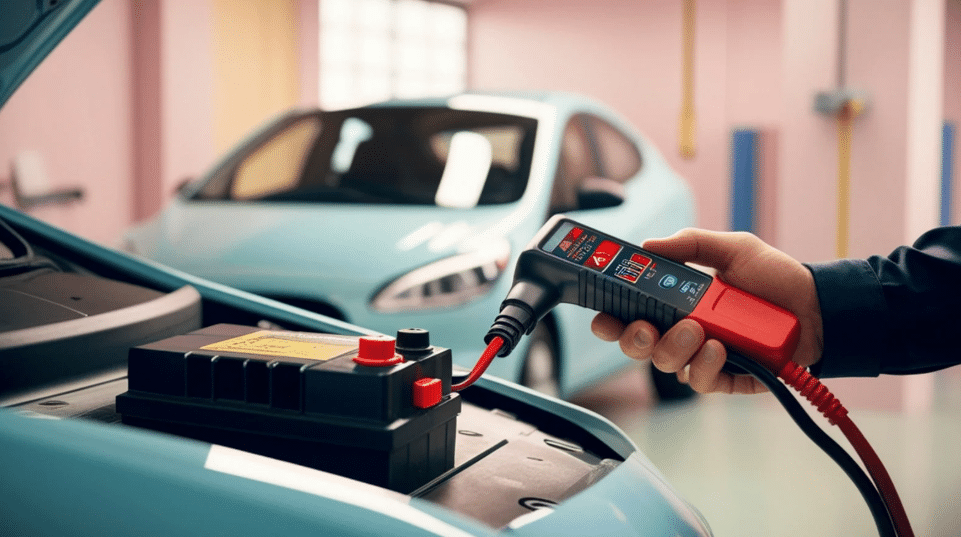
Voltage alone can fool you. A failing battery at rest often shows 12.5 to 12.6 volts, which looks perfectly healthy on a multimeter. Put that battery under a cranking load, however, and the voltage collapses to 9 or 10 volts, which is insufficient to reliably start a modern engine in cold weather.
A proper load test simulates cranking conditions by applying a current draw equivalent to half the battery's CCA rating for 15 seconds. The voltage response under that load reveals the battery's actual state. Digital testers used in most shops today do this automatically and return a pass/fail result along with an estimated state of health.
This is also the test that catches intermittent problems. A battery that starts the car fine in 70-degree weather might fail outright the first morning it drops to 30 degrees. A load test at 70 degrees often reveals the weakness before the weather does.
What Modern Vehicles Demand From Batteries
Cars have gotten much more electrically demanding over the past decade. Start-stop systems cycle the starter dozens of times per commute. Keyless entry systems keep various modules in a low-power state even when the car is locked. Advanced driver-assistance features like adaptive cruise, lane-keeping, and automatic emergency braking all need reliable power. Infotainment systems pull meaningful current even when the vehicle is off.
Modern alternators also don't always run at full output. Smart charging systems often reduce alternator load during steady cruising to improve fuel economy, which means the battery takes on more of the vehicle's instantaneous electrical load than it used to. All of this puts more demand on the battery than older vehicles ever asked for, and underspecced replacements wear out faster because they weren't engineered for the actual workload.
This is why matching or exceeding the factory specification matters on replacement. A battery rated for a 2010 sedan is not a substitute for the battery spec'd for a 2024 SUV with start-stop and a full ADAS suite, even if both batteries physically fit the tray.
OEM vs. Aftermarket Batteries: What Matters
Replacement battery selection involves three specifications that matter: group size, cold cranking amps (CCA), and reserve capacity. Group size is the physical dimensions and terminal configuration. It has to match exactly for the battery to fit the tray and connect to the cables properly.
CCA measures cranking power at 0°F, and the replacement must meet or exceed the factory rating. Higher is fine; lower causes problems. Reserve capacity measures how long the battery can power vehicle accessories with a failed alternator. Modern vehicles with heavy electrical loads benefit from higher reserve capacity than the minimum rating.
Vehicles that shipped with AGM batteries from the factory require AGM replacements, not cheaper flooded substitutes. Flooded batteries won't properly support AGM-calibrated charging systems, and installing the wrong chemistry can shorten battery life, trigger warning lights, or confuse the vehicle's battery management system. The broader OEM vs. aftermarket parts conversation applies here, with the added wrinkle that battery chemistry specifically has to match the vehicle, not just the fit.
How to Stretch Every Month Out of Your Battery
A few habits meaningfully extend battery life. Drive the vehicle regularly, and when you do, drive it long enough for the alternator to fully recharge the battery. One longer trip per week does more good than several short ones. If the car sits for more than a week or two at a time, use a battery maintainer plugged into a standard outlet.
Keep terminals clean and tight. Corrosion creates resistance that forces the charging system to work harder and often prevents a full charge from reaching the battery. A wire brush and a bit of baking soda solution handles most corrosion, and a thin coating of dielectric grease after cleaning prevents it from returning.
Address small charging system issues promptly. A marginal alternator that undercharges by a few tenths of a volt doesn't set off warning lights, but it starves the battery over months. Full alternator failure and repair becomes necessary far sooner than it should when these small issues get ignored, and the battery gets taken along for the ride.
Finally, don't let the battery deeply discharge. A single overnight dome light drain can cost you 10 to 15 percent of battery life. Modern vehicles usually have automatic shutoffs, but older ones and aftermarket accessory wiring don't always.
Frequently Asked Questions
Can I replace my own car battery?
On many vehicles, yes, and it takes 10 to 15 minutes with basic hand tools. On modern vehicles with electronic battery management, replacement often requires registering the new battery with the car's control module using a scan tool. If your vehicle has start-stop or AGM-specific charging, professional replacement ensures the new battery is properly recognized and charged correctly.
Do I need an AGM battery if the factory battery was AGM?
Yes. Vehicles that shipped with AGM have charging systems calibrated specifically for AGM chemistry. A flooded battery in an AGM-specced car will be overcharged by the vehicle's voltage regulator, which damages the flooded battery quickly and can trigger warning lights or reduce fuel economy. Always match AGM with AGM on these vehicles.
What does "registering" a new battery mean?
Many modern vehicles track battery age and capacity to optimize charging. When you install a new battery, the vehicle needs to be told that a new battery is present so it can reset its charging strategy. This is done with a scan tool and takes a few seconds. Skipping this step on vehicles that require it causes the new battery to be charged as if it's still the old, degraded one, which shortens its life.
How much does car battery replacement cost?
Standard flooded batteries installed run $120 to $250 for most vehicles. AGM batteries typically cost $200 to $400 installed. European and luxury vehicles with premium OEM-spec batteries and required registration can run $300 to $600 or more. Emergency roadside or mobile replacement often costs more than scheduling the job at a shop.
Why did my new battery die in a year?
The usual culprits are a parasitic drain from another system, a marginal alternator undercharging the battery, repeated deep discharges, or mismatched specifications. A shop can test the battery, verify alternator output, and measure parasitic draw to identify which issue is at play. A good replacement battery should give several years of service, and anything less deserves investigation. Lingering electrical issues sometimes also relate to deeper problems covered in engine repair diagnostics.
Can extreme cold kill a battery that survived summer?
Yes, though it's usually a battery that was already damaged by summer heat that finally fails in winter. Cold reduces a battery's cranking ability by 30 to 60 percent depending on temperature, so a battery that's already at 70 percent health from heat damage may not have enough cold performance to start the engine. The first hard freeze is when marginal batteries usually give up.
About Blue Ridge Automotive
Blue Ridge Automotive has served Marietta drivers since 2010 from our Marietta location, with additional convenient shops in Buckhead (Atlanta), Chamblee, and Decatur. Our ASE-certified technicians include battery testing as part of routine visits, handle proper battery registration on modern vehicles, and match AGM, EFB, and flooded replacements to your vehicle's exact specification. Routine services like oil change services are also a good opportunity to catch battery issues before they strand you, and every service we perform is backed by a 24,000-mile, 24-month warranty through TechNet.
Not Sure How Much Life Is Left in Your Battery?
A five-minute battery test takes the guesswork out of it. If your battery is older than three years, if it's shown any early warning signs, or if you just want peace of mind heading into summer or winter, having it tested is the fastest way to know where you stand. Our technicians test the battery and the charging system together, because the two always affect each other.
Call (770) 426-4220 or schedule a service online to book your battery check at the Blue Ridge Automotive Marietta location.